
A French alternatives manager with a live bid under it
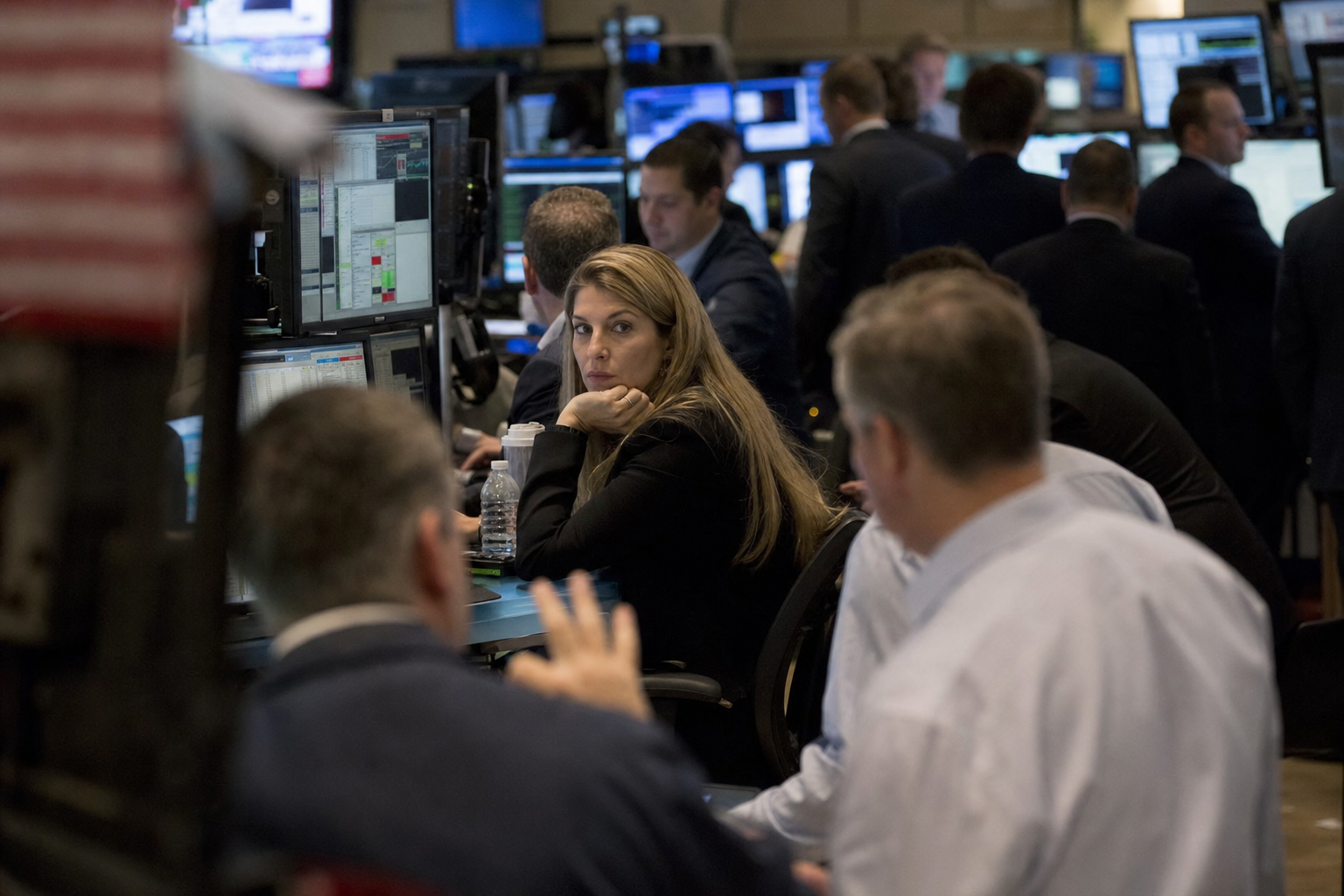
Tikehau Capital is not being read in a vacuum. European alternative asset managers have spent 2026 trying to prove they can keep gathering assets and monetising them even as rate expectations keep shifting under their feet, and the sector has held up better than a casual glance at the macro tape would suggest. Eurazeo has been pushing its own private-markets story, including a private debt vehicle that cleared 3.9 billion euros, and larger managers across the region have benefited from the same basic truth, which is that fundraising has concentrated around names with scale, distribution and a credible product set.
That is the backdrop for the insider cluster. Flamarion, who is listed in the filing as president of AF&Co, bought again on 4 August. The disclosed purchase was roughly 88,093 euros, euro-normalised at ingest, and it sits inside a much larger run of buying activity, 63 buy transactions totaling approximately 47.7 million euros in recent activity. The stock was already trading at 17.06 euros that day, up 2.9 percent, so this was not a lonely print into a panic. It was buying into strength, or at least into a market that had already decided the company deserved a better multiple than it had a few months earlier.
The bull case starts with the business, not the filing
The strongest version of the long case begins with the half-year numbers. Tikehau said fee-paying assets under management grew 7 percent in H1 2026, while management fees and other revenues rose 13 percent to 190 million euros. Net result group share doubled to 165 million euros, helped by stronger asset management margins and a 217 million euro gain from the Schroders stake sale. That is a real earnings bridge, not a hand-wavy story about “platform value”. The business is showing operating leverage, and the market has a habit of paying up for that when it believes the growth is repeatable.
The sector backdrop helps. The European Central Bank raised its key policy rates by 25 basis points in June 2026, lifting the deposit facility rate to 2.25 percent. Higher-for-longer rates are not a clean gift to alternatives managers, but they do keep the conversation focused on private credit, yield, and capital allocation discipline. In that environment, a manager with a diversified private-markets franchise can look better than a plain-vanilla asset gatherer. Tikehau’s mix of private equity, debt and real estate gives it more than one lever to pull, and the H1 print suggests those levers were working at the same time.
The company also kept buying its own stock. Share repurchases continued through July under an extended mandate, with multiple transactions executed around 17 to 18 euros. That matters because it tells you management has not been shy about using capital when it thinks the stock is cheap enough. Add the insider buying cluster on top, and you get a picture of a boardroom that is not waiting for the market to hand it a lower entry point. The market may still be doing the work for them, but they are not standing aside.
Insiders Trades data gives the filing a modestly constructive frame. The signal score is 4, which is not a trumpet blast, but it is enough to say the trade is not random noise. The score is being pulled by a chief executive level buyer, the cluster context, the tiny size of the purchase relative to the company, and the fact that the filing value is near EUR 88,093. That is a small cheque against a company with a market value of about 2.74 billion euros, but small does not mean meaningless when the same name keeps showing up in the register.
The catch is that the easy part may already be in the price
The first problem is obvious enough. The stock has already moved. Tikehau closed at 17.06 euros on 4 August, and the 52-week range runs from 14.58 to 20.50 euros. You are not buying a forgotten balance-sheet stub. You are buying a name that has already re-rated off the lows and is now somewhere in the middle of its annual range, with a decent H1 story and a market that has had time to notice it.
That matters because insider buying is most useful when it appears after disappointment, not after a clean run. Here, the company has had a good enough first half to justify attention, and the stock has already responded. So the filing has to do more work. It has to say something about conviction, not just confidence. The trouble is that the filing itself is still only one data point, and the cluster is not a broad board-level stampede. Insiders Trades data shows 12 recent declarations in the cluster picture, but only one distinct insider in the recent set. That is a concentrated pattern, not a wide one.
The second problem is the macro one. The ECB hike in June was a reminder that the rate cycle is not settled. For an alternatives manager, that can cut both ways. Higher rates can support private credit economics and keep investors interested in yield, but they can also pressure valuations, slow deal activity, and make fundraising more selective. If the market starts to worry that the easy money in private markets has already been harvested, the multiple can compress even while reported earnings look fine. That is the part bulls need to keep in view. The business can be doing well and the stock can still stall.
The third problem is that the company’s own results include a one-off element. The 217 million euro gain from the Schroders stake sale helped net result group share double to 165 million euros. That is not a criticism, just a fact. Gains like that are real, but they are not the same thing as recurring fee income. If you are underwriting the stock on a clean compounding story, you need to separate the recurring from the opportunistic. The H1 fee growth is encouraging. The stake-sale gain is useful. They are not interchangeable.
What the insider cluster actually adds

The filing that matters most is the one from 4 August, but the broader pattern is what gives it texture. Flamarion has been active more than once, and the recent activity includes a run of buy transactions rather than a single isolated print. That is why the market tends to pay attention. One buy can be a gesture. Repeated buys can be a habit. A habit is more interesting, even if it still does not tell you the future.
The role matters too. Insiders Trades data weights chief executive level buying most heavily, and that is sensible. A CEO or equivalent is closer to the economics of the business than a passive director. In this case, the filing is tied to a president of AF&Co, and the internal dossier classifies the broader bucket as chief-executive buys at mid-cap names. That bucket has a sample size of 2,417, with a 90-day win rate of 49.5 percent and an average 90-day return of 1.88 percent. The 365-day average return is 65.6 percent. Those are historical cohort figures, not a forecast for Tikehau, and they should be treated that way. They tell you the bucket has had some positive drift over time, but not enough to turn a filing into a free lunch.
The size of the purchase also cuts both ways. EUR 88,093 is not a life-changing sum for someone at this level, and it is tiny relative to the company’s market capitalisation. Insiders Trades data notes that the filing is under 0.01 percent of market value. That is why the trade reads as a signal of alignment rather than a balance-sheet event. It is skin in the game, not a capital allocation decision. Useful, yes. Decisive, no.
The score of 4 fits that middle ground. It is enough to keep the name on the radar, especially when the company is already showing operational momentum and the stock is not cheap in the way a distressed name would be cheap. But it does not erase the fact that the cluster is narrow and the macro backdrop is still active. You can like the filing and still decide the stock has already done some of the work for you.
Eurazeo, the ECB, and why the peer set matters
Peer context is useful here because Tikehau does not trade as a standalone curiosity. Eurazeo has been working the same French alternatives lane, and its private debt vehicle clearing 3.9 billion euros shows that capital is still available for managers with a credible product and distribution story. That does not make the two names identical. It does tell you the market is still willing to fund the right platforms, even in a more demanding rate environment.
The ECB backdrop is the other half of that comparison. A 25 basis point hike to 2.25 percent changes the conversation around private markets. It can support the pitch for private credit, but it also raises the bar for execution. Managers need to show that fee-paying assets can keep growing, that margins can hold, and that they can harvest value without leaning too hard on financial engineering. Tikehau’s H1 numbers help on the first two counts. The Schroders gain helps on the third, but only in a limited way.
That is why the stock’s own chart matters. At 17.06 euros, Tikehau is not priced like a broken story, and it is not priced like a no-brainer either. The market has already acknowledged the H1 momentum and the repurchase activity. The insider cluster adds another layer of support, but it does not change the fact that the business still has to keep delivering into a less forgiving macro regime. If rates stay elevated, the winners in alternatives will be the firms that can keep gathering assets without paying up too much for them.
The company’s own calendar also matters. Half-year results were released around 29 July, and the filing came only days later. That timing suggests the insider activity is being read against fresh numbers, not stale ones. That is usually the right way to think about it. Insiders know the business better than the rest of us, but they also react to the same public print you do. The difference is that they can act with their own capital after the market has had a first look.
Where the case breaks if you push it too far
The first break point is valuation discipline. A company that has already posted 7 percent AUM growth and 13 percent revenue growth in the half can look cheap on one set of screens and fully valued on another, depending on how much of the Schroders gain you strip out and how much recurring earnings power you believe is left. If you lean too hard on the doubled net result, you risk paying for a number that will not repeat in the same form.
The second break point is concentration. The cluster is real, but it is not broad. Insiders Trades data shows 12 recent declarations, yet the recent set is still dominated by one name. That is not the same thing as a board-wide vote of confidence. It is a meaningful pattern, but it is still a pattern around one person. If you want a stronger governance read, you would want more than that.
The third break point is the cohort math. A 49.5 percent win rate over 90 days is basically coin-flip territory, and the 1.88 percent average return is modest. The 65.6 percent 365-day average return is more interesting, but it is also the kind of number that can be distorted by regime, sample composition and the fact that some names simply trend for reasons unrelated to the filing. This is why the historical bucket is useful as a frame and dangerous as a promise. It keeps you honest. It does not hand you a trade.
The fourth break point is that the stock has already had a decent session. Up 2.9 percent on 4 August, it was not waiting for the filing to be noticed. That makes the insider buy less of a catalyst and more of a confirmation. Confirmation is fine. It is just less exciting than discovery, and the market usually pays more for discovery.
The balanced verdict on Tikehau Capital now
The honest long case is straightforward. Tikehau Capital has a business that is growing fee-paying assets, lifting management revenues, and showing better profitability in a sector that still has a live macro tailwind in private credit and a live macro headwind in higher rates. The company is also buying back stock, and the insider register shows repeated buying from Antoine Flamarion, including the 4 August purchase of roughly EUR 88,093. Put together, that is a decent alignment story.
The honest bear case is just as straightforward. The stock has already moved, the H1 profit jump includes a large stake-sale gain, the insider cluster is narrow, and the cohort math is not strong enough to turn the filing into a clean edge by itself. The market has already had time to price some of the good news. If the next leg of the story is going to work, it has to come from continued operating delivery, not from the filing alone.
So the right read is not to dismiss the buying, and not to overstate it either. It is a useful confirmation of a business that has had a better first half than many peers in the European alternatives space, and it arrives at a time when the sector still has room to reward managers that can keep gathering assets and protecting margins. But the stock is no longer in the cheap seats, and the macro regime is still capable of making life awkward for the whole group. The next public checkpoint is whether the H1 momentum shows up again in the next trading update and whether the repurchase cadence stays active around the current price band.
Dig deeper: Tikehau Capital's full insider filing history and Antoine FLAMARION's filing track record.
Sources and further reading
- InsiderScreenerpress
- Tikehaucapitalpress
- Tikehaucapitalpress
- Simply Wall Stpress
- Morningstarpress
- Yahoo Financepress
- Tikehaucapitalpress
- Tikehaucapitalpress
This is not investment advice.