
A co-founder buys while the sector tries to reprice itself
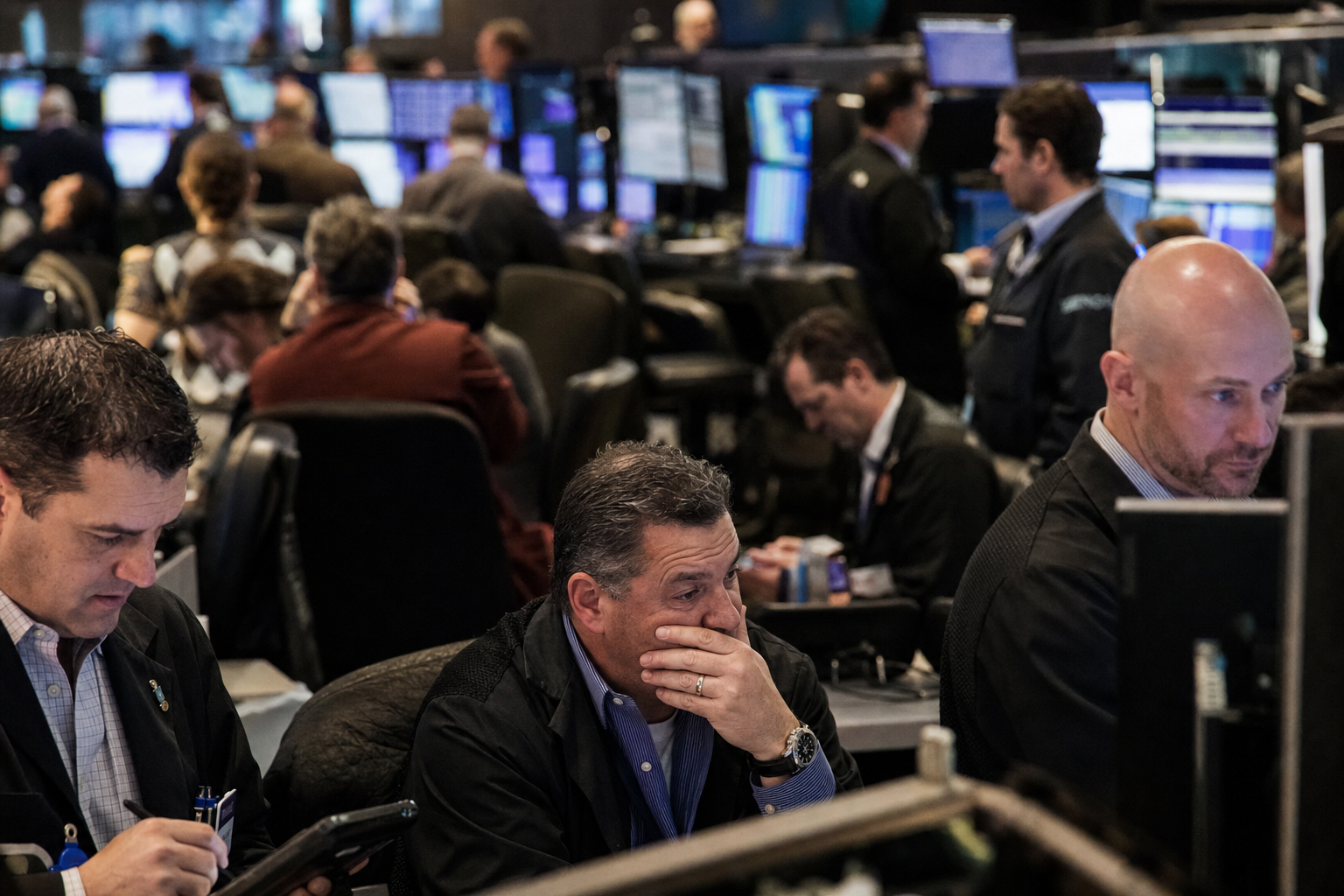
Tikehau is not being read in a vacuum. European alternative asset managers are trying to sell a simple story to the market, one that has been hard to keep simple for most of the last two years: rates are no longer lurching higher, inflation is closer to target, and the industry can get back to doing what it likes best, which is raising capital, deploying it, and collecting fees while everyone else argues about multiples. That backdrop matters here because listed managers live and die on confidence in the durability of fee streams, not on one quarter of mark-to-market noise.
Tikehau’s own first-half numbers gave the bulls something to work with. The firm said assets under management reached EUR 53.5 billion as of June 30, 2026, up 5 percent year over year, with fee-paying AUM at EUR 43.5 billion. It also reported net results group share of EUR 165 million, roughly double the prior period, and a 22 percent rise in asset management EBIT, with a core fee-related earnings margin of 42 percent. That is the kind of print that lets a listed alternative manager argue it is not just surviving the cycle, it is monetizing it.
The stock has not exactly run away from that story. TKO.PA has been trading near EUR 17 in early August, and recent sessions included a 2.9 percent advance to 17.06. That leaves the market in a familiar place for this part of Europe, where listed private markets names can look cheap on one metric and fully priced on another, depending on whether you think fundraising is about to reaccelerate or merely stop getting worse. Eurazeo, the closest listed French comparison in the research here, has been talking up EUR 1.1 billion of Q1 2026 fundraising and 14 percent third-party AUM growth. Tikehau sits in that same lane, with a different mix and a different balance of credit and private equity, but the same basic question from the market, can these firms keep converting AUM into cash flow without needing a perfect macro backdrop.
The bull case starts with the business, not the filing
The strongest case for Tikehau begins with the business mix. This is a French alternative asset manager with enough scale to matter, but not so much scale that it has become a pure index proxy for the sector. The company’s June AUM figure, the fee-paying base, and the first-half earnings all point in the same direction, which is that the platform is still gathering enough assets to keep the fee engine moving. In a market that has spent a lot of time worrying about exits and fundraising, that is the right place to be.
The macro backdrop helps, at least at the margin. The European Central Bank’s deposit facility rate has been held in the 2.25 to 2.40 percent range through mid-2026, and inflation is closer to the 2 percent target than it was when the cycle was still tightening. That does not make private equity or private credit easy. It does make the conversation less hostile. Lower and steadier rates tend to support deployment, and they reduce the odds that every financing discussion turns into a fight over the cost of capital. For a manager like Tikehau, that matters because the firm earns from managing capital through the cycle, not from calling the exact top or bottom in public markets.
The peer set also matters. Eurazeo’s Q1 fundraising update, with EUR 1.1 billion raised and third-party AUM up 14 percent year over year, shows that investors are still willing to back European alternatives when the product mix looks credible. Tikehau’s own H1 results suggest it is not being left behind. The company doubled net results group share to EUR 165 million and lifted asset management EBIT by 22 percent. Those are not the numbers of a business that has lost its footing. They are the numbers of a manager that has found enough traction in credit and private equity to keep the market interested.
That is the backdrop against which the insider buying lands. Antoine Flamarion, the co-founder and president of AF&Co, bought about EUR 355,883 of stock on August 7. Insiders Trades data classifies the print as part of a buy cluster, and the recent declaration list shows repeated buys on August 4, 5, 6 and 7, plus earlier July activity. The market does not need a founder to buy every time the stock looks cheap. It does pay attention when the same name keeps showing up on the buy side while the company is still digesting a decent operating print.
The size is not trivial in context. Insiders Trades data puts the filing at about 0.01 percent of the company’s market value, which is not a balance-sheet event, but it is enough to say the buyer was not just making a ceremonial gesture. The score attached to the filing, 4.2, reflects that combination of role, clustering and size. I would not lean on the score as if it were the thesis. I would use it as a prompt to ask whether the filing lines up with the operating picture. Here, it does.
The risks the market still has to price
The first problem is that Tikehau is still a mid-cap listed alternative manager, and mid-caps can be awkward places to hide when the market gets choosy. The company’s fundamental score in our dossier is 36, with a rank of 20835 out of 28163. That is not a disaster, but it is not a pristine quality screen either. The value score is 23 and quality is 49, which tells you the business has enough substance to matter, but not enough obvious cheapness or quality dominance to make the case effortless. This is a real company with real earnings, not a clean factor darling.
The second problem is that the insider pattern is narrower than the word cluster might suggest. Insiders Trades data shows 12 recent declarations, but the cluster field also says there is only one distinct insider in the recent set. That means the buying is concentrated in one name, not spread across a broader group of executives and directors. Concentration can be useful, especially when it comes from a founder or chief executive. It can also be overread. One person can be persistent for reasons that have nothing to do with the next twelve months of trading. You do not get to infer a board-wide view from one active buyer.
The third problem is that the stock has already had a decent run into the print. A share price near EUR 17, after a 2.9 percent session to 17.06, is not the same thing as a distressed entry point. If the market has already started to price in better fundraising, steadier rates and a cleaner earnings path, then the insider buy is arriving after some of the easy skepticism has already come out of the name. That does not make the filing useless. It does make the burden of proof heavier.
There is also a structural issue with listed alternative managers that never goes away. Their earnings can look smooth until they do not. Fee-related earnings are the attractive part of the story, but the market still worries about performance fees, deployment pace, exits and the durability of fundraising. Tikehau’s H1 numbers were good enough to support the bull case, yet they do not erase the fact that this is a business tied to capital markets sentiment, to client appetite, and to the health of private assets more broadly. If the fundraising window narrows, or if deployment gets harder, the market will stop rewarding the same metrics it is rewarding now.
What the cohort data says about the filing

The cohort read is useful here because it keeps the filing in proportion. Our historical bucket for chief-executive buys at mid-cap names spans 2,496 cases. The 90-day win rate was 49.4 percent and the average 90-day return was 1.73 percent. That is a modest edge, not a magic trick. It says that this kind of buy has been slightly better than a coin flip over the next three months, on average, but it also says plenty of these trades go nowhere or fail.
That matters because the temptation with a founder buy is to treat it as a cleaner signal than it really is. A founder can buy because he likes the valuation, because he wants to steady the market, because he sees a better operating run-rate, or because he simply prefers to keep adding. The filing does not tell you which of those is true. The cohort data does not tell you that either. What it does tell you is that this role-and-size bucket has not been noise in aggregate, even if the individual outcome is still uncertain.
The strategy framework in our dossier points in the same direction, but I would keep it in the background. The live placeholders for the point-in-time backtest headline are 1.17, 12.5% (STOXX Europe 600 on the same dates: 9.3%) and (figure withdrawn, see audit 231), and those figures sit on a restricted EU venue universe with a short, single-regime window. They are useful as a screen, not as a promise. I would not build a valuation case on them. I would use them to remind myself that the signal has worked often enough to deserve attention, then go back to the company-specific facts.
That company-specific read is still the same one. Tikehau has enough AUM, enough fee-paying AUM and enough first-half earnings momentum to justify a closer look. The insider buy adds a layer of alignment, but it does not rescue a weak business. Here, the business is not weak. It is merely exposed to a market that can change its mind quickly about listed alternatives, especially when the shares are already near the level where the last good news has been partially absorbed.
Why the founder's buying matters
The identity of the buyer is doing real work here. Antoine Flamarion is not a random director making a token purchase. He is the co-founder, and the dossier identifies him as president of AF&Co, with the recent declarations showing repeated buys across early August and mid-July. That kind of persistence matters because it suggests the buying is not a one-off reaction to a headline. It is a pattern.
Founder buying can be overinterpreted, but it should not be flattened into the same category as a small director purchase from someone with little operational exposure. A founder usually has a longer memory of the business, the fundraising cycle, the client base and the internal pipeline. That does not make the trade right. It does make it more informative than a lot of the filings that hit the tape. When a founder keeps buying into a period where the company has just reported stronger earnings and the stock is still trading in a relatively tight band, the market has to at least ask whether the buyer sees more room than the chart does.
Still, the market is not obliged to agree. Tikehau’s market value, about EUR 2.94 billion in the dossier, means the EUR 355,883 filing is meaningful but not transformative. It is a conviction marker in the narrow sense that it shows willingness to add capital, but it is not the sort of purchase that changes the capital structure or forces a new strategic reading. That is why the right response is not to chase the print. It is to place it beside the operating data and ask whether the shares are still discounting too much caution.
The answer is probably that they are discounting some caution, but not all of it. The market has already recognized that European alternatives are not in the same place they were when rates were still climbing and fundraising was more fragile. It has also not fully committed to the idea that the cycle has turned cleanly. That is where Tikehau sits, and that is why the filing matters. It is a founder buying into a business that has improved, but not into a market that has become easy.
The balance sheet of the story, and the next thing to watch
The bull case is straightforward enough. Tikehau reported stronger first-half earnings, higher AUM, and a healthy fee-paying base. The macro backdrop is less hostile than it was, European peers are still finding capital, and the shares have not run so far that the insider buy looks like a late, desperate gesture. On top of that, the buyer is a co-founder, not a passive observer. That is a decent stack of evidence.
The catch is equally straightforward. The company is still a mid-cap alternative manager with a middling fundamental rank, the recent buying is concentrated in one insider, and the stock has already moved enough that the market is not offering a distressed entry. Our cohort data gives the filing some historical support, but only modestly. A 49.4 percent win rate and a 1.73 percent average 90-day return do not justify heroics. They justify attention.
So the practical read is balanced. Tikehau looks like a business with improving operating momentum in a sector that is getting a better macro backdrop, and the founder buy reinforces that picture. It also remains a stock where the market can get ahead of itself if it starts treating one good half-year and one active insider as proof that the whole cycle has reset. The next thing to watch is whether the company can keep converting that EUR 43.5 billion fee-paying base into earnings without needing a friendlier market than the one it has now.
If the shares keep holding near EUR 17 while the company keeps posting AUM growth and fee-related earnings discipline, the filing will look better in hindsight. If fundraising slows or the stock loses that level, the August 7 buy will look like what it is today, a useful but incomplete clue.
Dig deeper: Tikehau Capital's full insider filing history.
Sources and further reading
- Yahoo Financepress
- Tikehaucapitalpress
- Tikehaucapitalpress
- Investing.compress
- Euronextpress
- Copress
- Tikehaucapitalpress
- Marketscreenerpress
This is not investment advice.