
A Paris alternatives name with a better wind at its back
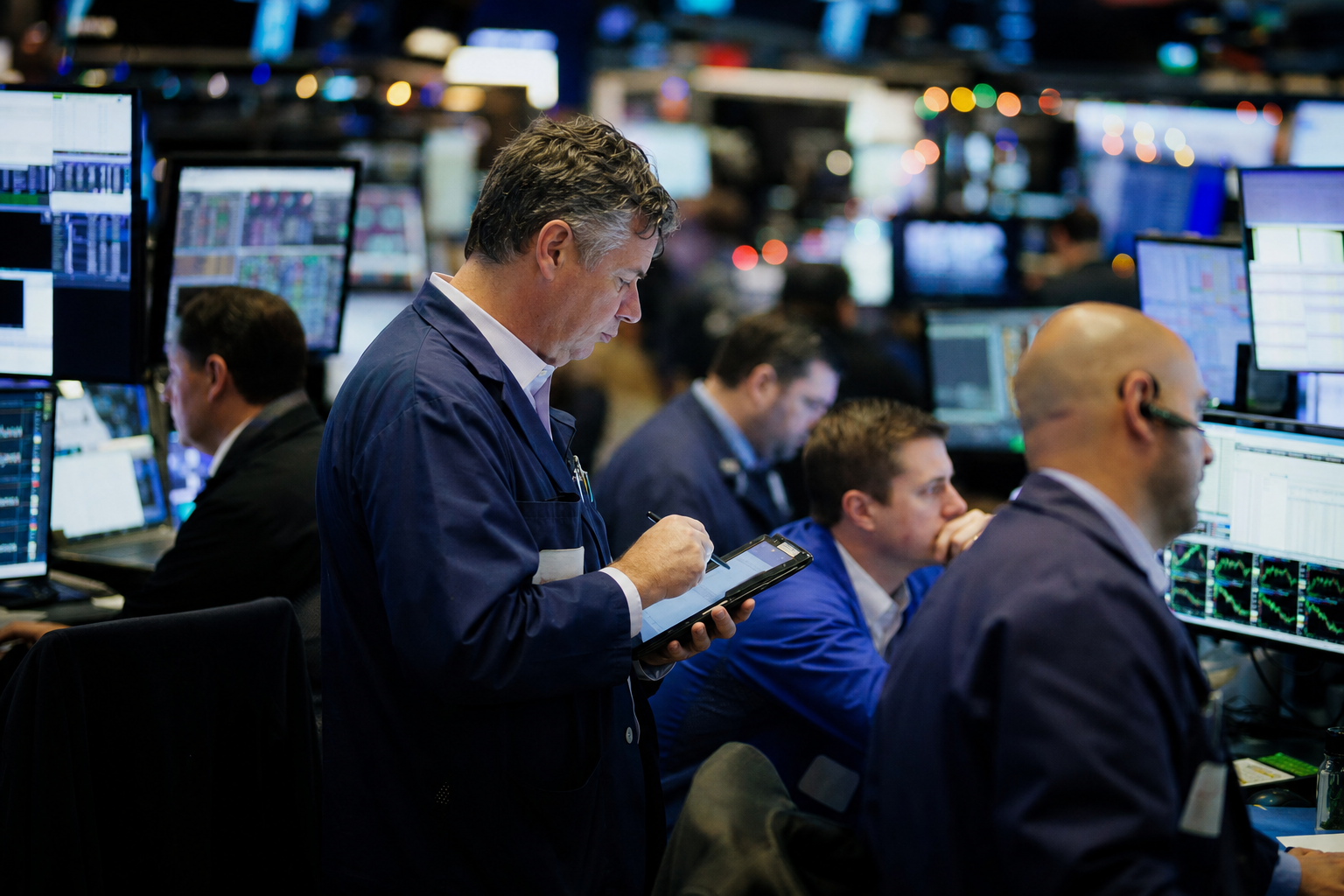
Tikehau is not trading in a vacuum. European alternative asset managers have been getting a cleaner macro backdrop than they had a year ago, with rates no longer rising in a straight line and capital markets a little more willing to fund private credit, real assets and buyout activity. That matters for a firm like Tikehau because its business is built on fee-bearing assets, deployment, fundraising and the slow monetisation of what it already owns. When that machine works, the market tends to pay for visibility. When it does not, the discount shows up fast.
The sector also has a relative-value problem. U.S. platforms have scale, distribution and a deeper credit franchise, and the European listed names often trade as if they are perpetually proving they deserve to be in the same conversation. That is the backdrop here. Tikehau sits in the middle of a market that is rewarding fee stability and punishing anything that looks cyclical or opaque. Against that, a co-founder buying stock is not the whole story, but it is not nothing either.
Flamarion's August buying streak and the market setup
The filing that matters is simple. On August 24, 2026, Antoine Flamarion bought shares for about EUR 36,529, euro-normalised at ingest. The company’s own disclosure trail shows this was not an isolated gesture. Insiders Trades data flags it as part of a cluster, and the recent declaration list includes purchases by Flamarion on August 20, August 17, August 14, August 13 and August 12. That is a string, not a one-off.
The size is modest in market-cap terms, and that cuts both ways. On one hand, it is not the kind of purchase that changes a balance sheet or forces a re-rating by itself. On the other, it is real money from a founder figure who already knows the business better than any outside holder does. Our scoring puts the filing at 3.8, driven by the chief-executive role, the cluster pattern and the fact that the buy is tiny relative to the company’s EUR 2.92 billion market value. That is the right lens. You do not need to pretend EUR 36,529 is huge to see that repeated buying from the same senior figure is more informative than a lonely token print.
The stock had also already done some work. It was recently near EUR 17.00 to EUR 17.96 on Euronext Paris, and it had risen 22.8% over the prior 90 days. That is the catch in the timing. This was not a contrarian buy at the bottom of a broken chart. It came after the market had already started to reward the name. Sometimes that means insiders are chasing strength. Sometimes it means they are buying into a rerating they think still has room. The filing alone does not tell you which.
The bull case is built on fees, not slogans
The strongest long case starts with the half-year numbers. Tikehau’s H1 2026 results showed assets under management at EUR 53.5 billion, up 5% over the last twelve months. Management fees and other revenues rose 13% to EUR 190 million, and core fee-related earnings climbed 32% to EUR 80 million, lifting the margin to 42%. That is the kind of progression the market can underwrite. It says the platform is not just gathering assets, it is converting them into earnings with better efficiency than before.
That matters more in alternatives than it does in a plain-vanilla asset manager. Fee stability is the prize. Private credit, real assets and private equity all have different cycles, but the common thread is that the manager gets paid for scale, origination and persistence, not just for being right on one quarter of flows. Tikehau’s own messaging has leaned into a harvesting phase, which is the right word for a business that wants to show the market it can turn years of platform building into cash generation. If you are looking for a reason the shares have been able to move, that is it.
The balance sheet story helps too. The company has pointed to portfolio realizations, including the Schroders stake sale, and to planned bond redemptions that would reduce gross debt to EUR 1.5 billion. That is not a trivial detail for a listed alternatives group. Lower debt gives management more room to lean into fundraising, seed strategies and capital returns without the market immediately asking whether the leverage is doing too much of the work. In a sector where investors are increasingly selective, cleaner financing can matter almost as much as headline growth.
The broader industry backdrop also gives Tikehau a tailwind. The European alternatives space is consolidating, and U.S. acquirers have already completed more than USD 14 billion in deals year to date through August 2026, the fastest pace since at least 1995, according to the cited reporting. That does two things. It reminds you that scale is valuable, and it keeps pressure on smaller or mid-sized European platforms to either grow into relevance or risk being priced as second-tier franchises. Tikehau has enough breadth across private credit, real assets and private equity to avoid looking narrow. That is an advantage when the market is sorting winners from also-rans.
Why the rerating may already be partly in the price

The first problem with the bull case is obvious once you look at the chart. A 22.8% rise over 90 days is not a blank slate. It means the market has already started to discount the better fee line, the stronger earnings and the cleaner balance sheet. If you buy after that move, you are not buying hidden value. You are buying into a story that is already visible.
That is where insider buying gets tricky. A founder purchase after a strong run can mean confidence, but it can also mean management thinks the stock is still cheap relative to the business. Those are not the same thing. The filing does not tell you whether Flamarion sees another leg higher, whether he is averaging into a position, or whether he simply prefers to keep buying when the company is executing. You can infer discipline. You cannot infer certainty.
The second problem is sector-specific. Private credit has been tested by a modest uptick in defaults, and that matters even for managers that have so far kept realized losses low. The market has spent years treating private markets as a cleaner earnings stream than public equities, but the first sustained stress in credit can change the tone quickly. If deployment slows, if fundraising gets harder, or if investors start asking harder questions about marks and underwriting, fee growth can decelerate faster than the market expects. Tikehau is not immune to that. No manager is.
There is also a structural issue in Europe. The region’s asset managers continue to lose ground to U.S. platforms, which now manage nearly half of regional assets. That is not just a headline about competition. It is a reminder that distribution, product breadth and brand still matter, and that a good quarter or two does not erase the scale gap. Tikehau can be a better business than the market price implies and still remain a smaller fish in a pond where the biggest fish set the terms.
Historical cohort data for chief-executive buys
Insiders Trades data puts this filing in a chief-executive buy bucket at mid-cap names. The historical T+90 cohort for that bucket shows a 51.1% win rate and a 2.61% average return, with a 90-day average return of 79.92% over 365 days in the same cohort table. That is useful context, but only as context. It tells you that this kind of filing has not been random noise in the past. It does not tell you that Tikehau will follow the same path now.
The sample size is 3,039, which is large enough to be worth respecting and still not large enough to turn a single trade into a law of nature. The cohort is also broad. It mixes different market regimes, different valuation starting points and different company-specific situations. A chief executive buying at a mid-cap name after a strong run is not the same thing as a chief executive buying after a drawdown, and the market does not treat those cases the same way either. That is why the historical read belongs in the article, not in the headline.
The internal quality screen is not screaming either. Tikehau’s fundamental score is 35, with a rank of 21,353 out of 28,832. That is not a disaster, but it is not a pristine balance-sheet or growth story either. The quality score is 48, and growth is not populated in the dossier. So the honest read is that the company has enough operational momentum to support the stock, but not enough fundamental perfection to make the insider buy redundant. That distinction matters. If the business were obviously cheap on every screen, the filing would be less interesting. If the business were obviously weak, the filing would be easier to dismiss. Tikehau sits in the middle.
Capital returns, debt reduction and the market's read-through
One reason the market has been willing to give Tikehau more credit is that the company has been active on capital structure and capital return. Between August 14 and August 20, the company repurchased 6,479 shares at a weighted average price of EUR 17.05, according to the disclosure. That is not a huge buyback in absolute terms, but it is a visible one, and it came alongside the insider purchases. When management and the company itself are both in the market, the message is cleaner than when only one of them is.
The point is not that buybacks and insider buying magically validate each other. They do not. The point is that both actions sit in the same frame. Management appears willing to allocate capital to its own equity while also reducing debt and talking up the earnings visibility of the platform. That combination can support a rerating if the operating numbers keep cooperating. It can also disappoint if the market decides the earnings quality is less durable than it looks.
There is another detail worth keeping in view. The recent buying is not coming from a random director with a small side position. It is coming from a co-founder and chief-executive figure. That matters because the market usually treats founder buying differently from routine board-level activity. Founders tend to know where the bodies are buried, but they also tend to be the most naturally optimistic holders in the room. You should respect the information content without pretending it is pure objectivity.
What the setup says about durability
If you want the honest long case, it is this. Tikehau has shown better fee growth, better core earnings and a cleaner balance sheet path. It operates in a sector that is still getting paid for stability and scale. Its co-founder has been buying repeatedly in August, and the company itself has been repurchasing stock. That is enough to keep the name on a serious watchlist, especially if you think European alternatives deserve a higher multiple than they have carried.
If you want the honest caution, it is this. The shares have already moved. Private credit is not in a stress-free environment. European managers still face a structural scale disadvantage versus U.S. platforms. And the insider filing, while useful, is not a magic decoder ring. It tells you that someone with deep knowledge of the business is willing to add stock after a strong run. It does not tell you that the next quarter will cooperate, or that the market will keep rewarding the name at the same pace.
That is why the right stance is selective rather than euphoric. Tikehau looks like a better business than it did a year ago, and the filing reinforces that view. But the market has already noticed. The next test is whether the company can keep turning AUM into fee-related earnings while the sector absorbs more competition and a less forgiving credit backdrop. Watch the next regulated disclosures, the pace of buybacks and whether the August buying continues into September.
Dig deeper: Tikehau Capital's full insider filing history and Antoine FLAMARION's filing track record.
Sources and further reading
- InsiderScreenerpress
- Benzingapress
- Tikehaucapitalpress
- Morningstarpress
- Webdisclosurepress
- Marketscreenerpress
- MarketWatchpress
- Streetinsiderpress
This is not investment advice.