
Industrial software, hardware, and the parts of the cycle that still matter

Hexagon Aktiebolag Hexagon Aktiebolag makes money in the unglamorous places that still move real industry. Precision measurement, positioning technologies, and industrial software are not a single story, they are a stack. Manufacturing Intelligence, Infrastructure & Geospatial, and Autonomous Solutions each lean on different end markets, but the stock still trades on the same basic question, whether the company can keep turning industrial digitization into margin and cash flow while the cycle shifts underneath it.
The current backdrop matters because aerospace and defense, electronics, and general manufacturing have been doing the work, while automotive, agriculture, and construction have been softer. You do not need a heroic macro view to see the split. You need only look at which end markets are carrying the quarter and which ones are still waiting for a turn. Hexagon's second quarter 2026 results showed 12 percent organic revenue growth, the strongest rate in five years, and an improved adjusted operating margin, which tells you the business is not just surviving the mix, it is extracting something from it.[^1]
The stock has also been helped by a market that has been willing to pay for industrial names with exposure to defense and advanced manufacturing. Swedish shares have participated in that rotation. Hexagon has not been alone in that move, and the comparison set matters. Trimble and Zeiss Group sit in adjacent territory, with measurement and positioning exposure that makes them useful reference points for how the market is treating industrial digitalization. The point is not that they are identical. They are not. The point is that the market has been rewarding names that can show real demand in the right end markets, and Hexagon has had enough of that to keep the debate alive.
Tomas Eliasson buys at SEK 100, and the filing lands in a cluster
The filing itself is straightforward. Tomas Eliasson, a board member, bought 12,000 class B shares on 24 August 2026 at SEK 100 each, for a total euro-normalised filing value of EUR 107,868. He lifted his holding to 23,000 shares. The trade took place on Nasdaq Stockholm and was reported to the Swedish Financial Supervisory Authority.[^2]
The price matters because it was not a deep discount buy after a panic. The stock traded near SEK 100 to 101 in the sessions immediately following, with a recent quote at approximately SEK 101.10.[^2] That puts the purchase right on the market, not far below it, which is usually where you start asking whether the insider is simply keeping pace with a position or adding with intent. You do not get a clean answer from one line in a filing. You do get context from the rest of the week.
Hexagon's buying has not been isolated. The board member's purchase follows a roughly SEK 1.2 million acquisition by CFO Enrique Patrickson earlier in the week and a share purchase by general counsel Thomas De Muynck.[^2] Our data counts 4 distinct insiders across 7 recent declarations, with Andreas Wenzel appearing more than once in the recent sequence. That is enough to call it a cluster without turning it into a grand theory. It is a cluster because several senior figures have chosen the same direction over a short stretch. It is not a guarantee of anything beyond that choice.
Insiders Trades data gives this filing a display score of 4. The drivers are plain enough, and they are the sort of things that usually matter in a name like this: the trade sits inside an insider cluster, it is tiny versus the company's market value, and the euro-normalised filing value is only EUR 107,868. That last point is easy to miss if you only look at the local-currency share count. Against a market cap of EUR 23.98 billion, the purchase is a rounding error. Against the insider's own history, it is still a real buy.
Q2 strength, new targets, and why the stock is not cheap on hope alone
Hexagon's operating story is better than the old industrial software stereotype. The company is not just selling measurement tools into factories. It is selling systems that sit closer to production decisions, asset mapping, and automation workflows. That gives it more ways to benefit when customers spend on efficiency, resilience, and defense-adjacent capability. It also means the stock can move on a mix of order intake, margin delivery, and the market's appetite for industrial tech. The business model is broad enough to absorb some softness, but not broad enough to ignore it.
The second quarter 2026 release matters because it showed the business can still grow at a pace that supports the current debate. Twelve percent organic revenue growth is not a trivial number for a company of this size, and management said that growth momentum entering the third quarter remained supported by order intake in high-priority end markets.[^1] That is the operating backdrop the insider filing has to live inside. A board member buying at SEK 100 after a strong quarter is a different read from a board member buying after a miss and a reset. The market knows the difference, and so should you.
The new 2026 to 2030 targets also frame the stock. Hexagon is now aiming for average annual organic growth of 4 to 6 percent, excluding robotics, and EBITAC margins of 24 to 26 percent.[^3] Those are not fantasy numbers. They are a management statement about what the company thinks the next phase looks like. They also tell you why the shares can hold attention even when the macro is uneven. If the company can keep growth in that range and defend margins, the market has a reason to keep paying for the platform.
There is one more wrinkle. Hexagon stands to record a substantial fair-value gain from its 1.2 percent stake in Unitree following that company's recent IPO.[^2] That is not the core thesis. It is a side effect. But side effects matter when a stock is already being judged on how much optionality sits inside the portfolio. The market tends to notice when a company owns something that suddenly has a public price tag.
What the peer set is telling you, and what it is not
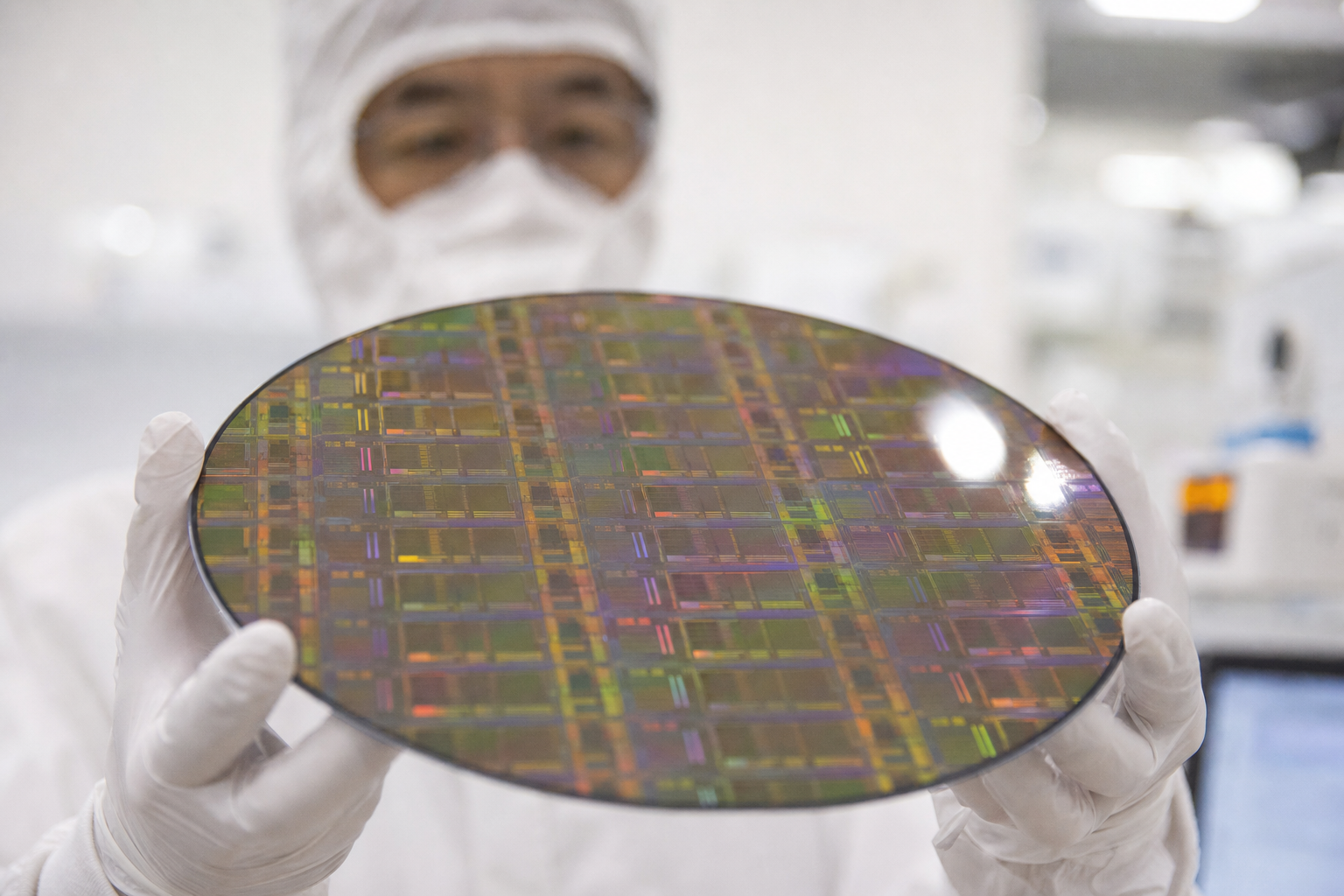
Trimble and Zeiss Group are useful comparables because they force the right question. Are you paying for a cyclical industrial recovery, or for a structural digitization story with defense exposure layered on top? Hexagon sits somewhere between those poles. It has enough industrial sensitivity to feel the cycle, and enough software and positioning exposure to avoid being just another hardware name. That combination is why the stock can trade on both earnings quality and end-market mix.
The peer lens also keeps the valuation conversation honest. Recent coverage has been mixed, but several target-price increases followed the July earnings release. Nordea raised its target to SEK 110 and reiterated buy, while SEB lifted its target to SEK 100.[^2] Consensus among roughly 15 covering firms sits near neutral, with average targets clustered around SEK 98 to 100.[^4] That is not a euphoric setup. It is a market that has accepted the quarter, respected the guidance, and still wants proof that the better growth can persist.
A single board buy can be noise. A CFO buy can be more telling, but still not decisive. A sequence that includes a board member, the CFO, and the general counsel is less easy to write off as coincidence. The cluster does not tell you the stock is cheap. It tells you that multiple senior figures have been willing to add while the shares sit around SEK 100, after a strong quarter and alongside a fresh target framework. That is a more specific read than the usual hand-waving around insider confidence.
Our scoring reflects that without overdoing it. The display score is 4, which is modest, and that is exactly how it should be treated. The filing is not large relative to the company, and the historical cohort data for ca/board buys at mega-cap names is mixed, with a 47.6 percent 90-day win rate and a -0.18 percent average return over that horizon. That is historical cohort data, not a forecast for Hexagon, and it should stay in that box. The longer 365-day average return in the same bucket is 67 percent, which tells you the bucket can work over time, but not that this trade will.
The stock around SEK 100 is the real test
A lot of insider coverage gets lazy at this point. A buy lands, the stock is near the purchase price, and the story gets reduced to a binary call. That is not enough here. Hexagon is a large, diversified industrial technology company with a recent quarter that showed real operating momentum, a new target framework that gives the market a fresh yardstick, and a peer set that keeps the valuation debate alive. The insider filing matters because it arrives in that exact setting, not because it exists in isolation.
The market has already had a chance to react. The stock held close to SEK 100 after the purchase and was recently quoted around SEK 101.10.^2 That tells you the market did not immediately reject the filing, but it also did not re-rate the name on the spot. Fair enough. One board buy does not change the business. A cluster of senior buys, a strong quarter, and a fresh target framework can keep the stock in the conversation, though, especially when the shares are already sitting near the level the insider paid.
The risk is that the better quarter gets treated as a new baseline before it has earned that status. Automotive, agriculture, and construction are still soft. The company has to keep converting strength in aerospace, defense, electronics, and general manufacturing into durable margin support. If that mix slips, the market will not care much that a board member bought at SEK 100. It will care about the next quarter.
For now, the more disciplined read is simple. Hexagon is showing operating improvement, management has put fresh targets on the table, and several insiders have bought into the name over a short period. That combination does not force a conclusion, but it does justify attention. The next clean checkpoint is the next operating update, where the market will see whether the Q2 momentum and the order intake commentary still hold up.^1
Why this filing matters more than a lone buy
The difference between a useful insider read and a noisy one is usually structure. Here, the structure is doing some work. The company is in a sector that has found support from defense and advanced manufacturing. The quarter was strong. The targets are explicit. The stock is near the insider's entry price. And the buying did not come from a single isolated name, but from a board member inside a broader sequence that also included the CFO and general counsel.
That is enough to keep the filing on the radar without pretending it is a thesis by itself. Hexagon is still a large-cap industrial technology story with a mixed end-market backdrop, and the market is still asking whether the recent strength can persist. The insider cluster says senior figures are willing to own that question at around SEK 100. The business update says there is at least some evidence for them to lean on. The peer set says the market is not giving away the stock.
If you want the practical next step, it is not to chase the filing. It is to watch whether the next set of numbers confirms the Q2 pattern, especially the order intake in the higher-priority end markets and the margin path toward the new target range. That is where this name will be judged, and that is where the insider buys will either look timely or merely well-timed.
Sources and further reading
- Marketscreenerpress
- Dipress
- Ad-hoc-newspress
- Insidersalphapress
- Marketscreenerpress
- Groundpress
- Ad-hoc-newspress
- Marketscreenerpress
This is not investment advice.