
Gold miners are still trading the metal, not the memo
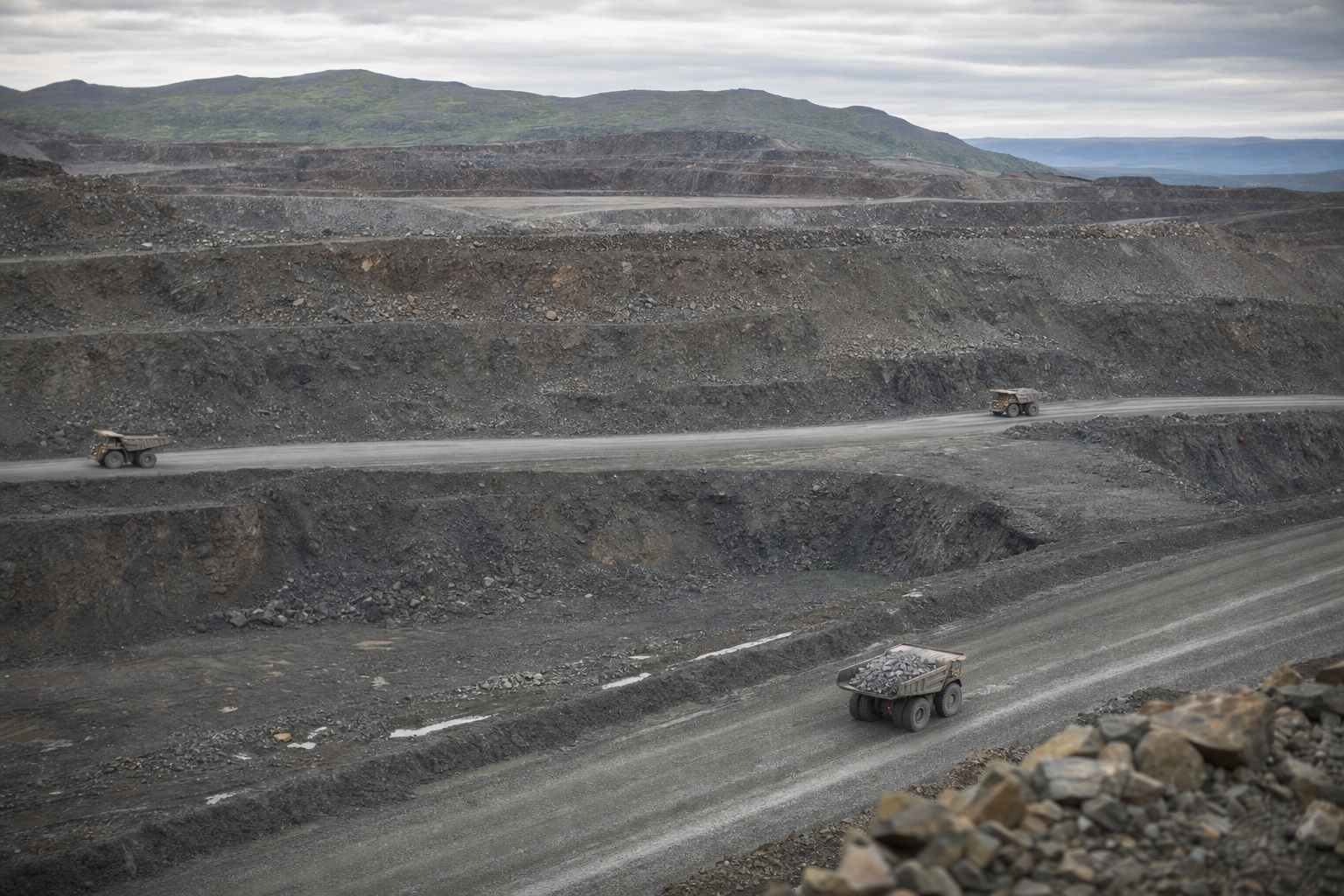
Gold producers do not get to ignore the metal price, and Alamos Gold does not get to pretend otherwise. Bullion traded near USD 4,000 to 4,038 per ounce in mid-July after peaking above USD 5,500 intraday in January 2026, a swing that has changed the mood around the whole group. The market has been leaning on tighter U.S. monetary policy expectations and persistent inflation, even as central bank buying and geopolitical demand still sit underneath the long-term case for gold.
That is the backdrop for Alamos Gold Inc., a mid-tier Canadian producer with Island Gold and Young-Davidson in the mix. The stock has not escaped the pressure. It recently closed around CAD 39.62 on the TSX and USD 28.26 on the NYSE, roughly 26% lower year to date. Newmont and Barrick Gold have more scale and more geographic spread, while Agnico Eagle Mines gives you a closer Canadian peer with a growth tilt. Alamos sits in the middle, which is often where the market gets picky. You do not get the diversification premium of the giants, and you do not get the pure optionality of a smaller developer. You get operating execution, grade, and guidance, and the market prices those details quickly.
July 20 was not one buy, it was a line of them
The filing cluster is the hook, and it is a real one. On July 20, 2026, Christopher John Bostwick bought shares valued at approximately EUR 1,282, according to the filing aggregated on ceo.ca. The same day, Colin Webster bought EUR 2,122, Rebecca Thompson bought EUR 2,588, and Grace Tang bought EUR 2,510. Those are euro-normalised filing values, not local share prices, and they are small in absolute terms. They are also not isolated.
Insiders Trades data shows the July 20 prints as part of a wider pattern, with 10 insiders trading the name in the same direction over the past quarter. That matters more than the individual ticket sizes. A lone director nibbling a few thousand euros can be noise. A cluster across multiple senior officers and directors is harder to dismiss because it says several people chose the same side at the same time, after the stock had already been under pressure. Bostwick is listed as a senior officer of the issuer, and the other July 20 buyers were senior officers as well. Earlier in 2026, Greg Fisher and John McCluskey also bought in June, which gives the July activity some context rather than leaving it as a one-day curiosity.
The market does not need to infer much from the size. These are negligible fractions of a company with a market value around EUR 10.36bn. Our scoring rewards this kind of configuration, a wide cluster in the same direction, but the score is only one thread. The more useful point is simpler. Management and directors were buying while the stock was already down hard and while the sector backdrop was still messy. That is the kind of timing you pay attention to, even if you do not overread it.
Why Alamos matters more than a generic gold name
Alamos is not a story stock. It is a producer with operating assets, guidance, and a schedule. That means the shares move on a mix of bullion, grade, costs, and execution, not on a single headline. The company has highlighted ramp-up potential at higher-grade assets, but it also trimmed 2026 output guidance earlier in the year after setbacks at one site. That is the sort of detail the market remembers. A miner can have a good long-term asset base and still get punished if one operation slips or if the ramp takes longer than promised.
The company’s second-quarter 2026 results are due after the close on July 29, with a conference call on July 30. That is the next real test. If the quarter shows the ramp is progressing and the guidance cut was a one-off, the stock has room to recover some of the lost ground. If the quarter shows more friction, the July buying cluster will look more like a vote of confidence in the franchise than a near-term trading signal. Those are different things. The market cares which one it is.
Insiders Trades data puts the company in a strong fundamental bucket as well, with a score of 70, quality at 88, and a value mark of 53. I would not turn that into a thesis by itself. I would treat it as a screen that says the business is not broken, even if the share price has been acting as though the sector is. That distinction matters when you are reading insider buying at a producer. People do not usually buy because the chart looks pretty. They buy when they think the business can absorb the noise.
The cohort read is decent, and still just a cohort read
Insiders Trades data for the relevant bucket, director-level buys at large-cap names, shows a 90-day win rate of 55.4% and an average 90-day return of 3.22%, with a 365-day average return of 55.46% across 3,956 observations. That is the historical backdrop, not a forecast for Alamos and not a promise that July 20 will work out. It does tell you that this kind of filing pattern has not been useless in the past. It has been mildly positive over three months, and much stronger over a year, in the bucket we track.
The caveat is obvious but worth keeping in frame. A cohort average is a blunt instrument. It does not know whether the insider bought after a guidance cut, before a production beat, or into a falling gold price. It does not know whether the company is about to print a clean quarter or a messy one. It only tells you what happened, on average, when similar insiders bought similar names. That is useful because it keeps you from treating every buy as a revelation. It is also useful because it stops you from dismissing clusters just because the ticket sizes are small.
The strategy framework behind the bucket is built around a 90-day holding window, with a maximum position size of 0.08. The point-in-time backtest headline sits at 1.17, 12.5% (STOXX Europe 600 on the same dates: 9.3%), and (figure withdrawn, see audit 231) on the restricted EU venue universe, with the usual caveats about search-aware deflation and a short, single-regime window. I am not going to pretend those tokens are a prophecy. They are a framework check, and that is all they should be.
What the peers are telling you about the sector mood
The peer set helps because Alamos is not being judged in a vacuum. Newmont and Barrick Gold have the scale to absorb more moving parts, more jurisdictions, and more balance-sheet complexity. Agnico Eagle Mines is the cleaner Canadian comparison, because it shares more of the growth-and-quality framing that investors often apply to Alamos. When the market gets nervous about bullion, the larger names can sometimes look safer simply because they are larger. When the market wants growth with a Canadian operating base, Agnico tends to get the cleaner premium. Alamos has to earn its multiple through execution.
That is why the July 20 cluster is interesting in context. The insiders were buying into a period when gold equities had already underperformed the broader TSX year to date. The sector was not offering easy momentum. The gold price had pulled back from the January spike. Analysts were also sending mixed messages, with Scotiabank upgrading Alamos to CAD 80 from CAD 60 on July 14, while earlier June cuts from RBC, BofA, and Jefferies pointed the other way. That is a noisy tape, and the stock has been living inside that noise.
The market is not asking whether gold is dead. It is asking whether the current price of gold, the current cost structure, and the current production path justify owning this miner now. That is a narrower question, and a more useful one. Alamos has enough operating quality to stay on the screen, but not enough insulation to ignore a weak bullion backdrop. The insider cluster says the board and management are willing to buy through that tension. The next quarter will tell you whether they bought early or merely bought into a name they know well.
July 29 is the real checkpoint
The calendar matters because the next catalyst is close. Alamos reports second-quarter 2026 results after market close on July 29, then holds its conference call on July 30. That is where the market will look for confirmation on the ramp-up story, the effect of the earlier guidance cut, and whether the company is still on track to turn higher-grade assets into better cash generation. If the quarter is clean, the July 20 buying cluster will look better in hindsight. If it is not, the filings will still matter, but mostly as evidence that insiders were willing to lean in before the numbers were public.
You should also keep the scale of the buying in perspective. EUR 1,282, EUR 2,122, EUR 2,588, and EUR 2,510 are not heroic amounts for a company of this size. They are not balance-sheet moves. They are not a capital-allocation overhaul. They are small, repeated, same-day purchases by senior people inside a company that has been under pressure. That is enough to merit attention, not enough to force a conclusion.
Insiders Trades data gives the name a decent fundamental backdrop, and the cluster picture is real, with 10 distinct insiders trading in the same direction over the past quarter and 12 recent declarations in the cluster set. That is the sort of pattern you want to see if you are looking for alignment rather than one-off theater. Still, the stock will trade on ounces, grades, costs, and gold. The filings only tell you that some of the people who know the business best were willing to buy while the market was still looking at the drawdown.
What would make this read stronger, or wrong
The bullish case gets stronger if the July 29 print shows the earlier guidance trim was contained, if the ramp at the higher-grade assets is visible in the numbers, and if bullion stops sliding. A better gold tape would help, but the company still has to execute. If the quarter disappoints, the insider cluster does not vanish. It just becomes a data point that says management and directors were willing to buy before the market had the full picture. That is useful, but it is not the same as being right.
The bearish case is straightforward. Gold stays soft, the quarter shows more operational friction, and the stock keeps drifting while the market prefers larger or cleaner peers. In that version, the July 20 buys look like confidence in the long-term asset base rather than a near-term call. That is not nothing. It is also not enough to carry the shares on its own.
For now, the most honest read is that Alamos sits at the intersection of a weaker gold backdrop, a still-credible operating franchise, and a meaningful insider buying cluster. The filings do not solve the trade. They do tell you where some of the informed money inside the company chose to stand before the next results date. The market gets that answer on July 29, when the quarter lands after the close.
Dig deeper: Bostwick, Christopher John's filing track record.
Sources and further reading
- The Globe and Mailpress
- Alamosgoldpress
- Yahoo Financepress
- MarketBeatpress
- Simply Wall Stpress
- Alamosgoldpress
- StockTitanpress
- Wallstreetzenpress
This is not investment advice.