
The filing, first and plain
Gregory S. Fisher bought Alamos Gold Inc. on June 25, 2026, for approximately EUR 54,205, and Insiders Trades data tags the transaction as part of a buying cluster. That is the event. The stock closed that same day at $31.11 on the NYSE, up $1.01, or 3.36%, from the prior session, after trading between $30.36 and $31.30 on volume of about 5.57 million shares, according to the market data cited in the brief. The filing came after a rougher company update on June 18, when Alamos cut Q2 2026 production guidance to 130,000 to 135,000 ounces, about 12% below prior expectations, because of seismic events and power outages at Young-Davidson.
That sequence is the part to sit with. The company had just told the market that one of its mines had stumbled, and then an insider stepped in as part of a broader buying wave. You do not need to romanticize that. You do need to read it as management and directors putting money into the name while the tape was still digesting an operational miss. Insider filings do not rescue a quarter, and they do not erase mine disruption. They do, however, tell you where the people closest to the business were willing to lean when the market had a fresh reason to doubt the story.
Why this filing scored 48
Insiders Trades data gives the trade a score of 48. That is not a hero number, and it is not supposed to be. The score rationale is straightforward: it was filed by an operating director, it sits inside a wide cluster, and the euro-normalised filing value was near EUR 54,205. Those are the drivers. The cluster element is the one that matters most in our framework, because a single buy can be noise, a cluster is harder to dismiss. When 12 insiders trade the same name in the same direction over the past quarter, the pattern earns attention. That is exactly the configuration our scoring rewards most.
The role matters too. Fisher is listed as a senior officer of the issuer in the signal data, and the dossier also frames the cohort bucket as Directeur · Unknown. That is a useful reminder that the signal is not coming from a random account or a one-off board observer. It is coming from someone inside the governance and operating orbit of the company. Still, the score is 48, not 80. That restraint is healthy. The filing is meaningful because it arrives in a cluster and after a company setback, not because the euro value is enormous or because one insider has suddenly become a market oracle.
The size of the buy is enough to register but not enough to overpower the rest of the picture. EUR 54,205 is real money, but it is not a balance-sheet event. The right read is narrower. This is a management cohort putting capital to work while the market is focused on a near-term operational miss. That can be conviction. It can also be routine support for the stock after a drawdown. The data does not let you pretend otherwise.
What Alamos was dealing with when the buy hit
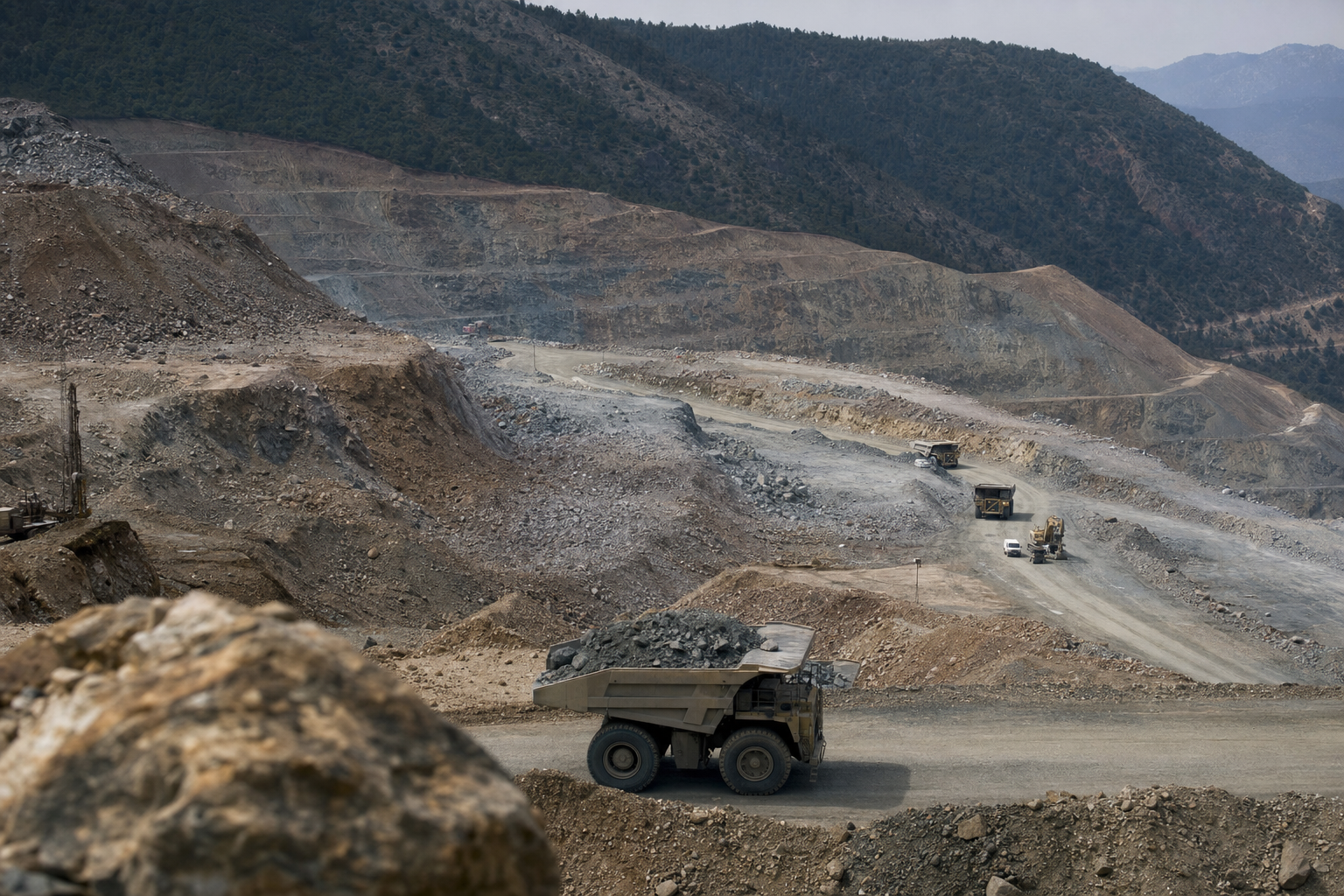
The company backdrop is not subtle. On June 18, 2026, Alamos said Q2 2026 production guidance would come in at 130,000 to 135,000 ounces, about 12% below prior expectations, because seismic events and power outages hit Young-Davidson. That is the sort of update that forces the market to reprice near-term execution risk, even if the long-term asset base remains intact. The filing from Fisher came one week later, so the buy did not happen in a vacuum. It happened after the business had already admitted a setback.
That timing is why the trade deserves more than a lazy “insiders are bullish” label. If you are weighing this name, the question is not whether a director likes the stock in the abstract. It is whether the people closest to the company thought the market had overdone the penalty for a mine-specific disruption. The cluster suggests more than one insider was willing to make that bet. The June 25 buy sits alongside earlier June purchases by CEO and Director John McCluskey, including 1,000 shares on June 8 at a maximum price of $34.09 for US$34,086, and 2,000 shares on June 4 at a maximum price of $35.63 for US$71,269, according to the ownership data cited in the brief.
That matters because it shows the June 25 trade was not a lone gesture. It was the latest print in a sequence. The market had already had a chance to digest the operational cut, and insiders were still buying. That is the cleanest part of the read. It does not tell you the stock cannot go lower. It tells you the internal bid did not disappear when the company had to lower the quarter.
The tape was firmer than the news flow
The market backdrop on June 25 was better than the company headline flow. Alamos closed at $31.11, up 3.36% on the day, after an intraday range of $30.36 to $31.30 and volume of roughly 5.57 million shares. That is a decent session for a stock digesting an operational disappointment. It suggests the market was not in full panic mode by the time Fisher filed. The stock had some support, and the insider buy landed into that support rather than into a collapsing tape.
That distinction matters. Insiders buying into a falling knife and insiders buying into a stabilizing stock are not the same signal. The former can be bravado, the latter can be a quiet vote that the market has already discounted the damage. Here, the stock was up on the day, and the filing arrived after the company had already reset expectations. That combination usually pushes a reader away from theatrical interpretations and toward a more practical one. The insiders may have thought the market had become too impatient with a temporary operational problem. Or they may simply have been using a weak patch to add exposure. Either way, the trade fits a pattern of support rather than desperation.
You should also keep the scale in mind. A 3.36% daily move is not a verdict, and 5.57 million shares of volume is not a referendum. It is a tape that was active enough to absorb news and still finish green. That makes the insider cluster more interesting, not less. The buy did not need to fight a rout. It had a market that was already trying to steady itself.
What our cohort data says, and what it does not say

Insiders Trades cohort data for the bucket Directeur · Unknown shows a 90-day sample size of 6,853, with a win rate of 35.9% and an average return of negative 1.06% over 90 days. The 365-day average return is 19.24%. Keep the labels straight. This is historical cohort data for a role-and-size bucket, not a forecast for Alamos Gold and not a promise that Fisher’s buy will work. It is a map of how similar filings have behaved on average, not a guarantee about this name.
The 90-day number is the one that should temper enthusiasm. A 35.9% win rate is not strong, and a negative 1.06% average return says that, in this bucket, the short-horizon edge has been weak. That is exactly why we do not sell insider buying as a magic trick. The market often takes time to digest operational issues, and insider buys can arrive before the pain is over. If you are looking for a clean, immediate signal, the cohort data does not give you one. It gives you a mixed record with a slightly negative short-term average.
The 365-day figure is better, but it is still just a historical average. It tells you that patience has mattered more than speed in this bucket. That fits the kind of trade you are looking at here. A director buying after a guidance cut is not usually a one-week trade. It is a longer read on whether the business can work through the disruption. The cohort data does not bless that thesis. It simply says the short-term path has often been choppy, and the longer window has historically been more forgiving.
The cluster is the real signal here
Insiders Trades data says this was part of a wide cluster, with 12 distinct insiders trading the same name in the same direction over the past quarter. That is the configuration our scoring rewards most, and for good reason. A cluster is harder to wave away than a single purchase because it reduces the odds that one person is acting on a personal preference, a calendar quirk, or a one-off compensation event. When multiple insiders buy within a short window, the market gets a cleaner read on internal alignment.
The recent declarations listed in the dossier show how concentrated that pattern has been. Fisher bought on June 25. Monique Mercier bought on June 18. John Robert Stobo Prichard bought on June 18. Colin Webster bought on June 16. Rebecca Thompson bought on June 16. Grace Tang bought on June 16. That is a sequence, not a solitary print. The earlier purchases by John McCluskey on June 8 and June 4 add to the same picture. Even without every individual size and price in front of us, the direction is clear. The board and senior officer group was buying through June.
That does not mean every insider had the same view or the same reason. It does mean the company was not sending mixed signals through its filings. If anything, the filings suggest a shared willingness to own the stock after the operational update. That is the part the market should respect. Clusters are not perfect, but they are the closest thing insider data has to a consensus vote. On this name, the vote was on the buy side.
What is missing from the fundamental picture
The dossier does not include a fundamental health screen for Alamos Gold, so there is no transparent pillar-by-pillar read to lean on here. That absence matters. It means the insider signal has to stand on its own against the operational update and the market tape, without the help of a proprietary fundamentals overlay. In other words, you should not smuggle in a thesis that the company is cheap, high quality, or structurally improving unless you have that evidence elsewhere. We do not in this brief, so we do not say it.
That leaves the trade where it belongs, in the intersection of governance behavior and near-term execution stress. The operational issue at Young-Davidson is real. The market reaction was manageable, not catastrophic. The insiders bought anyway. That is enough to build a watchlist case, not enough to build a full investment case. If you are already long the name, the cluster may help you tolerate the noise. If you are not, it should not force you in. The filing is a data point, not a mandate.
The lack of a fundamental dossier also keeps the read honest. Some insider stories are backed by a clean screen on margins, balance sheet, or cash generation. This is not one of those stories in the material you gave me. So the article should not pretend otherwise. The only defensible conclusion is narrower: management and directors were willing buyers after a guidance cut, and the market had not yet broken the stock. That is a useful setup, but it is still a setup, not a conclusion.
Risks, caveats, and what to watch next
The obvious risk is that Young-Davidson’s issues are not one-off noise. Seismic events and power outages can be temporary, but they can also expose operational fragility that takes longer to repair than the market wants to admit. If the next update shows the disruption was deeper than the June 18 guidance cut implied, the insider cluster will look early rather than prescient. That happens. Insider buying is a signal, not a shield.
The second risk is that the cluster may reflect support for the stock rather than a hard view on near-term fundamentals. Those are different things. A board can buy because it thinks the market has overreacted, because it wants to show confidence, or because it sees value over a longer horizon. The filings do not tell you which motive dominates. They only tell you where the money went. That is useful, but not enough to build a thesis on its own.
For what to watch, start with the next operational update and any further commentary on Young-Davidson recovery timing. Then watch whether the buying cluster broadens or stops. If more insiders file buys after the June 25 transaction, the pattern gets stronger. If the cluster ends there and the company keeps missing, the signal fades quickly. Also watch how the stock behaves around the $30 to $31 area, because the June 25 close showed the market was willing to hold the name there even after the guidance cut. That is the level where the tape and the filings meet.
Bottom line on the read
Gregory S. Fisher bought about EUR 54,205 of Alamos Gold on June 25, 2026, and he did it inside a wider buying cluster. That is the core fact. The stock had already absorbed a June 18 production warning tied to Young-Davidson, and the market still closed higher on the day of the filing. Insiders Trades data gives the trade a 48 score because the cluster is real, the filer is an operating director, and the filing size is meaningful enough to matter.
The historical cohort data is the brake pedal. For the Directeur · Unknown bucket, the 90-day win rate is 35.9% and the average return is negative 1.06%, while the 365-day average return is 19.24%. That is not a forecast. It is a reminder that short-horizon insider signals can be messy, especially when they arrive after an operational miss. The cluster gives the filing weight. The cohort data keeps you from overreading it.
If you are following Alamos, this is the kind of insider pattern that deserves attention, not applause. The people closest to the business were buying after a setback. That is worth knowing. It is not enough, by itself, to make the stock a buy.
Sources and further reading
- finance.yahoo.compress
- macrotrends.netpress
- marketwatch.compress
- insidearbitrage.compress
- cnn.compress
- simplywall.stpress
- theglobeandmail.compress
- finance.yahoo.compress
This is not investment advice.