
AI servers, storage share, and the stock that keeps re-rating
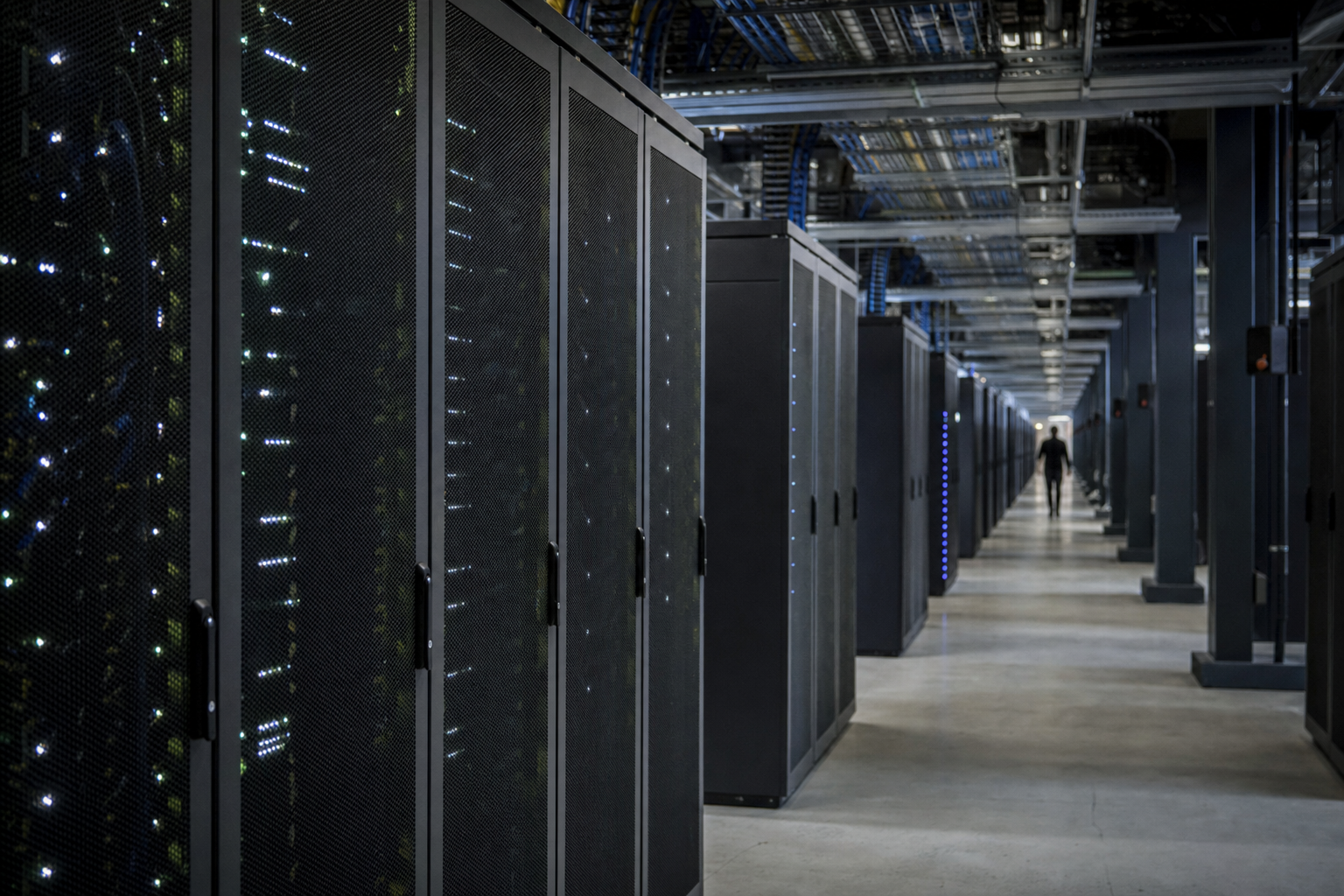
Dell’s business model is simple to describe and hard to execute well. It sells servers, storage, PCs, and the services that sit around them, but the stock has increasingly traded on the part of the business that feeds AI buildouts. When data center buyers are spending, Dell gets pulled into the center of the conversation because it can ship the boxes, the storage, and the attached infrastructure at scale. That is the mechanism. The stock has been re-rating on that mechanism for months, and the July insider sales arrived after the market had already done a lot of the work.
The company itself has been leaning into that story. Dell said it finished the first quarter of 2026 as the top enterprise storage vendor with 31.2% market share and 40.8% year-over-year growth, a clean reminder that this is not just a PC name wearing an AI badge. The market has also been willing to pay for the AI server angle because capital spending on data center equipment has stayed firm, and the broader tech tape has been supportive through the first half of 2026. Dell is not trading in a vacuum. It is trading in a sector where buyers keep rewarding anything that looks attached to AI infrastructure.
The July selling cluster is the point, not the lone form 4
The latest filing came from Radakovich Lynn Vojvodich, a director, who sold 2,022 shares of Class C common stock on July 22, 2026 at $413.77 per share. The filing value was about EUR 733,652, euro-normalised at ingest, and the sale was made pursuant to a Rule 10b5-1 trading plan adopted in March 2026. That detail matters because it tells you the trade was pre-scheduled. It also does not make the sale meaningless. A planned sale is still a sale, and it still lands in the market at a specific price, in a specific week, after a specific run.
The bigger read comes from the cluster around it. July already included multiple sales by Silver Lake-affiliated entities, including a roughly $29.9 million sale of 72,766 shares on July 6 at an average price of $410.52. Insiders Trades data flags this as a cluster, with 4 distinct insiders and 12 recent declarations. That is the shape you care about. One director sale can be noise. A run of sales from affiliated holders and a director, all in the same month, is a different message. Not a verdict. A message.
Dell’s own market value puts the filing in scale. The company’s market cap in the dossier is EUR 249.3bn, so the director sale is a negligible fraction of the business, under 0.01% by our scoring inputs. That is why you do not overread the size. You do, however, read the timing against a stock that closed at $437.50 on July 24 after trading as high as roughly $454 earlier in the week. Selling into strength is not a crime. It is also not the same thing as buying weakness.
Why Dell still trades like an AI infrastructure proxy
Dell’s stock has been helped by the same force that has lifted a long list of hardware and infrastructure names, namely the market’s willingness to keep funding AI buildouts. The company has been able to position itself as a beneficiary of enterprise and hyperscale spending, and that matters because the revenue mix is not just about one product cycle. Servers and storage can carry more weight when buyers are refreshing racks for AI workloads, and Dell has been explicit about its storage leadership while the market has been willing to pay for the AI server angle.
Peer behavior helps frame the trade. Super Micro has been the more explosive name, with a reported record $60 billion backlog and margin guidance that has kept the market focused on the scale of AI server demand. Hewlett Packard Enterprise, by contrast, has taken a more cautious stance in parts of the business and has pursued job reductions. Dell sits between those poles. It has the scale and the installed base, but it is not being valued like a sleepy legacy hardware vendor. It is being valued like a company with a credible claim on the AI capex cycle.
That is why the stock can absorb a lot of good news and still stay bid. The market is not just buying a quarter. It is buying a position in the infrastructure stack. Dell’s storage share data, its server footprint, and the repeated analyst upgrades all feed the same narrative. Citi, Evercore ISI, and Bernstein have all been constructive in recent weeks, according to the cited market coverage, and that matters because the sell-side is not usually this willing to lean in unless the demand picture still looks live.
Director-level buying cohorts and the limits of the signal
Insiders Trades data for the bucket that most closely matches this kind of trade, director-level buys at mega-cap names, shows a 54.5% 90-day win rate and a 2.95% average return over 90 days across 2,827 observations. The 365-day average return in that bucket is 52.21%. That is useful context, but only if you keep your head straight about what it is. It is historical cohort data. It is not a forecast for Dell. It does not tell you what this director sale will do to the stock next week, next month, or next quarter.
The internal score rationale here is also straightforward. The filing was by an operating director, it came as part of an insider cluster, it was sized at a negligible fraction of market value, and the euro-normalised filing value was near EUR 733,652. That is enough to make the trade worth reading, not enough to make it the whole story. Our scoring is a filter for attention, not a substitute for the business case. Dell’s business case is still the AI infrastructure cycle, the storage share, and the market’s willingness to keep capital flowing into data center hardware.
The strategy frame in the dossier is built around a 90-day holding window and a maximum position size of 0.08%. The point-in-time backtest headline remains 1.17, 12.5% (STOXX Europe 600 on the same dates: 9.3%), and (figure withdrawn, see audit 231), with the usual caveat that those figures live on a restricted EU venue universe and do not survive search-aware deflation. That is a screen, not a promise. You should treat it that way and move on to the actual company, which in this case is a large, liquid name with a real operating story and a filing pattern that deserves more than a shrug.
The stock price did the heavy lifting before the filing hit
Dell closed at $437.50 on July 24, after a week that included a high near $454. That matters because the filing did not arrive in a vacuum. It arrived after the stock had already moved hard enough to make a sale look rational on its face. If you are trying to separate signal from routine portfolio management, price context is the first thing you check. A director selling after a sharp run is not the same as a director selling into a drawdown.
The market backdrop has been friendly to the trade, and that is part of the tension. Technology equities have been a meaningful contributor to the S&P 500’s first-half gains in 2026, and Dell has benefited from the same appetite for AI-linked infrastructure names. When the sector is hot, insider sales can be easier to dismiss. That would be lazy here. The better read is that the stock has already been rewarded for the AI story, and insiders, including affiliated holders, have been taking some money off the table while the market still pays up.
The fact that the latest sale was made under a March 2026 10b5-1 plan keeps you honest. It means the trade was prearranged, not a spur-of-the-moment reaction to a chart. But the plan does not erase the cluster. It does not erase the fact that Silver Lake-linked entities were also selling earlier in July. And it does not erase the broader pattern that the stock has been strong enough to let insiders monetize at levels above $400 a share.
The read on Dell's July insider activity and the market backdrop
Dell’s fundamental score in the dossier is 39, with a rank of 18,988 out of 27,387. That is not a pristine fundamental backdrop. It is a mixed one. The company has real business momentum in AI infrastructure and storage, but the broader quality screen is not screaming perfection. That is exactly the kind of setup where insider sales can be read in two directions. Bulls can say the business is strong enough to support monetization. Bears can say the stock has run ahead of the fundamentals. Both can be true at once.
The useful part of the filing is not that it predicts a collapse. It is that it tells you who is taking chips off the table, when, and in what size. A director-level sale of 2,022 shares is not a balance-sheet event. The Silver Lake-linked sales earlier in the month were much larger, and that is the more important institutional signal. Together they tell you that the ownership base is willing to sell into strength while the market still treats Dell as an AI infrastructure winner.
That is where the setup gets interesting. If AI server demand keeps running, Dell can keep leaning on the same narrative that has supported the stock so far. If the capex cycle cools, the market will stop paying as much for the story, and the insider sales will look better timed in hindsight. You do not need to guess which one happens next to see why the filing matters. You only need to notice that the people with the cleanest view of the stock’s liquidity have been active sellers in July.
What to watch after the July cluster
The next thing to watch is not another headline about insider activity. It is whether Dell can keep converting AI demand into storage and server revenue at the pace the market has already priced in. The company’s first-quarter storage share and growth figures gave bulls a concrete talking point, and the analyst support has kept the stock in the conversation with the more aggressive AI hardware names. If that operating momentum stays intact, the July sales will remain a footnote to a stronger business story.
If the stock keeps hovering near the recent highs, the market will have to decide whether it wants to keep paying for the AI infrastructure trade at this level. That is where the insider cluster stays relevant. It does not tell you the next quarter’s revenue. It does tell you that a director and affiliated sellers chose this window to reduce exposure after a strong run. For a mega-cap name with a EUR 249.3bn market value, that is not a panic signal. It is a reminder that even the strongest AI-linked hardware names can become crowded on the way up.
Dell still has the cleaner business model of a scaled infrastructure vendor, not a one-product story. That gives it more ways to hold up if the AI cycle stays hot. It also means the stock can stay expensive longer than skeptics expect. The July filings do not change that. They simply tell you that some holders preferred to sell into the strength rather than wait for the next round of good news, and the next hard data point will be whether the company can keep backing up the AI narrative with orders, shipments, and margins in the quarters ahead.
Dig deeper: Dell Technologies Inc.'s full insider filing history.
Sources and further reading
- InsiderScreenerpress
- Secform4press
- Yahoo Financepress
- Levelfieldspress
- StockTitanpress
- Dellpress
- Quiver Quantitativepress
- Investing.compress
This is not investment advice.