
Nordic telecom still trades on cash, not slogans
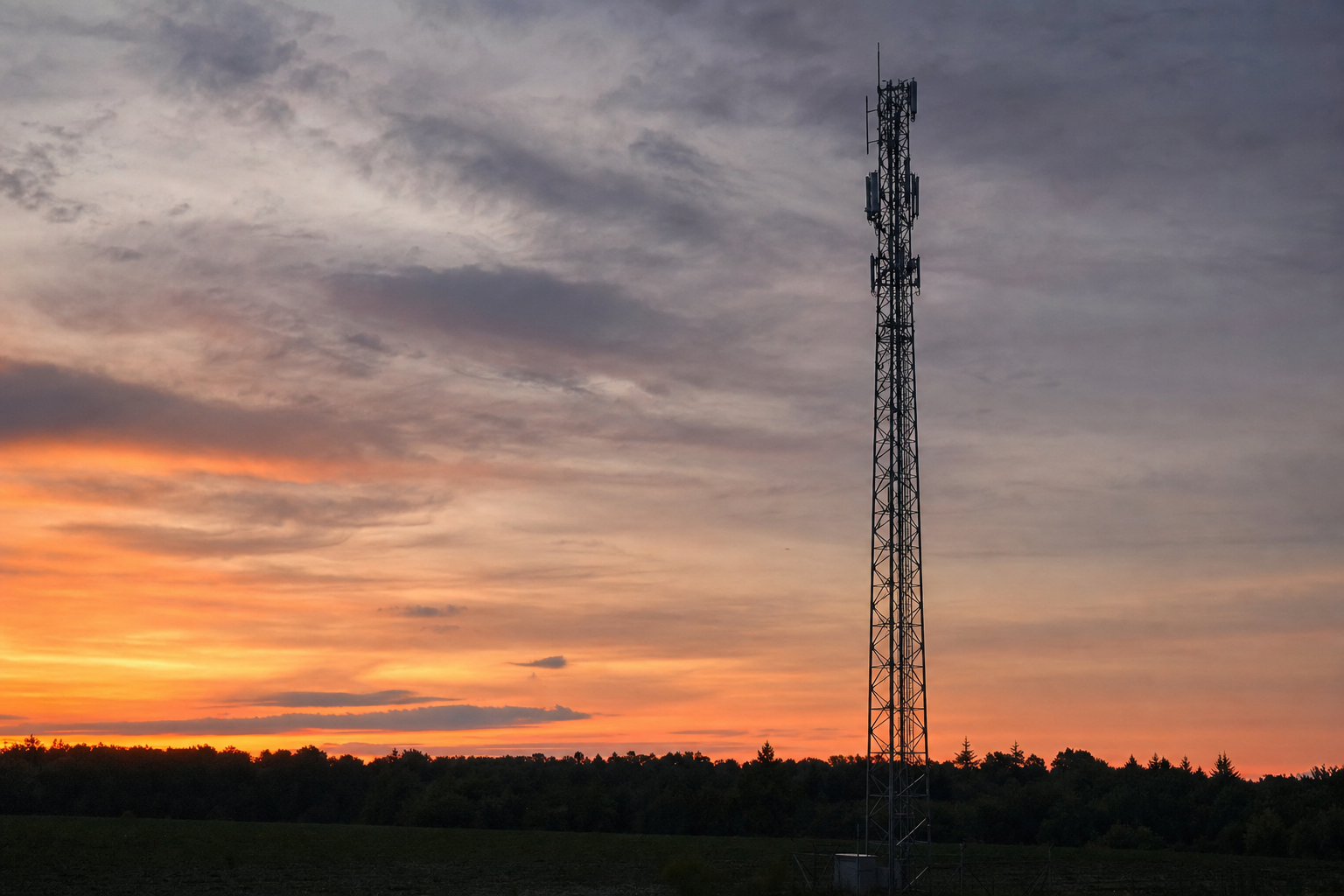
Tele2 AB sits in a part of the market where the story is usually dull until it is not. You do not buy a Nordic telecom name for a grand narrative. You buy it for service revenue that holds up, EBITDA that does not leak, and a balance between price discipline and customer churn that can survive another quarter of mature-market competition. The second-quarter print mattered more than the filing mechanics. Tele2 said on July 16 that end-user service revenue reached SEK 5.6 billion, up 2% organically year over year, total revenue came in at SEK 7.4 billion, also up 2% organically, and underlying EBITDAaL was SEK 3.0 billion, up 4% organically, helped by cost control across operations.[^tele2q2]
The stock has been trading like a mature telecom should, not like a growth story. Tele2 closed at SEK 163.50 on July 24, up 1.27% on the day, and recent trading has sat in a SEK 157 to 168 range.[^investing] That matters because in this sector the market usually gives you one of two things, a rerating when margins prove sticky, or a shrug when the numbers merely confirm the business is still intact. Tele2's quarter was closer to the first than the second.
Tele2's latest results were not flashy, and that is the point. End-user service revenue grew 2% organically, total revenue grew 2% organically, and underlying EBITDAaL grew 4% organically.[^tele2q2] In a market where mature telecom operators are still fighting pricing pressure, that is a decent outcome. It says the company is not relying on one-off noise to keep the P&L moving. It is leaning on the ordinary machinery of telecom, customer retention, cost discipline, and enough pricing power to keep the margin line from slipping.
The peer backdrop matters too. Nordic telecom has been steady rather than exciting, with stable EBITDA margins near 35% to 40% and ongoing pricing pressure in mature markets.[^morningstar] Telia has looked the most consistent on service revenue, while Telenor has pushed cash-flow improvement, and Elisa has kept its focus on enterprise and value segments across overlapping Baltic markets.[^competitors] Tele2 competes on price and simplicity in Sweden and the Baltics, which is a sensible position until it becomes a race to the bottom. So far, the company has avoided that trap well enough to keep the quarter respectable.
The market has not been generous to the sector, but it has been selective. Broader European telecom performance has been steady, with limited exposure to the AI-driven capex story that has pulled capital toward U.S. and Asian names.[^grounded] That leaves Nordic operators in a narrower lane. They are judged on cash generation, not on optionality. Tele2's quarter fit that frame. It did not need a heroic growth number. It needed to show that the business can still compound modestly while holding the line on costs. It did.
The filing that hit the Swedish Financial Supervisory Authority's market search portal on July 24 involved Thomas Reynaud, Tele2's chairman.[^fi] The reported activity included multiple entries, among them a disposition of 30,000,000 units in a Total Return Swap at SEK 180.45, related acquisitions and share-class exchanges of 2,660,000 Class A and Class B shares, and smaller swap positions.[^fi] The euro-normalised filing value was about EUR 486 million. That is not a rounding error. It is a very large line item for a board-level filing, and it is large enough to force a reader to ask what kind of exposure is being adjusted here.
InsiderTrades data scores the filing at 10.3, and the reason is plain enough. The reported value is about 4.84% of Tele2's market value, which is a meaningful slice for a single insider package. The score is not the story by itself, but it does tell you this was not a token administrative filing. It was sized. It was deliberate. And because the filing is tied to the chairman rather than a cluster of operating executives, the read is more about governance and exposure than about a sudden change in day-to-day trading conditions.
The structure matters too. This was not a cluster. InsiderTrades data shows one distinct insider, eight recent declarations, and the July 24 package included both BUY and SELL entries as well as OTHER entries for the same insider.[^dossier] That makes the filing harder to flatten into a simple bullish or bearish headline. A board-level package with swaps, share-class exchanges, and a large disposition can reflect portfolio mechanics, ownership structure, or compensation-related adjustments. It can also reflect a view on valuation. The filing alone does not tell you which. It does tell you the chairman was active around a position that is large relative to the company.

Tele2's share price matters here because the filing landed while the stock was already in a fairly tight band. The shares closed at SEK 163.50 on July 24, with recent trading between SEK 157 and 168.[^investing] That is not a panic tape. It is a range that says the market has already done some work on the name. In that kind of setup, a large chairman filing does not need to trigger a dramatic reaction to be relevant. It can simply reinforce the idea that the stock is being actively managed around a level where the market has some opinion about fair value.
The peer comparison sharpens that point. Telia has been carrying a premium position on the back of more consistent service-revenue trends, while Telenor has leaned into cash flow and Elisa has kept its Baltic and enterprise mix in focus.[^morningstar][^competitors] Tele2 sits in the same broad family, but the stock is still judged on whether it can keep translating operational discipline into a cleaner equity story. The July 16 quarter helped. The July 24 filing complicated the picture, but in a useful way. It reminded you that the stock is not just a quarterly earnings machine. It is also a governance and ownership story, and those two layers can matter more in telecom than in sectors where growth does the heavy lifting.
The market backdrop is not giving this name much help from the macro side. July 2026 was still a month of sector rotation and policy expectations, with no obvious index shock tied directly to the filing date in the sources at hand.[^grounded] Tele2's year-to-date performance trailed the OMX Stockholm 30 Index slightly on a total-return basis.[^yahoo] That is the sort of relative underperformance that can make a large insider filing feel more important than it would in a hot tape. If the stock were ripping, the market might dismiss it as noise. In a slower name, it gets more attention.
InsiderTrades data puts this filing into the bucket of board buys at large-cap names, and the historical cohort for that bucket has a sample size of 2,857, a 90-day win rate of 52.3%, an average 90-day return of 2.56%, and an average 365-day return of 45.23%.[^dossier] That is useful context, but only as context. It is historical cohort data, not a promise. It tells you that similar board-level activity has, on average, been followed by modest positive 90-day performance. It does not tell you that Tele2 will do the same. The mean can be flat or negative in other buckets, and even here the distribution matters more than the average if you are trying to trade around a single filing.
The better use of the cohort is to keep you honest about scale. A chairman filing of this size is not the same thing as a small director purchase after a weak day. It is a different class of event. The market may still ignore it if the business deteriorates, and it may still reward it if the quarter keeps improving. But the filing does sit in a historical pattern where board-level activity at large caps has not been useless. That is enough to keep it on the screen, not enough to build a thesis around it by itself.
The internal score also needs to be handled with care. InsiderTrades data gives Tele2 a fundamental score of 66, with a value score of 61 and a quality score of 71.[^dossier] Those are screening inputs, not a verdict. They help explain why the name can sit in the middle of the pack rather than at the top or bottom of a telecom basket. Tele2 is not being treated here as a broken balance sheet story or a hyper-growth rerating candidate. It is a steady operator with enough quality to matter and enough value to keep the market interested, which is exactly the kind of profile where insider activity can add texture without rewriting the whole case.
Tele2 does not get to hide behind a fashionable narrative. It sells connectivity, service bundles, and network access in markets where customers know how to compare prices. That means the stock lives and dies on execution. The July quarter showed that execution is still there. The chairman filing showed that ownership and exposure are being actively managed at a scale that is hard to ignore. Put together, those two facts do not produce a grand conclusion. They produce a cleaner question. Can Tele2 keep delivering modest organic growth and margin discipline while the market remains content to value it as a mature telecom?
The answer will not come from one filing. It will come from the next few quarters, and from whether the company can keep the service revenue line moving without sacrificing the EBITDAaL line. The second-quarter numbers suggest it can. The peer set suggests the market will continue to compare Tele2 against names like Telia, Telenor, and Elisa on cash flow quality and pricing resilience rather than on growth fantasy.[^morningstar][^competitors] That is a demanding comparison, but it is also a fair one. Tele2 has earned the right to be judged on operating discipline.
The chairman's July 24 package adds a second layer. It is large, it is mixed in structure, and it came from the board chair rather than from an operating executive. That makes it more interesting than a routine filing and less clean than a simple buy. You should read it as a meaningful ownership event around a company that has just posted a solid quarter, not as a standalone verdict on the stock. The business still has to do the work. The filing just tells you someone at the top is active around a position that is big enough to matter.
The next read on Tele2 is not complicated. Watch whether the company can keep end-user service revenue growing organically after the Q2 print, and whether underlying EBITDAaL stays on the same path. Those are the numbers that move the stock in a mature telecom. If they hold, the market can keep treating the name as a steady cash-flow compounder. If they slip, the chairman filing will matter less than the operating trend.
Also watch how the market treats the stock inside its recent SEK 157 to 168 range.[^investing] A break out of that band would tell you more about how investors are digesting the quarter than the filing alone can. For now, Tele2 looks like a company with a decent quarter, a large board-level transaction package, and a sector backdrop that still rewards discipline over drama. That is enough to keep it interesting, even if it is not enough to make it simple.
[^tele2q2]: Tele2 second-quarter 2026 results, July 16, 2026, https://www.tele2.com/investors/reports-and-presentations/tele2-reports-second-quarter-2026-results-continued-solid-growth/ [^investing]: Tele2 historical data, https://www.investing.com/equities/tele2-historical-data [^morningstar]: Morningstar report on Telia and Nordic peers, https://www.morningstar.com/company-reports/1488551-telia-earnings-financials-hold-up-better-than-nordic-peers-2026-guidance-within-reach?listing=0P0000A6L4 [^competitors]: Tele2 competitors overview, https://pestel-analysis.com/blogs/competitors/tele2 [^grounded]: Grounded research summary provided in prompt [^fi]: Swedish Financial Supervisory Authority market search portal filing, July 24, 2026, https://marknadssok.fi.se/Publiceringsklient/sv-SE/Search/Search?SearchFunctionType=Insyn&Isin=&Publiceringsdatum.From=2026-07-24&Publiceringsdatum.To=2026-07-24&button=search [^yahoo]: Yahoo Finance Tele2 quote page, https://finance.yahoo.com/quote/TEL2-B.ST/ [^dossier]: InsiderTrades internal dossier provided in prompt
Dig deeper: Tele2 AB's full insider filing history.
This is not investment advice.
Scandi Standard board members bought into a stock already up 72% year to date, as poultry demand, valuation and Glenhave...
Scandi Standard’s board is buying into a rights issue, a Glenhaven deal and a firmer chicken market. Here is what the fi...
Attendo’s CFO and new CEO each bought 200,000 synthetic call options as the stock trades near 128 SEK and the care backd...
Teleperformance’s deputy CEO sold EUR 999,772 as the BPO sector wrestles with AI pressure, weak demand and a 9-insider s...
Paulo Gaspar bought 119,561 Scandi Standard shares for EUR 1.78m as chicken demand, Glenhaven and a fully subscribed rig...
Clas Ohlson’s CFO and COO bought after a strong run, but the cluster sits beside offsetting sales, mixed peer action and...