
A sector that still has earnings under it
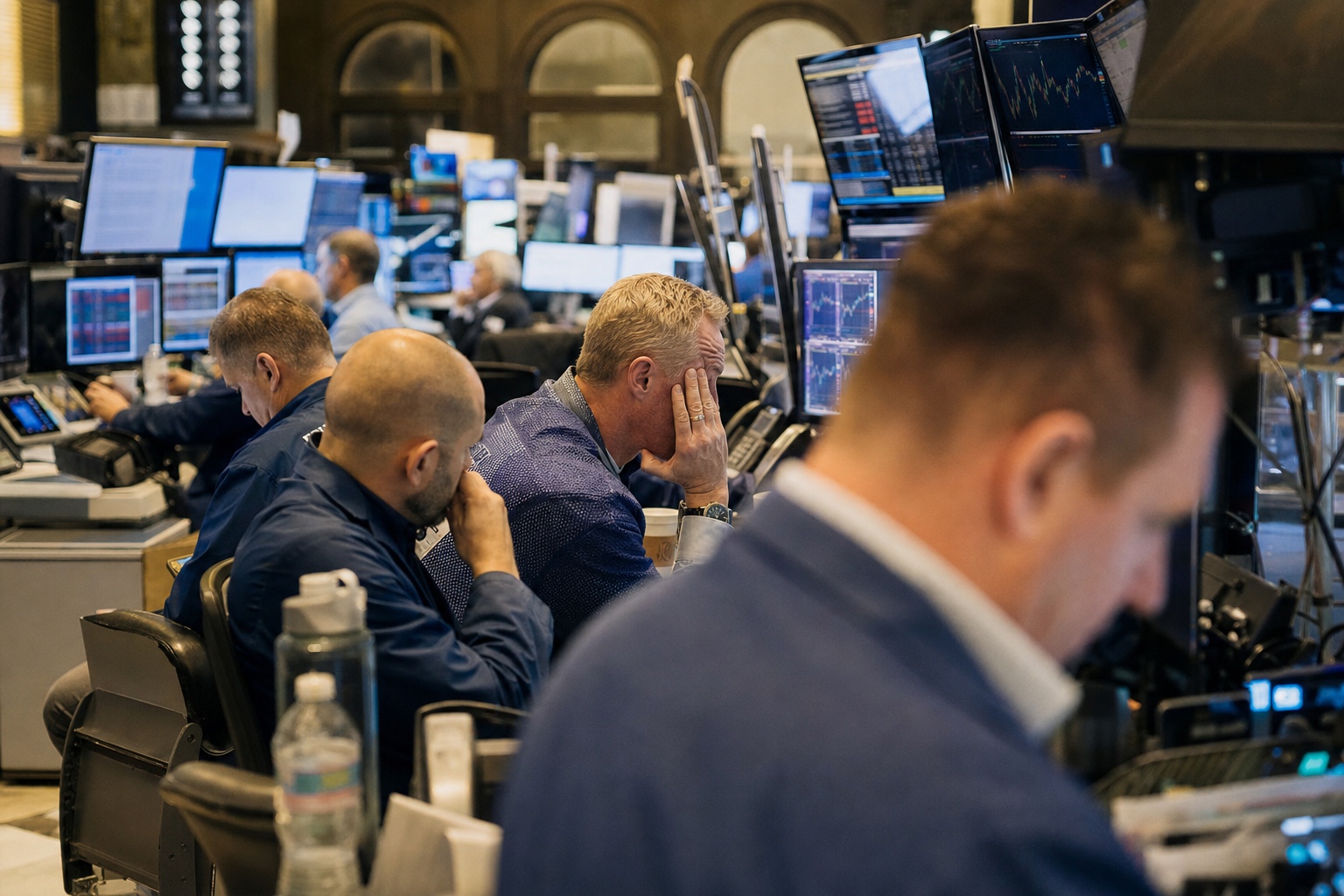
European banks have not needed a heroic macro story to keep working. They have needed something simpler, and lately they have had it, sustained net interest income, fee lines that are still growing, and cost discipline that has kept the sector from leaking margin as growth stays soft. Morningstar’s read on second-quarter 2026 bank results showed net profits up around 18 percent year over year in a sample of major lenders, with cost-income ratios averaging 47.8 percent. That is not a euphoric backdrop. It is a durable one.
The macro is still doing its usual job of making everyone cautious. Euro-area growth is projected at about 0.7 percent for 2026, and the mix of geopolitical tension, higher energy prices, and hesitant investment has not exactly invited banks to lean into risk. Yet the sector has kept capital and liquidity in decent shape, which matters more than the headlines when you are trying to price a lender. Erste Group is the cleanest peer comparison here, because it has been trading like a bank with more obvious momentum, after a record quarterly net profit above EUR 1 billion and an upgraded full-year outlook. Raiffeisen Bank International AG sits in that same regional banking lane, but the market still prices it more cheaply. RBI trades at roughly 8.5 times trailing earnings, below Erste’s roughly 12.7 times.
RBI’s numbers are better than the market multiple says
The company itself has been doing enough to keep the story alive. RBI reported first-half 2026 consolidated profit excluding Russia of EUR 708 million, up 25 percent from the prior year. Customer loans in the core group rose 6 percent to EUR 107 billion, and net fee and commission income increased 10 percent to EUR 1,068 million. Those are not the numbers of a bank waiting for the cycle to rescue it. They are the numbers of a bank still extracting earnings from its franchise while the macro remains only moderately helpful.
Management’s 2026 outlook, excluding Russia, is also not timid. RBI is guiding to net interest income above EUR 4.4 billion, fee income around EUR 2.2 billion, loan growth of around 7 percent excluding acquisitions, and return on equity near 9.5 percent. That matters because it gives you a frame for the filing. A CEO buy in a bank with a visible earnings path is a different read from a buy in a bank that is still trying to prove the model. The market may still be discounting RBI versus some peers, but the company is not trading on a blank page.
The filing itself is small, the context is not
On August 27, 2026, Michael Höllerer bought 483 shares of Raiffeisen Bank International AG on the Vienna exchange for EUR 30,090.90, euro-normalised at ingest, at about EUR 62.30 per share. The stock closed that day at EUR 61.65, down 1.91 percent. So the buy came into weakness, not after a clean breakout. That is the detail that matters more than the raw share count.
The cash amount is not large in absolute terms, and nobody should pretend otherwise. But the filing still carries weight because it came from the chief executive, not a peripheral director, and because it was a buy, not a tidy little disclosure after a run-up. Our scoring puts the filing at 10.6, helped by the size of the transaction relative to the company, about 6.21 percent of market value, and by the euro-normalised filing value near EUR 1.27 billion in the underlying data set. That is a strong internal read, but it is still one thread in the tape, not a verdict on the stock.
The company’s own fundamentals help explain why the buy is readable at all. Insiders Trades data scores RBI at 81 on fundamentals, with a quality score of 75. The rank is not the point. The point is that the bank is not showing up as a stressed balance-sheet story. It is showing up as a bank with earnings, capital, and a valuation that still leaves room for debate.
What a CEO buy means when the stock is already cheap

A cheap multiple can make insider buys look more obvious than they are. That is the trap. A bank trading at 8.5 times earnings can attract a buy simply because the shares are not expensive, not because management sees a dramatic rerating ahead. You have to separate the arithmetic from the signal. RBI’s valuation is already lower than Erste’s, and that gap alone can explain why a CEO might decide the stock is worth adding to. It does not explain timing, and timing is where the filing gets interesting.
Höllerer bought after a day when the shares were under pressure. He did not wait for the market to hand him a cleaner entry. He bought into a stock that had already been marked down, while the company was still carrying a solid first-half profit print and a decent 2026 guide. That is the kind of detail that keeps a filing from being pure theater. It is also why the transaction is more useful as a read on management’s comfort with the current valuation than as a grand statement about the next quarter.
The sector backdrop sharpens that read. European banks have had a decent run because earnings have held up, not because the macro has become friendly. If growth stays subdued and rates stop helping as much, the market will start separating banks that can still grow fees and loans from banks that only looked good in a higher-rate window. RBI’s first-half numbers say it belongs in the first group, at least for now. The CEO buy says management is willing to own that view with cash.
The cohort history is useful, but only as history
That cohort read is not flattering, and it should not be dressed up. The average 90-day return is slightly negative, and the win rate is below 50 percent. For a reader trying to turn insider filings into a trading edge, that matters. It tells you that board-level buying at large names has not been a clean short-term money machine. The market does not hand out easy points just because a chief executive buys stock.
But the cohort also does something useful. It keeps you honest about scale. A CEO buy in a mega-cap bank is often more about alignment and confidence than about a near-term catalyst. If you want a quick trade, you need more than a filing. If you want a better sense of whether management is leaning into its own story, this is the kind of disclosure that deserves attention. RBI’s case fits that pattern. The company has already put up a decent half-year result, the outlook is intact, and the stock still trades at a discount to a stronger peer. That is enough to make the buy legible, even if it is not enough to make it predictive.
The strategy framework in our data is built for a 90-day holding window, with a max position size of 0.08. Its point-in-time backtest headline sits at 1.17, 12.5% (STOXX Europe 600 on the same dates: 9.3%), and (figure withdrawn, see audit 231) on the restricted EU venue universe, with the usual caveat that those figures live in a short, single-regime window and do not survive search-aware deflation. That is a screen, not a promise. It helps separate the filings that deserve a closer look from the ones that are just noise.
Why this buy is easier to respect than to romanticize
There is a temptation to read every CEO purchase as a declaration of faith. That is lazy. The better question is whether the filing lines up with the company’s own operating picture. Here, it does. RBI has shown 25 percent growth in first-half profit excluding Russia, 6 percent loan growth in the core group, and 10 percent growth in fee income. The bank’s 2026 guide still points to earnings and balance-sheet growth, not just cost control. In that context, a CEO buying 483 shares is not a grand gesture, but it is coherent.
The market is still giving you a discount for the name. That can mean opportunity, or it can mean the market sees risks that the headline numbers do not fully capture. RBI still has exposure that investors will keep parsing, and the broader European banking backdrop is not free of macro drag. Growth is soft. Energy prices are not benign. Geopolitics is not helping sentiment. So the filing should not be read as a clean green light. It is better read as management putting a little more skin into a business that is already producing acceptable numbers.
The absence of a cluster matters too. Insiders Trades data shows just one recent declaration, from one insider, and no cluster buying. That makes this a lone filer story, not a board-wide vote. Lone buys can still matter, especially from a chief executive. They just do not carry the same breadth of conviction that a cluster does. You should not force that onto the page.
What to watch after the August 27 buy
The next useful test is not whether the stock pops on the filing. It is whether RBI keeps converting its first-half momentum into the second half. The bank has already told you what it expects for 2026, and the market will now watch whether net interest income stays above EUR 4.4 billion, fee income keeps tracking toward EUR 2.2 billion, and loan growth holds near 7 percent excluding acquisitions. If those lines stay intact, the buy will look more like a sensible internal vote than a one-off gesture.
The other thing to watch is relative performance against peers. Erste has set a high bar with its record quarterly profit and upgraded targets. If RBI keeps delivering but the valuation gap persists, the market is telling you it wants either more growth, more clarity, or both. That is where the insider filing becomes useful. It does not close the gap. It tells you management is willing to own the current price while that gap still exists.
For now, the stock closed at EUR 61.65 on the filing day, and the CEO bought at about EUR 62.30. That is the cleanest fact in the whole story. The company is still earning, the sector is still supported, and the market is still not paying up. The next quarterly update will tell you whether the discount is deserved or just stubborn.
Sources and further reading
- Financial Timespress
- Bitgetpress
- Eqs-newspress
- Ad-hoc-newspress
- Marketscreenerpress
- Finanznachrichtenpress
- Eqs-newspress
- Wikipediapress
This is not investment advice.