
A contract manufacturer that now has to prove it can digest its own growth

HANZA makes money the unglamorous way, by taking industrial complexity that larger customers do not want to manage in-house and turning it into a regional manufacturing package. Mechanics, electronics, cable harnesses, and assembly sit under one roof, or at least under one operating model, spread across European clusters. That matters because the stock is not really a pure play on one end market. It is a play on whether customers keep outsourcing complicated production, whether HANZA can keep those plants full, and whether the company can bolt on acquisitions without turning the balance sheet into a science project.
That is the backdrop you need before you look at the filing. The chairman of HANZA AB, Francesco Franzé, bought shares on 2026-09-28 worth about EUR 19,695, euro-normalised at ingest. On its own, that is a modest cheque. In context, it lands inside a recent buy cluster that already includes the CEO and other directors. Our data marks the name as a five-insider cluster over the past quarter, and that is the part that deserves attention, because it tells you the boardroom has been leaning the same way while the company is trying to absorb a much larger operating footprint.
The business is bigger now, and the market will judge the digestion
HANZA’s second quarter was not a tidy incremental print. Net sales reached SEK 2,573 million, up 70% year over year, with 9% organic growth and an adjusted operating margin of 8.5%. That is the kind of quarter that changes the conversation. You stop asking whether the model works in theory and start asking whether the company can keep the margin intact while the acquired assets are folded in and the customer mix shifts.
The company has been busy on that front. It completed the BMK Group acquisition earlier in 2026, adding electronics capacity, and in July it announced the Fortaco heavy-mechanics acquisition, expected to close in Q4 2026 and add about SEK 1.9 billion in annual revenue. Those are not cosmetic deals. They change the scale of the business and the operational burden. If you own the stock, you are underwriting integration, procurement discipline, plant utilization, and the ability to keep cross-selling across a broader industrial base. If you are short, that is where you look for slippage.
The market is not giving you a blank cheque for growth. The shares traded near SEK 149 on 2026-09-28, with a market capitalization of roughly SEK 9.4 billion. The company also has an authorized share-repurchase program of up to SEK 25 million, which is small relative to the equity value but still useful as a signal that management is not treating the stock as untouchable. In a name like this, price action often turns on whether investors believe the next acquisition will add earnings or just add complexity. The stock does not need perfection. It does need proof.
What the board is buying, and why the size matters less than the pattern
Franzé’s purchase is not large in absolute terms. EUR 19,695 is not the sort of number that changes a capital structure or pays for a strategic pivot. But insider filings are rarely about the raw euro value alone. They are about timing, repetition, and who is doing the buying. Here, the chairman is not alone. The recent declaration list in our dossier shows five distinct insiders buying over the past quarter, with 10 recent declarations in total and multiple board-level purchases in July, August, and September.
That pattern matters more than the latest ticket size. A lone buy can be noise. A cluster across the chairman, the CEO, and other directors is harder to dismiss because it lines up with a period when the company has just posted a strong quarter and is still digesting a fresh acquisition slate. You do not need to invent motive to read that. You just need to notice that the same direction keeps showing up in the filings.
Insiders Trades data gives this setup a display score of 3.7, and the reasons are straightforward. The filing sits inside a wide cluster, the transaction is tiny relative to market value, and the company is in the small to mid-cap band where insider information has historically been least priced in. That is a useful screen, but it is still a screen. The stock can be right for reasons that have nothing to do with the filing, and the filing can be right for reasons that never show up in the next quarter. You are reading a board’s behavior against a live operating story, not getting a guarantee.
The sector backdrop is doing some of the work for HANZA
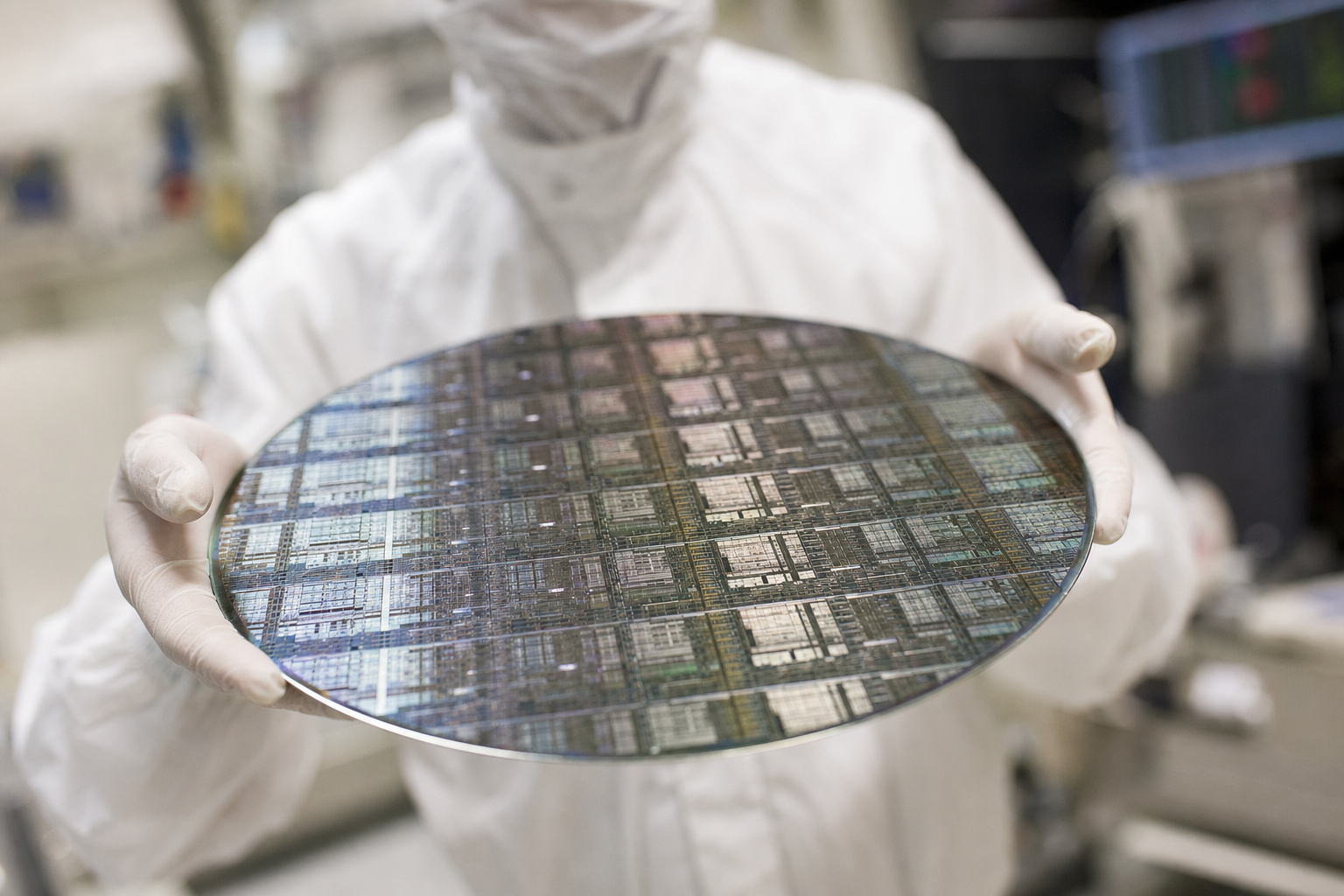
Contract manufacturing in Europe has had a decent run of themes to lean on. Supply-chain resilience still matters. Nearshoring still matters. Defense, mining, and broader industrial demand still matter. HANZA sits in the middle of that mix with a model that is more integrated than many peers. It is not just a factory network. It is a cluster model that tries to combine mechanics, electronics, cable harnesses, and assembly in a way that reduces friction for customers with complicated bills of materials.
That positioning is why the company can look more interesting than a plain-vanilla subcontractor. It also explains why the peer set matters. NOTE AB and Scanfil Oyj are the obvious Nordic comparables on regional focus and scale. Kitron ASA brings a stronger defense and medical certification angle. Flex Ltd. and Jabil Inc. are much larger and more global, which makes them useful as reference points but not direct twins. HANZA trades at a discount to some peers on forward multiples while it expands European capacity, and that discount is not mysterious. The market is charging for execution risk.
Wider Swedish equities have not been hostile, either. The OMXS30 closed at 3,295.03 on 2026-09-25, up 0.73% that day, with mixed weekly performance and ongoing M&A activity in the background. That is not a decisive macro tailwind, but it is not a panic tape either. For a stock like HANZA, the market backdrop matters less than the industrial cycle and the company’s own integration cadence. Still, when the local index is not under pressure, management gets a little more room to be judged on fundamentals rather than on macro fear.
The cohort read is decent, but it is historical, not predictive
The relevant cohort bucket in the dossier is board buys at sweet-spot names, with a sample size of 2,306. The historical T+90 win rate is 51.7%, and the average 90-day return is 1.58%. The 365-day average return is 67.93%. Those are real historical figures, and they are worth knowing because they tell you this kind of filing has not been random noise in the past. But they are still historical cohort data. They do not forecast this stock. They do not tell you the next quarter will be kind. They tell you the bucket has had some edge over time, and that is all.
The strategy framework in the dossier sits behind that with live placeholder tokens, not hard-coded numbers, and I am not going to pretend those are anything else. The point is narrower. HANZA’s current filing lands in a role-and-size pocket that has historically been workable, and it lands while the company is in the middle of a real operating transition. That combination is why the buy cluster deserves more than a shrug. It is also why you should not overread a single chairman purchase as if it were a balance-sheet event.
The fundamental screen is fine, but not clean enough to do the work alone
Insiders Trades data gives HANZA a fundamental score of 49, with a value score of 45 and a quality score of 52. The rank sits at 16,587 out of 29,506. That is not a disaster, and it is not a pristine quality story either. It reads like a company that has enough operating substance to matter, but still carries the usual friction of a business scaling through acquisitions and industrial complexity.
That is where the market will keep pressing. The Q2 margin of 8.5% is respectable, but the next question is whether the margin can hold while Fortaco is folded in and BMK is absorbed. The company’s model is built to handle complexity, yes, but every acquisition adds another layer of systems, customers, and plant-level execution. If the integration goes well, the market will probably reward the stock for being more than a simple contract manufacturer. If it goes badly, the same complexity becomes the excuse for a rerating lower.
The analyst backdrop is mixed enough to keep both sides honest. Pareto Securities reiterated a buy rating with a SEK 189 price target in May 2026. Analysguiden assigned a motivated value of SEK 153 in July. Affärsvärlden turned neutral on 2026-09-25, citing integration risks after the recent acquisitions. That spread is useful because it shows the stock is not sitting in a consensus fog. People are looking at the same company and drawing different conclusions about how much of the growth is already spoken for.
What to watch when the next filing and the next quarter arrive
The next useful data point is not another slogan about European industrial resilience. It is whether HANZA can keep converting acquisition-led growth into something that looks like durable earnings power. The Fortaco deal is expected to close in Q4 2026, and that will be the next real test. Until then, the market will keep watching whether the current buy cluster continues, whether the board keeps adding on weakness, and whether the company can show that the Q2 margin was not a one-off helped by timing.
You should also watch the balance between organic growth and deal growth. The 9% organic number in Q2 matters because it tells you the business is not just buying revenue. That distinction matters a lot in a name like this. A company can grow fast and still disappoint if the acquired revenue comes with too much integration drag. HANZA’s cluster model is supposed to reduce that drag. The filings suggest the board is willing to back the model with its own money. The next few quarters will tell you whether that confidence was early or merely convenient.
For now, the stock sits in a familiar but not trivial place. The business has scale, the sector has support, the acquisitions are real, and the insider buying is broad enough to notice. None of that removes the execution risk. It just means the market is no longer dealing with a small industrial name that can be ignored. It is dealing with a company that has grown into a more complicated version of itself, and the chairman just added EUR 19,695 to the pile while the next integration step is still ahead.
Sources and further reading
- Mfnpress
- Mfnpress
- InsiderScreenerpress
- Mfnpress
- Hanzapress
- InsiderScreenerpress
- Marketscreenerpress
- Marketscreenerpress
This is not investment advice.