
The bid was already there, and the insiders still stepped in
Boralex was already in the middle of a clean corporate finish when the buying hit. The renewable power producer had a Brookfield-led consortium and La Caisse lined up to take it private, the stock was trading around the CAD 37.21 to CAD 37.24 area before the close, and the deal price sat at CAD 37.25 a share in cash. That leaves little room for drama on the equity itself. The interesting part is that eight executives still chose to buy.
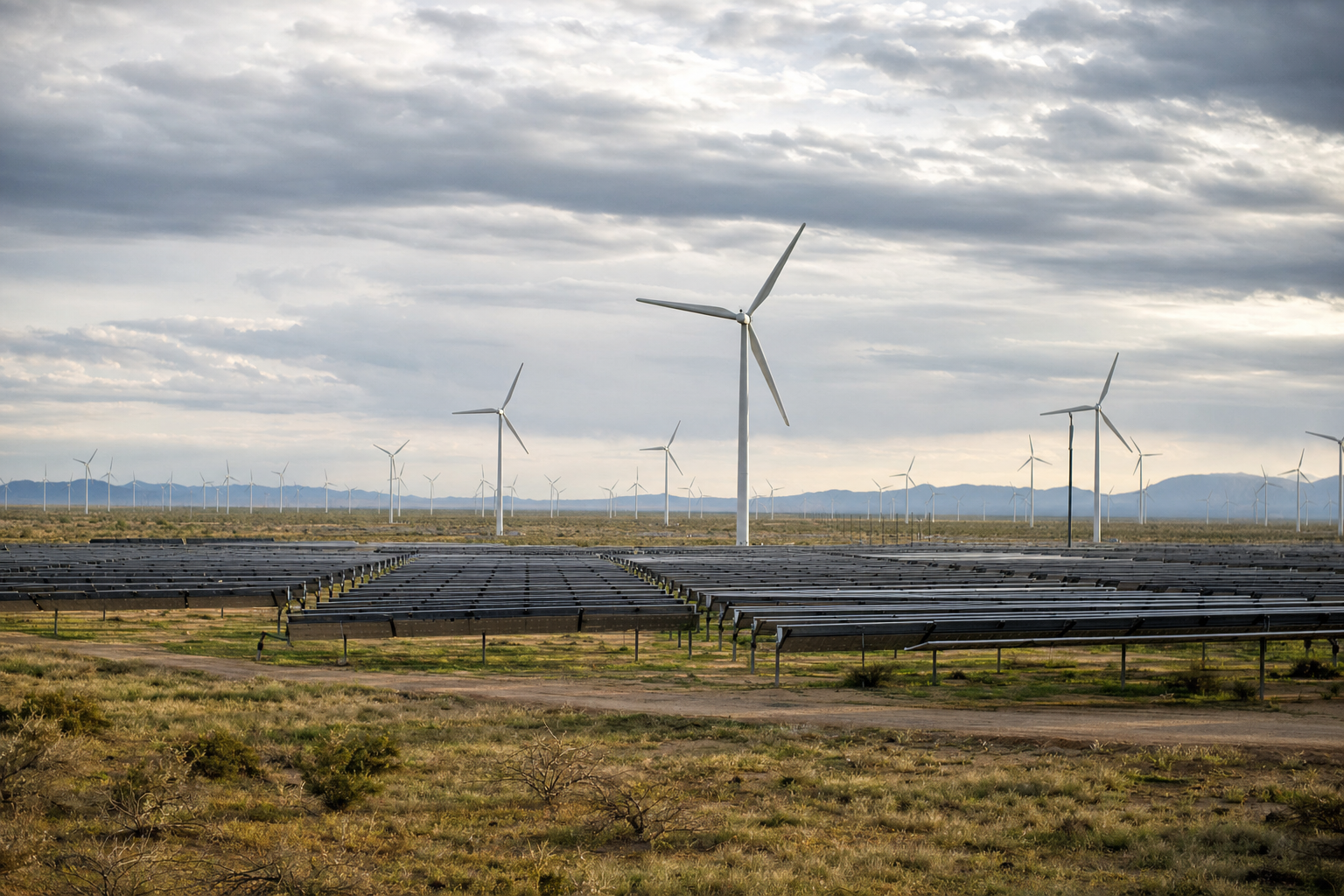
Boralex Inc. is not a speculative microcap with a story stock halo. It is a mid-sized Canadian renewable power owner with wind, solar, and hydro assets across Canada, France, the United States, and the United Kingdom, and installed capacity above 3,783 MW as of March 31, 2026. In a sector where higher rates have squeezed project finance and where policy support has had to do more of the heavy lifting, that asset base matters. So does the fact that the company was already on the path to private ownership when the filings landed.
The cluster itself is the first tell. Patrick Lemaire bought EUR 5,389,067, Patrick Decostre bought about EUR 1,960,569, and six others followed with purchases ranging from EUR 129,109 to EUR 430,510. The names include Marie-Claude Dumas, Lise Croteau, Dany St-Pierre, Nicolas Mabboux, Marie-Josée Arsenault, and Dominique Christophe Minière. These were posted on August 14, the same date the company expected to complete the transaction. That is not a random calendar coincidence. It is a boardroom-sized vote of confidence placed right at the edge of the closing tape.
Why this buy cluster still has teeth in a sector that has already rerated
The long case starts with the sector, because Boralex does not trade in a vacuum. Renewable power has spent the last few years moving from a pure policy trade into something closer to an infrastructure trade. Electrification, data center load growth, and the need for contracted generation have kept the strategic case alive even as financing costs have pinched returns. RMI’s 2026 energy transition outlook points to continued deployment in solar, wind, and storage, while the broader industry backdrop still leans on falling technology costs and a more stable borrowing path than the one investors had to digest in the rate shock years.
That backdrop helps explain why Brookfield wanted the asset. It also helps explain why Boralex shareholders were willing to approve the arrangement by 99.86% in June 2026. The company is not being bought because the market suddenly discovered a hidden growth engine. It is being bought because contracted renewable cash flows, scale, and geography still have strategic value, especially to an owner that can finance and package them differently. Brookfield Renewable Partners has already shown what scale can do in this space, and its own shares have outperformed the broader Canadian market this year. Boralex sits a rung below that, but in the same strategic lane.
The insider buying matters because it came from inside a business that had already been marked for exit. If you are looking for a clean read, that is the one. These executives were not buying into a vague turnaround pitch. They were buying into a deal that had already cleared the regulatory hurdles and had a cash price attached. That makes the action more concrete, and in some ways more revealing. People do not usually spend real money on a near-certain outcome unless they think the market is still underappreciating something, or they want to show alignment at the end of a process. Either way, the filing is not decorative.
Insiders Trades data gives the cluster a display score of 59, and the reason is plain enough. The largest purchase came from an operating director, the buys were clustered across multiple insiders in the same month, and the biggest ticket was sized at about 0.33% of the company’s market value. That is not a token gesture. It is a meaningful amount of capital for a company with a market value of about EUR 1.62bn at ingest, even if the stock was already close to the bid.
The price was nearly spoken for
The catch is that the market had already done most of the work. Boralex was trading within a few cents of the CAD 37.25 cash offer before the filings, so the upside from the deal itself was already compressed. If you are buying the stock now, you are not buying a wide spread or a mispriced merger arb. You are reading a late-stage signal from insiders who may have had reasons that are partly symbolic, partly personal, and partly tied to the mechanics of the transaction.
That matters because the company’s operating picture is not doing the heavy lifting here. Insiders Trades data puts Boralex’s fundamental score at 33, with a rank of 21,845 out of 28,370. The quality score is 37, and growth is not available in the dossier. That is not the profile of a business where the balance sheet or the earnings trend is pulling the stock higher on its own. It is a business being repriced by corporate action, and the insider cluster is riding on top of that.
The sector backdrop also cuts both ways. Renewable assets still have strategic value, but the market has become less forgiving of capital intensity. Higher rates have not disappeared, they have just stopped getting worse. Project finance still matters. Regulatory support still matters. Execution still matters. A company like Boralex can own good assets and still struggle to create public-market excitement if the financing environment stays sticky or if the market decides the private buyer is capturing most of the value. That is why the filing should not be read as a broad sector endorsement. It is a company-specific act, at a company-specific moment.
There is another wrinkle. The insider group is broad, but the filings are not all the same size or role. Lemaire’s EUR 5.4m purchase is the anchor. Decostre’s roughly EUR 2.0m buy is the next weight class. The rest are smaller, though still real. That spread can be read as a coordinated show of confidence, but it can also reflect role, compensation, and personal capacity. The cluster tells you the board and senior management were willing to buy. It does not tell you that every buyer had the same view of the business, the same time horizon, or the same reason for acting on August 14.
What the director-level buy bucket has done historically

The cohort read is useful here because it keeps the story honest. Director-level buys at mid-cap names have not been magic, but they have not been noise either. A 53.5% 90-day win rate is only modestly above a coin flip, and a 5.71% average 90-day return is respectable without being heroic. Over 365 days, the average return rises to 67.65%, which tells you the bucket has had some strong long-run outcomes. It does not tell you this trade will behave that way, especially not when the stock is already pinned to a cash bid.
That distinction matters more than usual because the transaction changes the meaning of the filing. In a normal public-company setting, a cluster of director and senior officer buys can be read as a bet on operating momentum, valuation, or a coming rerating. Here, the end state is already known. The cohort math can still tell you whether this kind of buying has tended to precede decent outcomes in the past, but it cannot tell you whether there is any residual upside left in the name after the deal price and the market price have nearly converged.
The strategy framework in our data is built for a 90-day holding period, with a max position size of 0.08, and the point-in-time backtest headline sits at 1.17, 12.5% (STOXX Europe 600 on the same dates: 9.3%), and (figure withdrawn, see audit 231) on the restricted EU venue universe. That is a screening framework, not an alpha promise, and it is especially fragile when the name is in the final stretch of a takeout. In other words, the framework can help you sort the filing from the noise, but it cannot turn a near-closed acquisition into a fresh long thesis.
Brookfield, La Caisse, and the price that left little on the table
The deal context is the part that keeps this from becoming a generic insider-buys story. Brookfield and La Caisse had already secured all regulatory approvals by August 6, 2026, and the company expected closing around August 14. The transaction had also already won near-unanimous shareholder approval in June. By the time the insiders bought, the market had had months to digest the possibility of a takeout and days to digest the certainty of closing.
That is why the stock’s own chart matters more than the usual insider-filing theatrics. If a name is trading at a wide discount to a bid, insider buying can sometimes reinforce the arb case. If it is trading right on top of the bid, the filing becomes a different kind of object. It can still signal alignment, but it is no longer a clean valuation tell. The spread is gone. The easy money is gone. What remains is a judgment about whether the insiders wanted to own more stock at the finish line, and whether that says anything useful about how they viewed the deal price itself.
Brookfield’s presence also changes the read because this is not a small strategic buyer trying to pick up a stranded asset. It is a large infrastructure and renewable platform with the balance sheet and operating scale to absorb Boralex. That makes the acquisition more credible as a portfolio move and less like a distressed rescue. It also means the public-market upside from a surprise rerating was never the main event. The insiders were buying into a corporate endpoint, not a new growth chapter.
Still, the size of the cluster is not trivial. Eight executives bought on the same date. The largest ticket was EUR 5.4m. The next was about EUR 2.0m. The rest were six-figure purchases, and all of them were filed on the same day the company expected to close. That is enough to merit attention even if you think the deal price already captured most of the value. It tells you the people signing off on the business were willing to put fresh capital into it at the end of the process. That is a real fact, not a slogan.
The balance sheet of the story is not the same as the balance sheet of the company
Boralex’s public-market setup was never going to be judged only on the filing. The company’s installed capacity, its geographic spread, and its role in the renewable buildout all gave it strategic relevance. But the public equity had also been living with the usual renewable-sector burdens, namely capital intensity, rate sensitivity, and the market’s habit of demanding cleaner growth than project developers can always deliver. That is why the private-equity style bid made sense in the first place.
The insider cluster does not erase those burdens. It simply tells you that management and directors were willing to buy at the end of the process. If you are a long-only holder trying to decide whether the filing changes anything, the answer is mostly no on valuation and maybe yes on tone. The tone is that the board and senior team did not treat the closing price as a throwaway level. They treated it as worth adding to.
There is also a subtle point about role mix. The cluster includes directors and senior officers, which makes it more meaningful than a lone purchase from a passive board member. Insiders Trades data flags the filing as a cluster, and the recent declarations list shows repeated buys from the same names, including Stéphane Milot and Nicolas Mabboux, alongside the August 14 purchases. That repetition suggests this was not a one-off gesture. It was a pattern of buying around the transaction window. The pattern is the story, but only up to a point. Once the deal is this far along, pattern recognition has to share the stage with plain corporate mechanics.
What you can still use from this filing
The practical use of the filing is narrower than the headline makes it sound. It does not give you a fresh entry point into Boralex as a standalone public equity, because the public equity is about to disappear into a cash deal. It does not give you a clean arb edge, because the stock was already near the offer. It does give you a read on how the board and senior team behaved when the transaction was effectively done.
That read is mildly constructive. The buying was broad, the amounts were real, and the timing was tight. The strongest purchase came from Patrick Lemaire, and the rest of the group followed with meaningful, if smaller, tickets. In a sector where capital discipline has mattered more than slogans, that is not nothing. It suggests the insiders were comfortable adding exposure at the end of a process that had already cleared approvals and shareholder votes.
But the limits are just as clear. The company’s fundamental score is weak. The stock was already near the cash price. The cohort data is only historical and only for a role-and-size bucket. The strategy token set is a live placeholder, not a promise. And the deal itself means the public-market story is almost over. If you want a clean long thesis, this is not one. If you want a precise read on insider behavior at the edge of a takeout, it is a useful one.
The next concrete event is the closing of the Brookfield and La Caisse arrangement, which was expected around August 14 after approvals were secured on August 6. That is the date that matters more than any tidy conclusion.
Dig deeper: Lemaire, Patrick's filing track record.
Sources and further reading
- The Globe and Mailpress
- Yahoo Financepress
- MarketBeatpress
- Boralexpress
- Simply Wall Stpress
- Businessinsiderpress
- Tmxpress
- Marketscreenerpress
This is not investment advice.