
Gold has stopped behaving like a straight line
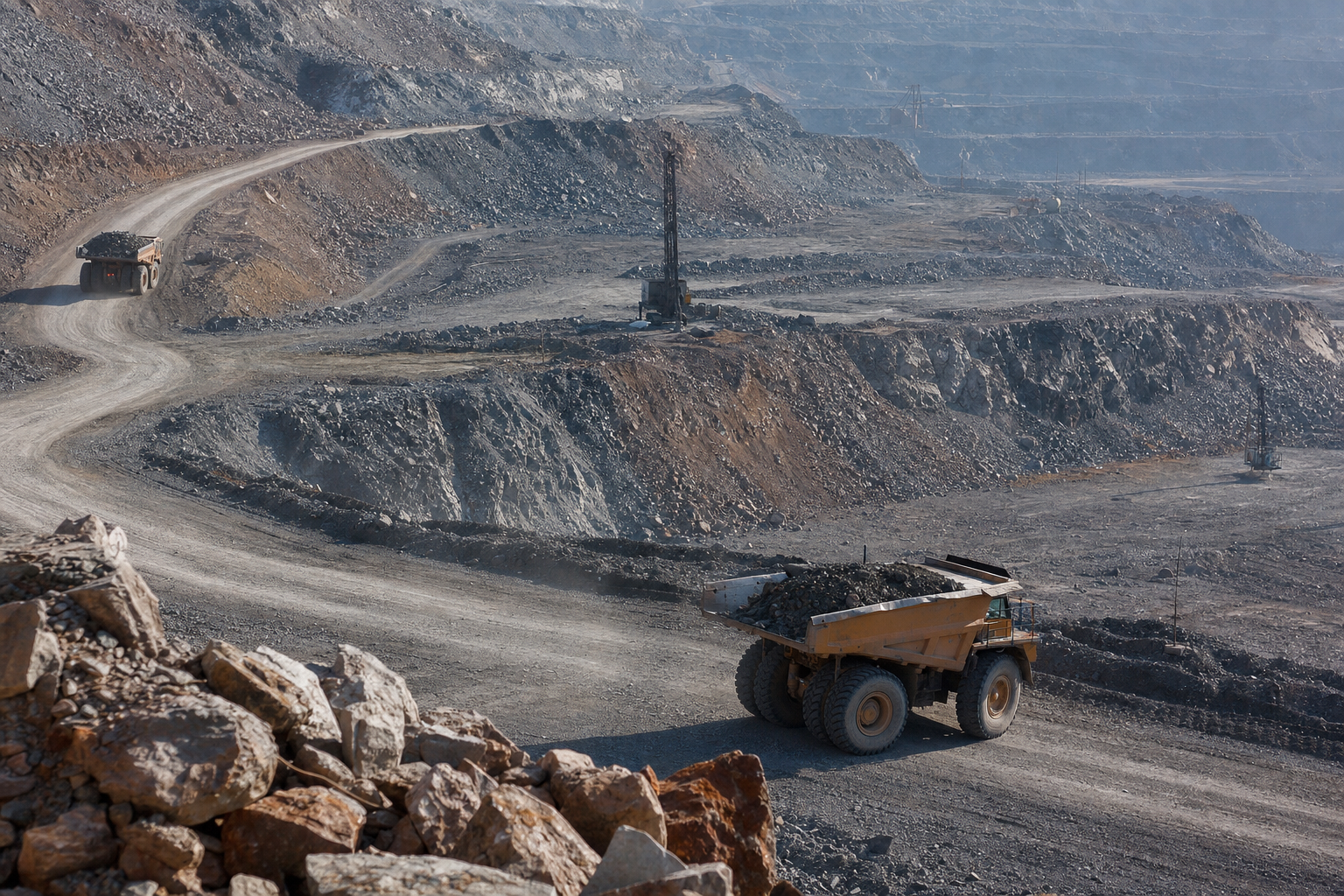
Wesdome Gold Mines Ltd. is worth a look here because the tape around gold has been messy, and messy tapes are where insider filings matter more than usual. Spot gold was trading near USD 4,100 to USD 4,165 per ounce in early July 2026 after reaching intraday highs above USD 5,500 earlier in the year and slipping below USD 4,000 in late June, according to the gold market data in the brief. That is a violent range for a metal that still carries a reputation for calm. It is also the kind of backdrop that forces a read on miners to separate operating quality from simple beta.
Wesdome sits in that middle ground where the market can either reward discipline or punish any sign of drift. The company runs two high-grade underground Canadian assets, Eagle River in Ontario and Kiena in Quebec, and that domestic focus matters when the sector is trying to decide whether the recent correction in bullion is a pause or the start of something more durable. IAMGOLD, Eldorado Gold, and Equinox Gold are the obvious comparables in the mid-tier gold lane, but Wesdome has had a cleaner recent corporate message than most of them, helped by a new quarterly dividend and an expanded normal-course issuer bid announced June 24. That is a company trying to tell the market it can return cash while still keeping the mine plan intact.
The filings were small in absolute terms, but they were not random
Rajbir Gill bought shares valued at about EUR 15,499. Ronald James Jonathan Lawrence bought about EUR 5,953. Robert Kallio bought about EUR 49,294. All three filings were open-market purchases dated July 2, 2026, and all three were marked as part of a cluster. That is the part to sit with. One insider buying a few thousand euros of stock can be noise, especially in a company of this size. Three executives buying on the same day is harder to wave away, even if the euro-normalised filing values are not large relative to the company’s market value.
Insiders Trades data puts the company’s market cap at EUR 3.61bn, which makes these purchases tiny on a percentage basis. Gill’s buy was about 0.000429% of market cap, Lawrence’s about 0.000165%, and Kallio’s about 0.001365%. That is not a board loading up the truck. It is also not the kind of symbolic one-lot trade that gets filed because someone wanted to make a point with no money behind it. The read is more mundane and more useful than that. Management was willing to buy into its own stock while the sector was still digesting a sharp move in bullion and while the company had just told the market it would return more capital.
What the tape did on the same day
The stock did not wait around to validate the filings. Wesdome closed at CAD 24.35 on June 30, then traded in a range of CAD 25.07 to CAD 26.25 on July 2 and closed near CAD 26.03, a gain of more than 6% in a single session, according to the market data in the brief. That matters because insider buying is easier to respect when it appears before the move, and easier to dismiss when it arrives after the stock has already rerated. Here, the timing sits in the middle. The filings were dated July 2, the same day the stock was already moving sharply higher.
That does not make the buys less interesting, but it does change the interpretation. If you are trying to read conviction, you want to know whether insiders were stepping in after a washout or chasing momentum. This looks closer to the latter, or at least to a management team that was comfortable buying while the market was re-pricing the name upward. That is a different signal from a distressed miner’s director buying after a collapse. It is also a more ambiguous one. A rising stock can make insiders look smarter than they are. A falling stock can make them look brave. The truth is usually less cinematic.
Wesdome’s recent corporate actions help explain why the market may have been willing to bid the shares even before the filings hit. The June 24 announcement of a quarterly cash dividend, a dividend reinvestment plan, and an expanded buyback program gave the market a clearer capital-return frame. For a gold producer, that is not a trivial message. It says the company believes it can fund operations, keep the mines moving, and still hand something back. In a sector where investors often have to choose between growth capex and discipline, that combination tends to get attention.
Why Wesdome is not just another gold name

The company’s operating profile is the reason the market keeps it in the conversation. Wesdome is not a sprawling diversified miner with a dozen jurisdictions and a slide deck full of optionality. It is a focused Canadian producer with two underground assets and a reputation built on grade. That makes it easier to underwrite, but it also makes the stock more sensitive to execution at the mine level. If Eagle River or Kiena disappoint, there is less of a portfolio to hide behind. If they perform, the leverage to the gold price can be sharp.
That is where the peer set matters. IAMGOLD, Eldorado Gold, and Equinox Gold all give investors different versions of mid-tier gold exposure, but Wesdome’s domestic footprint and capital-return posture set it apart. The market has been willing to pay for miners that can show cash generation without a lot of geopolitical drama, especially after gold’s run and subsequent correction forced a reset in expectations. Wesdome’s recent dividend and buyback announcement fits that preference neatly. It is a cleaner story than a company still trying to prove that every dollar of free cash flow has a better use inside the fence than outside it.
The sector backdrop also helps explain why insider buying can matter more now than it would in a sleepy tape. Gold has been volatile because the macro narrative has been volatile. Softer U.S. economic data, including weaker-than-expected June jobs figures, helped gold rebound above USD 4,100 on July 2, according to the market brief. That is the kind of move that reminds you gold is still trading as a macro hedge as much as a commodity. Central-bank buying has remained part of the background through mid-2026, and that keeps the floor under the sector even when the metal corrects hard. For miners, the question is whether the market believes the price environment is still good enough to support margins after the pullback.
Insiders Trades data says this is a moderate signal, not a grand one
Our scoring gives Wesdome a 49, which is about as plain as it sounds. It is not a screaming buy signal. It is not a warning flare either. The score is being pulled by the fact that the filing came from an operating director, that it was part of an insider cluster, and that the purchase was made in open market rather than through some mechanical compensation event. The euro-normalised filing value near EUR 15,499 for one of the buys is also part of the picture, though the more important point is that multiple senior officers were active at the same time.
The cluster detail matters because insider buying is often more informative when it is shared. One executive can be idiosyncratic. Three executives on the same date are harder to explain away as coincidence, even if the amounts are modest. Insiders Trades data shows 4 distinct insiders in the recent cluster picture and 12 recent declarations, with Robert Kallio appearing multiple times in the recent list. That does not automatically make the signal stronger in a predictive sense, but it does tell you the company has been on management’s radar. If you are weighing this name, that is the part to notice before you get lost in the score.
The historical cohort data is useful only if you keep it in its lane. For the Directeur · Large bucket, Insiders Trades cohort data shows a sample size of 58,770, a 90-day win rate of 49.7%, an average 90-day return of 1.4%, and an average 365-day return of 20.53%. That is historical cohort data for a role-and-size bucket, not a forecast for Wesdome and not a promise that this cluster will work. The 90-day average is modest. The win rate is basically a coin flip with a slight edge. The longer average return is better, but it belongs to a broad bucket, not to this specific trade. You should read it as context, not as a target.
The part the market may be pricing in already
The risk with any insider-buying story is that the market has often seen the same thing you have. In this case, the stock’s move on July 2 suggests some of the good news was already being priced before the filings were fully digested. That is not a reason to ignore the buys. It is a reason to avoid pretending they arrived in a vacuum. The market had a reason to like Wesdome before the insider cluster showed up. Gold had bounced, the company had just sharpened its capital-return pitch, and the stock had already started to move.
That makes the read more nuanced. A cluster of buys after a sharp selloff can be a clean contrarian tell. A cluster of buys into a rebound is more of a confirmation that management is not fighting the tape. There is value in that, especially in a miner where the operating story and the commodity tape are always in a tug of war. But it is not the same as a deep-value director stepping in after a broken quarter. If you are looking for a dramatic mispricing, this is not that. If you are looking for evidence that the people closest to the asset are comfortable owning more stock while the market re-rates the name, this is closer.
The company’s fundamental profile gives the setup some support. Insiders Trades data shows a fundamental score of 87, with a quality score of 93 and a value score of 81. Those are screening inputs, not an alpha claim, and they should be treated that way. Still, they help explain why the stock can attract both capital-return buyers and insider buyers at the same time. A miner with decent quality and a cleaner balance sheet story can do that. A miner with weak operations usually cannot.
What to watch from here
The next question is not whether the July 2 filings were bullish in some abstract sense. They were. The question is whether Wesdome can keep the market focused on execution rather than on the next swing in bullion. That means watching production consistency at Eagle River and Kiena, watching whether the dividend and buyback remain credible rather than cosmetic, and watching whether the stock can hold its gains if gold keeps chopping around instead of trending cleanly higher. The insider cluster gives management some credibility, but it does not remove operating risk.
For comparison, the broader gold sector still has to prove that it can hold margins if bullion stays volatile. Miners that looked cheap when gold was racing higher can look merely fair when the metal corrects. Wesdome’s edge is that it has a more focused Canadian operating base and a recent shareholder-return message that the market can actually price. That is enough to make the filing worth reading. It is not enough to make the stock easy.
If you are already in the name, the useful question is whether this cluster changes your view of management’s confidence in the current setup. It should, at least a little. If you are not in the name, the better question is whether you want exposure to a gold producer that is trying to combine operating quality with capital returns while the commodity itself is still volatile. That is a reasonable trade. It is also one that depends on gold not giving back too much of the year’s move.
Sources and further reading
- insiderscreener.compress
- nz.finance.yahoo.compress
- wesdome.compress
- theglobeandmail.compress
- s203.q4cdn.compress
- simplywall.stpress
- marketbeat.compress
- newsfilecorp.compress
This is not investment advice.