
Warrior Met is near the top of a stronger coal tape
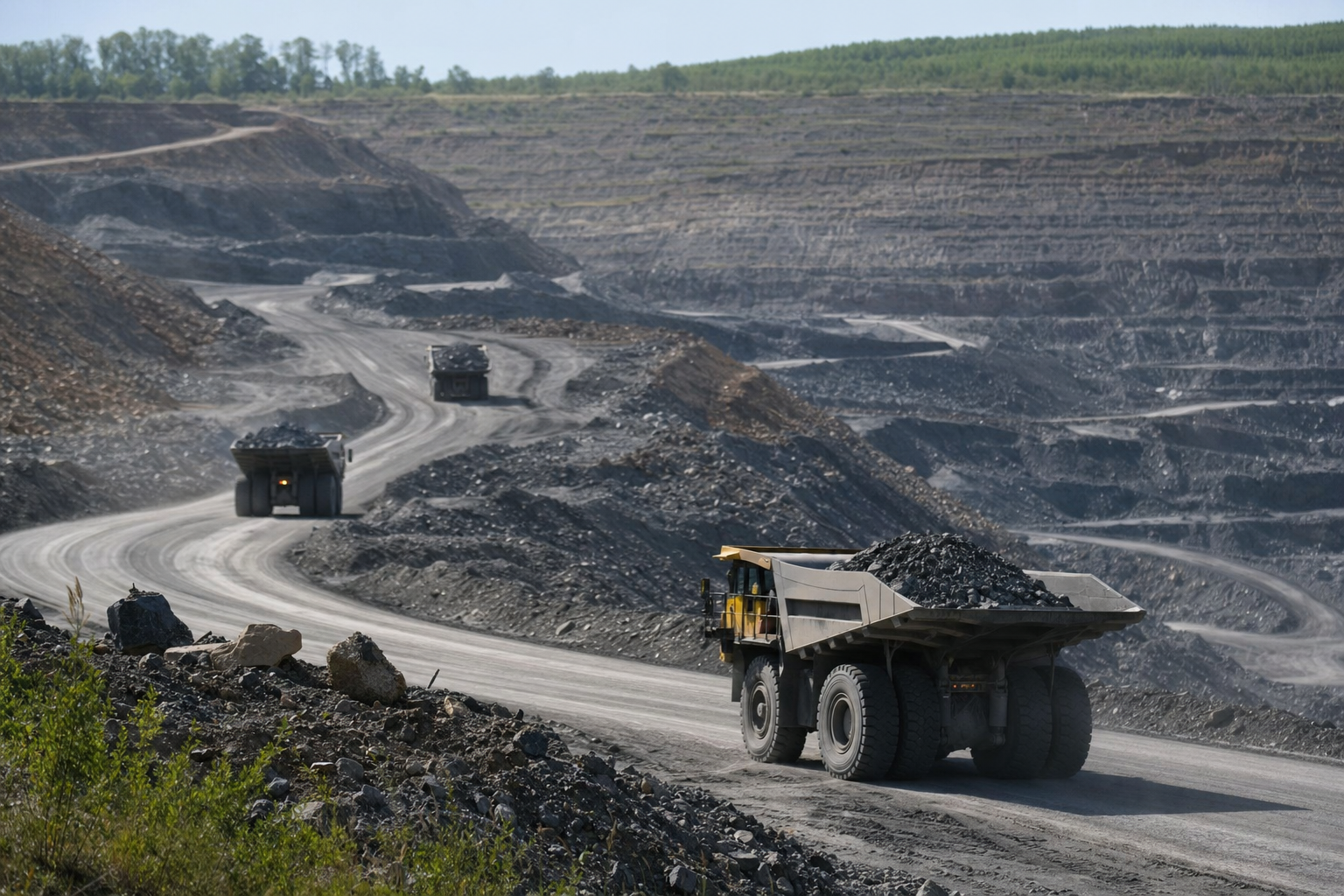
Warrior Met Coal is not trading like a sleepy cyclical. It is trading like a name that the market has decided to re-rate on a better met coal backdrop, a cleaner operating story, and a Blue Creek ramp that gives it more leverage than a plain-vanilla exporter. The stock closed at $105.22 on August 26 after a session that ran from $103.18 to $108.77, which puts it just below the 52-week high of $111.20 and well above the $54.66 low. That matters because insider sales look different when they land after a stock has already done the heavy lifting.
The sector backdrop helps explain why the market has been willing to pay up. Seaborne metallurgical coal prices have firmed, with the Australia HCC index reaching $248 per metric ton, helped by Chinese domestic supply constraints after a May mine accident in Shanxi and extended safety inspections, plus Indian restocking after the monsoon. That is a real commodity tailwind, not a story stock tailwind. Warrior Met sits in the middle of it as a U.S. pure-play exporter, and the market has treated that exposure as a feature, not a bug.
Insiders Trades data puts the company in a bucket where chief-executive buys at large-cap names have historically posted a 57.6% 90-day win rate and a 4.95% average return over that horizon, with a 57.88% average return over 365 days. That is historical cohort data, not a forecast for this name, and it is the kind of context that keeps you from over-reading one filing in isolation.
The bull case is straightforward, and it is not trivial
Start with the business. Warrior Met is a premium metallurgical coal producer and exporter, with Alabama operations and a cost structure that management and market commentary have framed around cash costs near $100 per short ton. It is also expanding capacity through Blue Creek, which gives the company more operating torque if pricing stays constructive. In a sector where freight, realized pricing, and export access can make or break margins, a pure-play exporter with growing volume is exactly the sort of setup that can catch a bid when the commodity turns.
The second-quarter numbers gave the market something to work with. EPS came in at $1.65, beating estimates by $0.25, and revenue reached $509.69 million, up 71.3% year over year. The company pointed to record sales volumes and the Blue Creek ramp-up. That is the kind of print that tells you the operating story is not just about a better coal chart. It is about more tons moving through a business that is already benefiting from firmer realized prices.
Peer context matters here too. Alpha Metallurgical Resources has a broader grade mix and an export terminal stake, which changes the way you think about its leverage and logistics. Ramaco Resources has a different reserve and cost profile. BHP’s metallurgical coal operations, through the BMA joint venture, have also shown production recovery and EBITDA improvement as realized prices firmed. Warrior Met is not the only way to play the theme, but it is one of the cleaner U.S. expressions of it.
The market has noticed. Shares were near $88 at the end of last year and have climbed sharply in 2026. Analyst consensus, according to the cited market data, sits at a Moderate Buy with an average target of $102.60, which is a useful reminder that even after the rally, the sell-side has not fully chased the stock into the stratosphere. That leaves room for a debate about whether the move is still early or already crowded. The insider filings land right in that debate.
Walter Scheller sold into strength, and he did it twice
Warrior Met Coal, INC. CEO Walter J. Scheller sold 50,000 shares on August 24 at $110 per share for a total filing value of EUR 4,708,550, euro-normalised at ingest. His direct holdings fell to 267,793 shares. The sale followed a Rule 10b5-1 trading plan adopted on March 2, 2026, which matters because it tells you the trade was pre-arranged rather than a spontaneous reaction to the latest quote.
The August 24 sale was not his first. Scheller sold another 50,000 shares on August 19 at $105 per share for $5.25 million. That is a clean, repeated reduction in exposure, and it came while the stock was already trading near its highs. If you are looking for a simple read, there is one: the chief executive has been taking money off the table into strength.
The rest of the cluster makes the pattern harder to ignore. Director Stephen D. Williams sold 4,800 shares at about $104.23 per share for roughly $500,304, and Chief Accounting Officer Brian M. Chopin sold 3,232 shares at $104.02 per share for roughly $336,193. Insiders Trades data shows four distinct insiders in eight recent declarations, with Scheller appearing multiple times and the recent activity skewing to sales. That is not the same thing as a broad exodus, but it is more than a one-off trim.
Our scoring leans on exactly that mix, the chief executive role, the cluster, and the size of the filing relative to market value. The sale represented about 0.10% of the company’s market value, which is not a balance-sheet event, but it is large enough to register as a deliberate reduction rather than pocket change. You do not need to invent motive to see the shape of it. The CEO sold into a strong tape, and he did so alongside other insiders.
The commodity backdrop is doing a lot of the work
This is where the bullish case starts to fray. The same met coal strength that supports the stock also makes the insider selling easier to explain without reaching for a darker story. When a commodity name has moved hard, insiders often monetize some of the gain. That is not a scandal. It is a reminder that the market has already done part of the work for them.
The company itself flagged a mix that is not perfectly clean. Commentary around the quarter highlighted robust operational metrics, but also softer realized pricing and higher freight costs as near-term factors. That combination matters because it tells you the business is still exposed to the usual cyclical friction. A strong volume quarter can coexist with pressure on realized pricing and shipping costs, and the latter can eat into the former faster than the market likes to admit.
The stock’s position near the top of its 52-week range also changes the burden of proof. At $105.22, Warrior Met is not cheap on the chart, even if the commodity backdrop is better than it was a year ago. If you are buying here, you are buying continued strength in seaborne met coal, continued execution at Blue Creek, and no ugly turn in freight or realized pricing. That is a lot of moving parts for a business that still lives and dies by global steel demand.
The broader steel backdrop is mixed, not euphoric. There are pockets of restocking support, and policy signals in the United States have favored domestic coal production, but that is not the same as a clean, synchronized demand boom. India’s steel expansion helps the export story, yet it also keeps the market tied to shipping lanes, import sourcing, and price competition. Warrior Met benefits from that structure when the cycle is firm. It gets hit when it is not.
What the historical bucket says about CEO buying
The cohort read is useful because it keeps the discussion honest. In the relevant bucket, chief-executive buys at large-cap names have historically produced a 57.6% 90-day win rate and a 4.95% average 90-day return, with a 57.88% average 365-day return. That is a decent historical backdrop for CEO buying, but it is not the trade here. Scheller sold, and the bucket is about buys. So the statistic is context, not a green light.
That mismatch matters. A lot of readers want insider data to do more than it can. They want a filing to settle the question of whether the stock is cheap, whether the cycle is turning, whether the next quarter will beat. It does none of those things on its own. What it can do is tell you whether the people with the most direct exposure are adding, trimming, or distributing risk while the market is still enthusiastic.
On that score, the current pattern is clear enough. The CEO has sold twice in a week, other insiders have sold too, and the stock is trading near its highs after a strong run. That combination does not scream panic. It does suggest that management is comfortable reducing exposure while the market still assigns a premium to the story. If you own the stock, you should at least ask whether you are being paid enough for the commodity risk that remains.
Insiders Trades data also shows the company’s fundamental score at 38, with a rank of 20,414 out of 28,892. I would not turn that into a thesis by itself, but it does fit the picture of a name whose market story is running ahead of a more mixed fundamental screen. The company has quality at 46 and value at 30 in the dossier, which is another way of saying this is not a pristine, all-clear balance sheet story. It is a cyclical producer with a strong tape behind it.
Blue Creek gives the stock torque, and torque cuts both ways
Blue Creek is the part of the story that keeps the bull case alive. Capacity expansion in a premium met coal producer is not a cosmetic detail. It changes the earnings profile if pricing stays supportive and volumes keep rising. That is why the second-quarter revenue print mattered so much. It was not just a beat. It was evidence that the operating ramp is real enough to show up in the numbers.
But torque is not a one-way gift. It magnifies the upside when the cycle is favorable, and it magnifies the downside when it is not. If seaborne prices soften, if freight costs stay elevated, or if realized pricing slips again, the same leverage that makes the stock attractive can turn it into a fast de-rating candidate. The market knows this. That is why the stock can trade near a high and still be vulnerable to a sharp reset.
The peer set reinforces the point. Alpha Metallurgical’s broader asset mix and terminal stake give it a different risk profile. Ramaco’s reserve and cost structure are different again. BHP’s scale and diversification make it a less direct read on the same trade. Warrior Met is cleaner, but cleaner is not safer. It just means the stock is more tightly tied to the met coal cycle and the company’s own execution.
That is also why the insider cluster matters more than a single sale would. A lone disposition can be noise. A CEO sale, repeated, with a director and the chief accounting officer joining in, lands differently. It says management is not rushing to add exposure at these levels. It does not say the business is broken. It does say the people filing the forms are happy to sell into a strong market while the rest of the market still likes the story.
The balanced verdict is not a tidy one
If you want the strongest honest long case, it is this. Warrior Met has a favorable commodity backdrop, a strong second quarter, a Blue Creek ramp that can add operating leverage, and a stock that has already proved the market is willing to pay for that combination. The company is a pure-play U.S. exporter in a sector where seaborne pricing has improved, and the recent revenue growth shows the operating story is not imaginary.
If you want the catch, it is just as plain. The CEO sold 50,000 shares on August 24 after selling another 50,000 on August 19, and other insiders sold too. The stock is near its 52-week high. Freight and realized pricing remain live variables. The business is still a cyclical coal exporter, which means the next move in the commodity can matter more than the neatness of any insider pattern.
The cleanest way to hold both facts at once is to treat the filings as a warning light, not a verdict. That phrase is the right one here, and I will use it once because it fits. The insider cluster tells you management is taking chips off the table into strength. It does not say the cycle is over. It does tell you that if you are long here, you are paying for a lot of good news already.
For now, the stock sits in the awkward middle that good cyclical names often occupy after a run. The business is better than it was, the commodity backdrop is supportive, and the insider tape is leaning to the sell side. The next hard data point is not a philosophy question. It is the next quarter, the next freight read, and whether Blue Creek keeps translating volume into cash without the market having to assume perfection.
Sources and further reading
- StockTitanpress
- Insidermonkeypress
- Secform4press
- Secform4press
- StockTitanpress
- MarketBeatpress
- Businessquantpress
- Secform4press
This is not investment advice.