
Sweden just made the NordX story cleaner
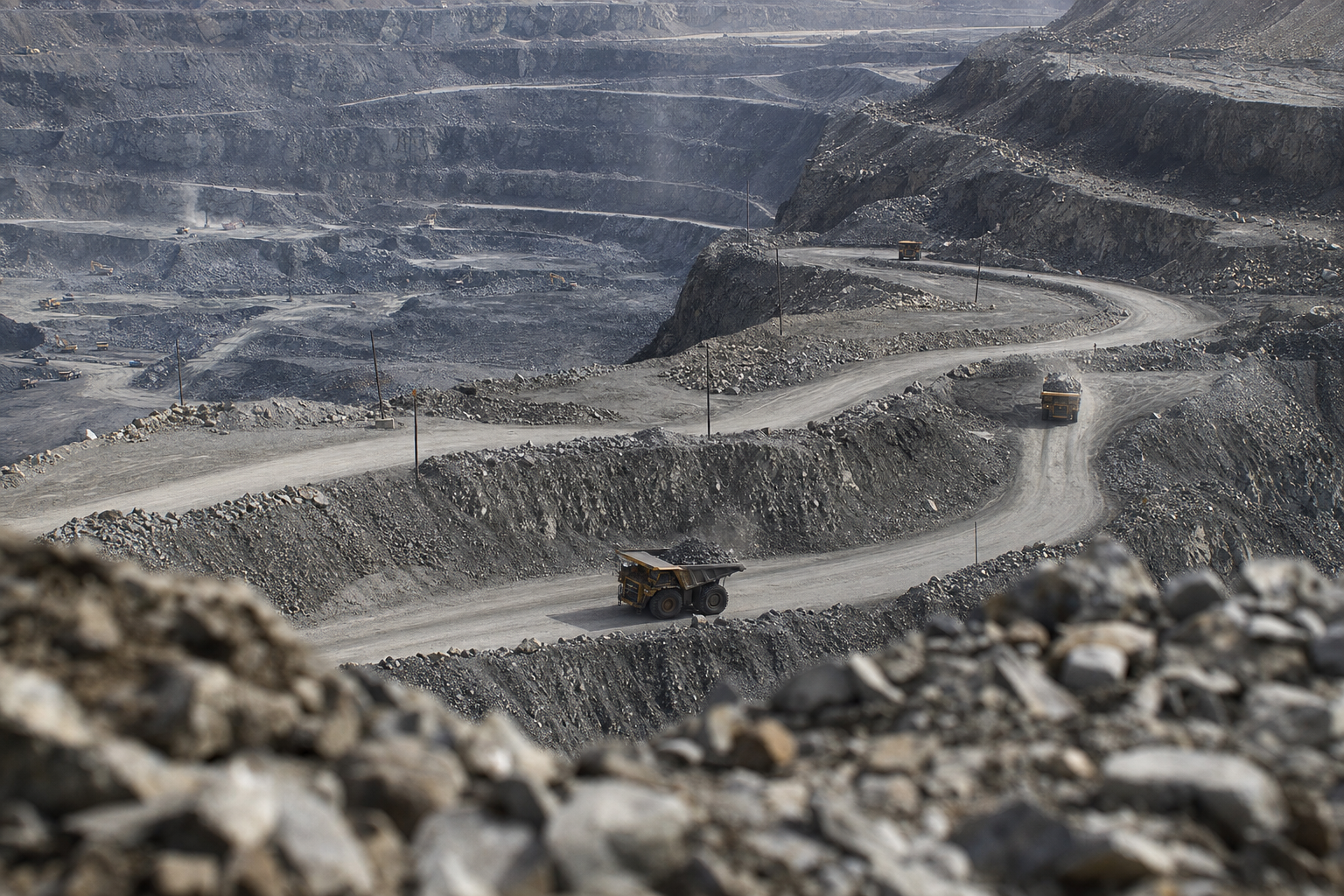
NordX Metals Corp. is still a micro-cap explorer, but the tape around it is not random. The company sits in the middle of a 2026 market that keeps rewarding anything tied to critical minerals, energy security, and supply-chain politics, while punishing names that need perfect financing conditions to get from permit to drill bit. That is the frame for NordX, not the filing by itself. If you are looking at this name, you are looking at a junior with lithium projects in Sweden and a portfolio of uranium and rare-earth permits in Sweden and Finland, in a market where uranium has held above USD 100 per pound and policy has started to matter again.
The Swedish angle matters because NordX is not just another generic junior with a map and a deck. On June 18, 2026, the company welcomed Swedish parliamentary approval of legislation removing municipal veto power over uranium mining. That is a real regulatory change, and for a Nordic explorer it is the sort of thing that can alter the probability tree around permitting, even if it does not make a deposit appear out of thin air. Energy Fuels, the larger U.S. uranium and rare-earth producer named in the peer set, has the benefit of production and guidance. NordX does not. But NordX does have a cleaner policy backdrop than many explorers, and in this sector that is not a small thing.
What Bowering actually bought
The filings on ceo.ca/ulth show Andrew William Bowering, listed as a senior officer of the issuer, buying on two consecutive days. The June 29 transaction was the larger one, about EUR 9,020.65 in euro-normalised filing value. The June 30 filing added about EUR 332.80. Together, the open-market buys total roughly EUR 9,354. That is not a life-changing sum in absolute terms, but it is not a token line item either for a micro-cap with a market value of about EUR 16.3 million. On Insiders Trades data, the June 29 buy alone was sized at about 0.25% of market cap, which is the sort of proportion that deserves attention in a name this small.
The more interesting part is not the euro amount in isolation. It is the pattern. This was not a one-off administrative filing, and it was not a sale dressed up as something else. It was a cluster buy, and the internal dossier says five insiders have traded the name in the same direction over the past quarter. That is the configuration our scoring likes most, because it usually means the market is not dealing with a single isolated opinion. In a micro-cap explorer, that can matter more than it would in a large-cap where one director can buy a few shares and barely move the needle.
The cluster is the point, but the tape still has to cooperate
A cluster buy in a junior miner is easy to romanticize and easy to overread. The better way to handle it is to ask what kind of company tends to produce this pattern. NordX is an exploration-stage business with exposure to lithium, uranium, and rare earths, and those are exactly the kinds of assets that attract insider participation when the sector backdrop improves and the financing window opens. The company also closed a CAD 1.2 million private placement on June 12, 2026, and the public release said insider participation was part of that financing. So the June 29 and June 30 open-market buys did not appear out of nowhere. They followed a period in which insiders had already shown willingness to support the capital structure.
That matters because juniors often tell you what they think through the register before they tell you through the drill results. In a name like NordX, insider buying can mean several things at once. It can mean management is trying to signal confidence to the market. It can mean insiders think the stock is cheap relative to the optionality in the portfolio. It can also mean they are simply aligning themselves with a financing they already helped anchor. All of those can be true. None of them guarantee a rerating. The filing is useful because it shows skin in the game, not because it solves the geological or financing questions.
The market backdrop gives the filing more context than usual. Critical minerals have been a policy trade in 2026, with governments and utilities trying to secure supply chains that are less exposed to Chinese processing and geopolitical bottlenecks. Uranium has been the cleaner expression of that theme, helped by reactor demand and contracting activity. Lithium and rare earths are messier, more cyclical, and more sentiment-sensitive, but they still benefit when investors want exposure to electrification and strategic materials. NordX sits at the intersection of those themes, which is useful when the tape is hot and dangerous when it cools.
Why NordX is not Energy Fuels, and why that still matters
Comparing NordX with Energy Fuels is useful precisely because the gap is so large. Energy Fuels is a producer with mid-year 2026 output tracking within guidance. NordX is an explorer with a much smaller market cap and a much earlier-stage asset base. That means the two names can trade on the same macro narrative while living in different risk universes. Energy Fuels can lean on production, operating leverage, and a more established investor base. NordX has to lean on geology, permitting, and capital markets access. One is a business. The other is a claim on future business.
That does not make NordX uninteresting. It makes the read more delicate. The company’s core assets include lithium projects in Sweden and a portfolio of uranium and rare-earth permits held through Swedish Minerals AB, including Duobblon, Norr Döttern, Märrviken, and Flistjärn. Those names matter because they show the company is not a one-asset story. The portfolio gives management multiple shots on goal, but it also spreads attention across several early-stage prospects. If one project advances, the market may care. If none do, the stock still has to survive the financing cycle. That is the reality of junior exploration, and no amount of policy tailwind changes it.
The Swedish legislative shift is the cleanest near-term positive in the file. Removing municipal veto power over uranium mining does not mean permits arrive automatically, and it does not erase environmental or technical hurdles. It does, however, remove one layer of local political friction. For a Nordic explorer, that is meaningful because permitting risk is often the hidden tax on valuation. Investors tend to focus on resource potential and forget that a project can sit in limbo for years if the regulatory path is messy. Sweden just made that path less messy for uranium, and NordX is positioned to benefit from that change more directly than a North American peer without Nordic exposure.
What our data says, and what it does not say
Insiders Trades data gives NordX a display score of 62 on the June 29 buy, and the rationale is straightforward enough. The buy came from an operating director, it was part of a wide cluster, it was sized at about 0.25% of market value, and it landed in a small-cap band where insider information has historically been least priced in. That is the kind of setup our scoring tends to like. It is also the kind of setup that can fail if the company needs more capital, if the asset base disappoints, or if the sector cools before the market has time to care.
The historical cohort data is where discipline matters. For the Directeur · Micro bucket, the sample size is 9,063. The 90-day win rate is 25.6%. The average 90-day return is -12.7%. The average 365-day return is -21.54%. That is not a flattering record, and it should not be dressed up as one. It is historical cohort data for a role-and-size bucket, not a forecast for NordX and not a promise that this trade will work. If anything, it is a reminder that micro-cap insider buying often arrives in names that are cheap for a reason. The signal can still be useful, but you need to respect the base rate.
The financing angle is where the story gets real
The June 12 private placement is part of why this filing deserves more than a headline skim. NordX closed a CAD 1.2 million private placement, and the public release said insiders participated. That tells you management and related holders were already willing to put money into the story before the open-market buys hit the tape. In a junior explorer, that can be a healthier sign than a lone director buy after a promotional run. It suggests the people closest to the company were willing to support it when capital was actually being raised, not just when the stock was being discussed.
Still, financing support is not the same as operational progress. Juniors can raise money and still go nowhere if the asset base does not advance. They can also raise money and then spend it in a market that is too weak to reward exploration risk. NordX’s market cap, about EUR 16.3 million, leaves it exposed to both outcomes. The company is small enough that a modest financing can matter, and small enough that dilution can matter just as much. If you are weighing this name, the question is not whether insiders bought. They did. The question is whether the company can turn a better Swedish uranium regime and a broader critical-minerals bid into something the market will pay for.
That is where the peer set helps. Larger names like Energy Fuels can absorb volatility because they have production and operating cash flow. NordX cannot. But junior explorers often trade on the margin between policy change and proof of concept. Sweden’s legislative shift improves the policy side of that equation. The insider cluster improves the alignment side. What remains is the hard part, which is drilling, permitting, and capital discipline. Those are the things that decide whether a micro-cap rerates or just keeps issuing paper.
The read from here is simple, but not easy
The cleanest interpretation is that NordX insiders are leaning into a better backdrop rather than running from a worse one. Bowering’s June 29 and June 30 buys, together worth about EUR 9,354 in euro-normalised filing value, fit a broader pattern of insider participation around the company’s June financing and a wider cluster over the past quarter. That is enough to say management is not passive. It is not enough to say the stock is cheap, or that the projects will advance, or that the market will reward the name tomorrow.
What makes the filing worth your time is the combination of timing and context. The company just got a more favorable uranium policy regime in Sweden. Uranium remains one of the cleaner policy-driven trades in critical minerals. NordX has Nordic exposure, a small market cap, and a cluster of insider activity that our data treats as meaningful. Against that, the historical cohort record for similar micro-cap director buys is poor. That is the tension. The insider signal is real, but the base rate is not generous. If the stock works, it will likely be because the market starts to believe the Swedish uranium story can move from policy tailwind to project value. If it does not, the filings will just be another reminder that insiders can buy into weak setups too.
This is the sort of name where you want to keep the story and the tape in the same frame. The story says Sweden is getting friendlier, critical minerals are in favor, and NordX insiders are adding. The tape says this is still a micro-cap explorer with all the usual hazards. Both are true. The filing adds conviction, not certainty.
Sources and further reading
- unitedlithium.compress
- finance.yahoo.compress
- thecse.compress
- otcmarkets.compress
- newsfilecorp.compress
- proactiveinvestors.compress
- thecse.compress
- marketscreener.compress
This is not investment advice.