
A small buy in a sector that still has to prove itself
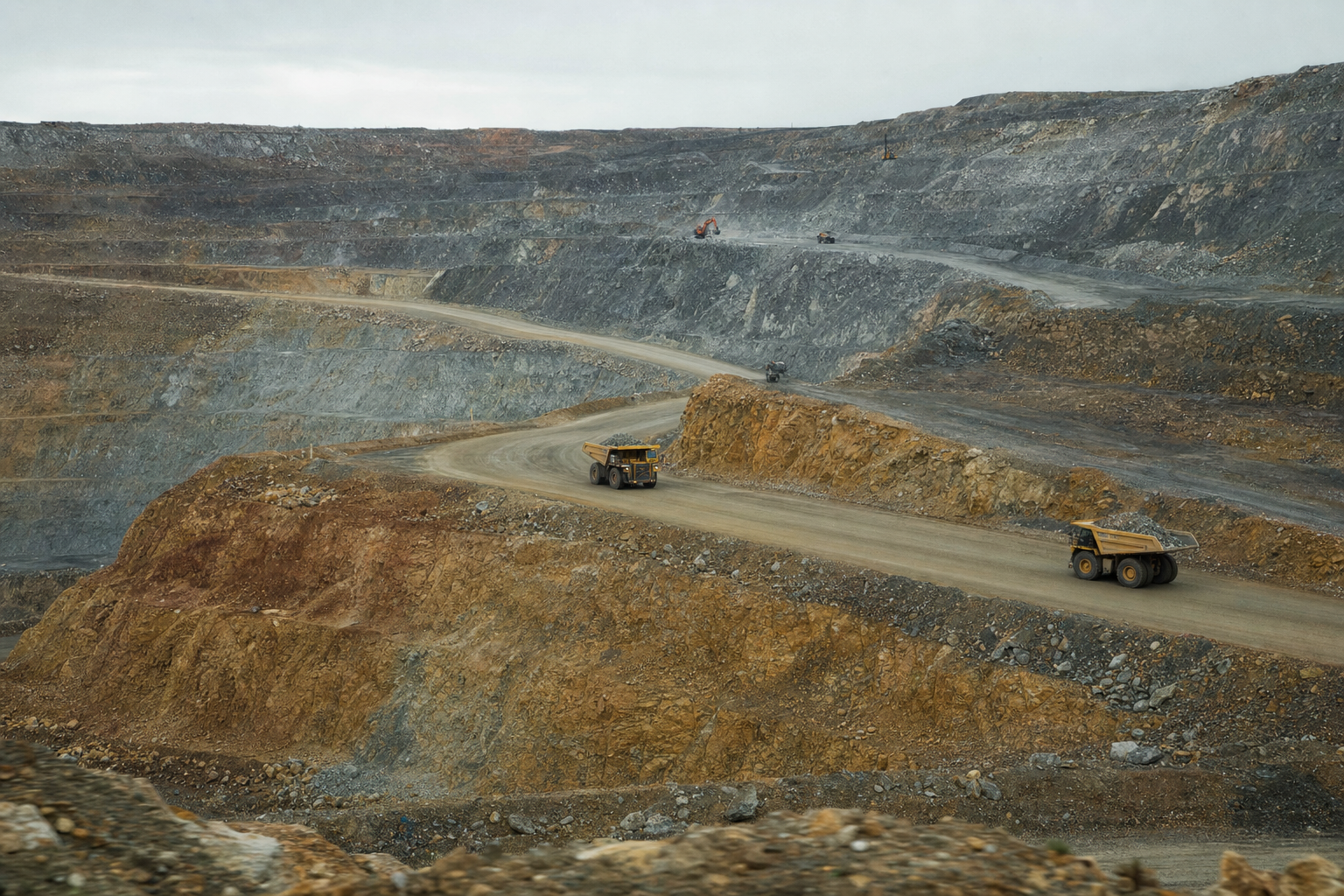
NordX Metals Corp. is not being read in a vacuum. It is a junior explorer in lithium, uranium and rare earths, operating in a part of the market that has spent much of 2026 trying to reconcile policy enthusiasm with commodity reality. Lithium-focused juniors have had to live with weak pricing, Chinese supply pressure and the market’s periodic preference for battery chemistries that do not need as much lithium as the last cycle promised. That is the backdrop. It is not a trivial one, because a junior miner’s equity story is usually a financing story first and a geology story second.
Against that, the filing from Andrew William Bowering, listed as CEO, is a clean buy. The euro-normalised filing value is about EUR 9,021, dated June 29, 2026. It is not a life-changing cheque. It does not need to be. On a company with a market value of about EUR 3.6 million, the trade is roughly 0.25% of market cap, which is the sort of size that makes a reader stop and ask whether the insider is leaning into the name or simply keeping pace with a corporate calendar. In this case, the answer is closer to the first than the second, because the trade sits inside a reported cluster.
Why this name is worth a look now
NordX is one of those names where the corporate wrapper matters almost as much as the asset base. The company rebranded from United Lithium earlier in 2026 after a 2-for-1 consolidation, and that tells you something about the stage of the business. Juniors do not consolidate and rename because they have reached maturity. They do it because they are trying to reset the equity story, clean up the capital structure and make the next financing easier to sell. That is not a criticism. It is the operating model.
The company also closed a CAD 1.2 million private placement on June 12, 2026, issuing units at CAD 0.30 with warrants at CAD 0.40, including CAD 61,000 from directors and officers. That is useful context because insider buying after a financing can mean different things depending on the setup. Sometimes it is a token gesture after dilution. Sometimes it is a deliberate show of alignment when the board knows the market is watching the cash runway. Here, the fact that directors and officers participated in the placement and then a CEO buy followed later in the month makes the sequence more interesting than a standalone purchase would be.
Shares have traded recently near CAD 0.40 on the CSE, which puts the insider buy in the same general zone as the recent financing terms. That matters because it suggests the CEO was not buying into a dramatic rerating. He was buying into a stock that has already been through a reset and is still priced like a junior. If you are looking for a grand contrarian signal, this is not it. If you are looking for evidence that management is willing to keep skin in the game while the market remains skeptical, this is closer.
The cluster is the part that sharpens the read
Insider buying in a micro-cap explorer is rarely about one person. The better read comes from whether the board and senior officers are moving together, or whether one insider is making a lonely statement. NordX’s internal cluster picture is the reason this filing deserves more than a passing glance. Insiders Trades data shows this was part of a wide cluster, with 5 insiders trading the same name in the same direction over the past quarter, and 12 recent declarations in the cluster window. That is the sort of pattern our scoring likes most, and for good reason. A lone buy can be idiosyncratic. A cluster says the people closest to the company are repeatedly choosing exposure over cash.
The June 29 buy by Bowering is the cleanest headline in that sequence, but it is not the only relevant piece. The recent declarations include multiple June 15 filings from Jonathon William Franklin and Johan Sebastian Bergenwall, with both BUY and OTHER entries in the record. The exact mechanics matter less than the broader point: this is not a one-off gesture from a single director trying to tidy up optics. It is a cluster in a name that has just rebranded, consolidated, and raised money. That combination tends to show up when management wants to signal that the corporate reset is not just cosmetic.
There is still a limit to how far you can push that read. Clustered buying in a junior miner does not magically solve geology, permitting, commodity pricing or dilution. It does, however, tell you where the board’s attention is. In a sector where many names spend more time issuing stock than advancing projects, repeated insider buying is one of the few ways management can show it is willing to absorb the same volatility as outside holders.
What the tape is saying about lithium and critical minerals
The broader sector backdrop is mixed, and that is being polite. Lithium prices have remained subdued despite voluntary production cuts in China, and that has kept a lid on enthusiasm for the junior end of the market. At the same time, the energy-transition trade has not gone away. Battery storage demand is still rising, domestic critical minerals policy remains a live theme, and governments continue to look for ways to reduce dependence on concentrated supply chains. Those two forces pull in opposite directions. One compresses near-term economics. The other keeps strategic interest alive.
NordX sits right in that tension. The company explores for lithium, uranium and rare earth elements, which gives it more thematic breadth than a pure-play lithium junior, but also leaves it exposed to the usual problem of multi-commodity stories: the market often likes the narrative more than the funding burden. The company itself highlighted Sweden’s June 2026 approval removing municipal veto power on uranium mining projects in a June 18 release, and that is not a throwaway detail. Regulatory change can matter a lot more than a drill result in a junior name when the asset base is still early stage. If uranium optionality becomes more valuable, NordX has something to point to beyond lithium.
Peer comparison helps frame the trade. Q2 Metals reported strong drilling intercepts at its Cisco project in June 2026. American Lithium was recently accepted into the U.S. Defense Industrial Base Consortium. Those are different kinds of catalysts, but they show the market’s current preference for names that can attach themselves to either hard data or strategic relevance. NordX is not there yet. It is still the smaller, earlier, more financing-sensitive version of the trade. That is exactly why insider buying matters more here than it would in a billion-euro producer.
The company’s financing tells you what kind of risk this is

The June 12 private placement is the other half of the story. A CAD 1.2 million raise at CAD 0.30, with warrants at CAD 0.40, is not the kind of financing that changes the company’s destiny. It is the kind that buys time. The fact that directors and officers contributed CAD 61,000 is useful because it shows management was willing to participate in the same paper as outside buyers. That does not eliminate dilution risk. It does not even reduce it much. But it does tell you the board is not treating the equity as a one-way exit.
For a micro-cap explorer, that distinction matters. A company with a market value of about EUR 3.6 million cannot afford to send mixed signals. If management is raising money, then buying stock around the same period is one of the few ways to argue that the financing was not simply a bridge to the next dilution event. Still, the market will judge NordX on execution, not symbolism. The stock has to survive the usual junior-miner math, where every new drill program, permitting step or strategic update has to compete with the cost of keeping the lights on.
That is why the insider buy should be read as a confidence marker, not a thesis. The trade size, about EUR 9,021, is meaningful in context but not heroic. It is large enough to matter on a company this small. It is not large enough to override the sector’s structural problems. If the tape were stronger, the same buy would look more like confirmation. In this tape, it looks like management choosing to lean in while the market is still cautious.
What our data says, and what it does not say
Insiders Trades data gives NordX a display score of 62, and the rationale is straightforward: the filing came from an operating director, it was part of a wide cluster, the size was about 0.25% of market value, and the company sits in the small-cap band where insider information has historically been least priced in. That is a sensible way to frame the signal. It rewards alignment, size and context rather than treating every buy as equal. But the score is not the story. It is a shorthand for why this filing is more interesting than a routine director purchase.
The historical cohort data is less flattering, and that is exactly why it belongs in the piece. For the Directeur · Micro bucket, Insiders Trades data shows a sample size of 9,088, a 90-day win rate of 25.6%, an average 90-day return of -12.65%, and an average 365-day return of -21.65%. That is historical cohort data for a role-and-size bucket, not a forecast for NordX and not a promise that this buy will work. It does, however, keep the read honest. In this part of the market, insider buying has often been a weak standalone predictor. The signal is better when it comes in clusters, when the company is small, and when the trade is large enough to matter relative to market value. NordX checks those boxes. It still does not escape the broader cohort record.
If you are weighing the name, that is the part to sit with. The filing improves the setup, but it does not turn a junior explorer into a clean momentum trade. The historical bucket data says these names have often struggled over the next three months. The cluster and the size say this one deserves attention anyway. Both can be true.
The read breaks down where juniors always break down
The obvious risk is that NordX remains a financing-dependent micro-cap in a sector where sentiment can turn on commodity prices faster than management can issue a release. Lithium has not yet given juniors the kind of sustained price support that makes equity stories easy. The company also has no recent analyst commentary or company statements directly addressing the June 29 filing in the public sources reviewed over the last seven days, which means there is no fresh management gloss to lean on. You are left with the filing, the financing, the rebrand and the sector backdrop. That is enough to form a view. It is not enough to get comfortable.
There is also a structural issue with reading insider buys in a name like this. In a large-cap industrial, a CEO buy can be a clean expression of conviction. In a micro-cap explorer, it can also be a way of reinforcing a capital markets narrative after a financing, a consolidation or a rebrand. That does not make it meaningless. It makes it harder to overread. The right question is not whether the CEO likes the stock. He clearly bought it. The right question is whether the company can convert this alignment into something the market will pay for, and whether the sector backdrop will cooperate long enough for that to happen.
NordX has a few things going for it. It has broader critical-minerals exposure than a single-commodity junior. It has a recent financing in hand. It has a cluster of insider activity rather than a lone purchase. It also has a market value small enough that a EUR 9,021 buy is not decorative. But it still has to prove that the new corporate wrapper, the uranium optionality and the lithium story can survive a market that remains selective. That is the real trade.
Bottom line on NordX Metals
The June 29 buy by Andrew William Bowering is worth reading because it lands in the middle of a broader insider cluster, after a recent financing, in a micro-cap junior that is trying to reset itself in a difficult lithium tape. That is a better setup than a random director nibble. It is also not a miracle. The sector is still under pressure, the company is still early stage, and the historical cohort record for similar insider trades is weak enough to keep expectations grounded.
If you want the cleanest version of the read, it is this: management is buying while the market is still cautious, and the cluster makes that more credible than a single filing would. If you want the harder version, it is this: juniors like NordX have a habit of making insider buying look smarter than it is until the next financing or the next commodity downdraft arrives. Both versions belong in the same notebook.
Sources and further reading
- simplywall.stpress
- ca.finance.yahoo.compress
- otcmarkets.compress
- uk.finance.yahoo.compress
- simplywall.stpress
- stocktitan.netpress
- thecse.compress
- barchart.compress
This is not investment advice.