
Gold is doing the heavy lifting, and Kinross is riding it
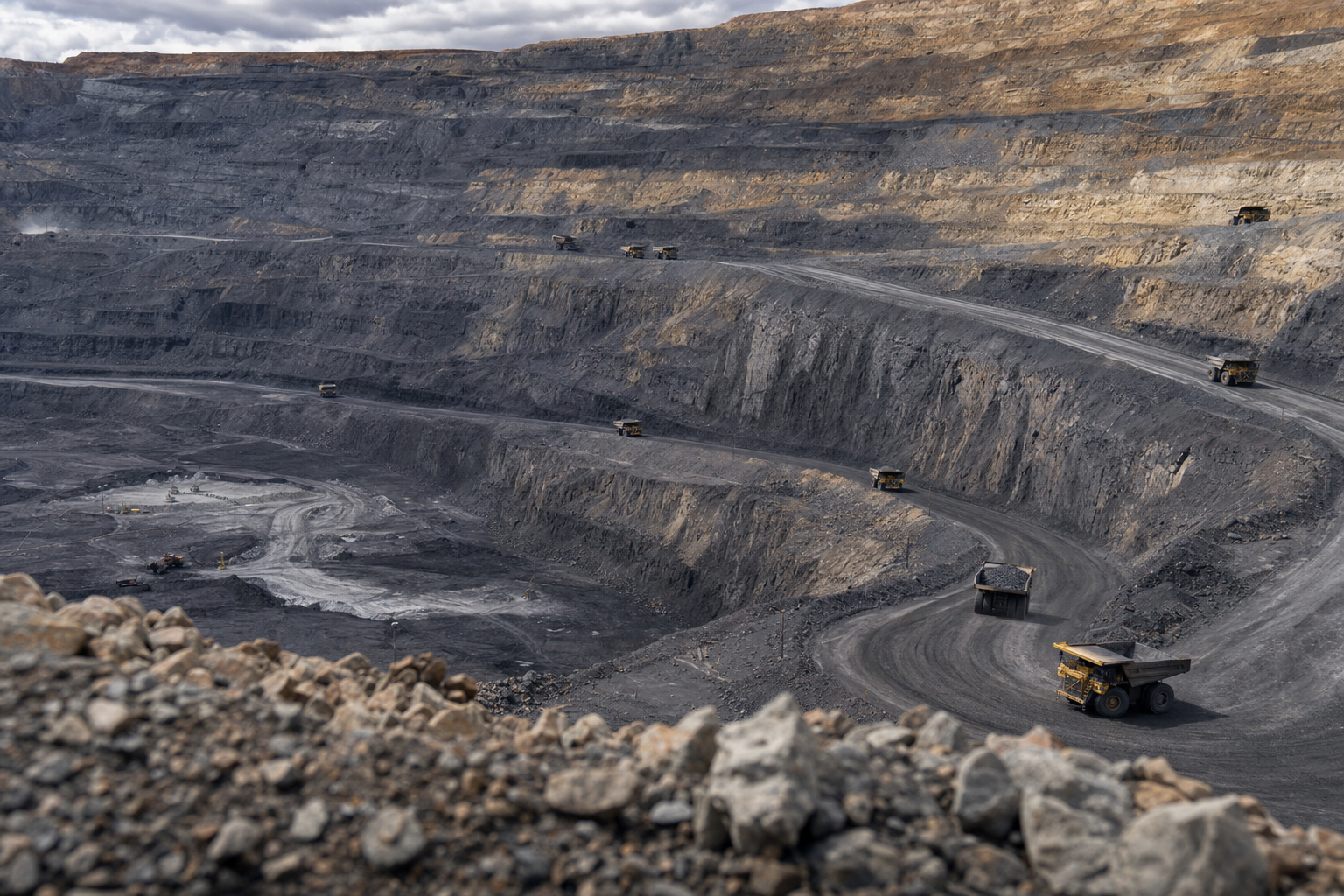
Kinross makes money the old-fashioned way, by pulling gold out of the ground and selling it into a market that has been paying up for the metal. That sounds simple until you look at the moving parts. The company has to keep ounces flowing, keep all-in sustaining costs in line, and avoid the kind of operational slip that turns a strong bullion tape into a weak equity story. Right now, the bullion tape is doing a lot of the work. Gold has been hovering around USD 4,100 to USD 4,157 per ounce, central banks have kept buying, and physically backed ETF flows turned positive in the first half of 2026 even after June outflows. That is the backdrop Kinross is trading against.
The stock has responded. Kinross closed near USD 24.20 on July 9 after a session gain of roughly 4.7 percent, and that matters because insider buying reads differently when the tape is already hot. A buy in a beaten-down miner can be a simple valuation call. A buy after a sharp run asks a harder question: do the people who know the business best still see room, or are they just following the same commodity bid everyone else can see? You do not get a full answer from filings alone. You do get a useful one when the buys arrive in a cluster.
July 9 filings show a coordinated buying cluster
Five recent filings on July 9 show insiders buying shares valued at roughly EUR 9,087 to EUR 15,641 each, and the broader cluster picture is larger than that handful. Insiders Trades data shows 12 insiders trading the same name in the same direction over the past quarter, all buying. That is the kind of pattern our scoring likes because it is not easy to wave away as a one-off gesture from a single director with a calendar reminder. It is still not a guarantee. It is a concentration of behavior, and concentration is the point.
The named buyers in the latest batch were Julie Robertson, Ryan Latinovich, Stephen Kerrigan, Joseph Kemp, and Afjal Hashim. All five filed on July 9, all bought, and all were senior officers of the issuer. The euro-normalised filing values are small in absolute terms, which is exactly why the context matters. These are not balance-sheet-changing purchases. They are conviction markers, and in a company with a market cap of about EUR 39.0 billion, even the largest of the five, at about EUR 15,641, is a sliver. Insiders Trades data still assigns the company a signal score of 49, helped by the cluster, the role mix, and the fact that the filings came from insiders close enough to the operating machine to matter.
That score should not be overread. It is a filter, not a verdict. But it does tell you the pattern is not random noise. A lone buy from a passive director can be shrugged off. Twelve insiders buying the same name in the same direction over a quarter is a different shape, especially when the stock has already moved and the company has a known catalyst window ahead.
Kinross’s operating setup and shareholder returns
Kinross is a mid-tier gold producer with operations across the Americas and Africa, and the market is paying attention to the same things it always does in this business, only more so when gold is strong. Production guidance, cost discipline, free cash flow, and balance-sheet posture all matter because they determine how much of the bullion price gets through to equity holders. Kinross has reiterated 2026 guidance of 2.0 million attributable gold-equivalent ounces at all-in sustaining costs near USD 1,730 per ounce. That spread between realized gold and cost is the engine. If it widens, cash builds. If it narrows, the stock can stop behaving like a levered gold call and start behaving like a reminder that mines are businesses, not ETFs.
The company has also leaned on shareholder returns, targeting 40 percent of free cash flow through dividends and buybacks. That is not a small detail in a sector where capital allocation can separate the names that compound from the names that merely participate in the cycle. Newmont and Barrick have both rallied in the 30 percent range over recent three-month periods, and Agnico Eagle has had its own operational interruptions. Kinross sits in the same broad trade, but the market is not buying all miners for the same reason. Some are getting credit for scale, some for stability, some for cash returns. Kinross is trying to get credit for all three, and the insider cluster lands in the middle of that effort.
The company’s own fundamental screen is solid enough to keep the story from being purely momentum driven. Insiders Trades data shows a fundamental score of 78, with quality at 88. Those are not alpha claims. They are a transparent screen, a way to say the business is not showing up as a broken balance sheet or a low-quality asset base. In a commodity name, that matters because the market will forgive a lot when the metal is rising, but it does not forgive weak execution forever.
The July 29 report is the next test

The timing is doing some work here. Kinross is scheduled to report second-quarter results on July 29, 2026. That gives the July 9 buying cluster a short runway before the next hard data point. Insiders do not need to be clairvoyant to buy ahead of a quarter. They do need to be willing to own the setup into a report, and that is a different posture from buying after the numbers are out and the market has already decided what to think.
The broader gold tape also makes the timing more interesting. Central bank accumulation has averaged 1,000 tonnes annually in recent years, and physically backed ETF flows were positive in the first half of 2026 despite June outflows. That is the sort of macro support that can keep miners bid even when the equity market is otherwise selective. Rule Symposium discussions have also pushed gold into a new frame, less as a simple hedge and more as collateral in a high-debt environment. Whether you buy that narrative or not, the market has clearly been willing to pay for it. Kinross is one of the names that benefits when gold is treated as something more durable than a panic trade.
The read breaks down if you assume the commodity tailwind does all the work. It does not. The stock still has to clear the quarter, and the quarter still has to show that the company can hold production and costs where management said they would be. If the July 29 report confirms the operating story, the insider cluster will look better in hindsight. If it does not, the buys will look like a small, well-timed expression of confidence that did not translate into a better operating print. Filings do not protect you from that.
What the cohort bucket says about the odds
Insiders Trades data puts the relevant historical cohort for Directeur · Mega names at a 54.5 percent 90-day win rate, with an average 90-day return of 2.85 percent and an average 365-day return of 34.04 percent, based on a sample size of 59,300. That is the kind of statistic that can be useful if you keep your head. It says that, in this bucket, the historical tendency has been mildly positive over 90 days and much stronger over a year. It does not say Kinross will do that. It does not say this cluster will work. It says the role-and-size bucket has had a decent historical profile, and that is all.
The bucket matters because this is not a retail-sized whim. These are senior officers and directors, and the company sits in a mega-cap bucket with a large market value. The market-cap context cuts both ways. On one hand, the buys are tiny relative to the company, which means you should not romanticize them. On the other hand, the people making them are close enough to the operating cadence to have a real view on production, costs, and the quarter ahead. That is why the cluster gets attention even though the euro values are modest.
You can also see why the score is only 49. The signal is constructive, but not explosive. It is not a rare, outsized, all-in bet. It is a cluster of small buys in a strong gold tape, ahead of earnings, from senior insiders. That is enough to matter. It is not enough to force a conclusion.
Why the peers matter more than the headline does
Kinross does not trade in isolation. Newmont and Barrick have both been moving with the gold complex, and that is the first comparison you should make before you even look at the filings. If the whole group is rerating because bullion is strong and capital discipline is back in fashion, then Kinross’s insider buying is partly a read on the sector, not just on the company. That is fine. In fact, it is often how these things work. Insiders buy when the business and the tape are aligned, not when they are trying to heroically call a bottom in a broken market.
Agnico Eagle’s operational issues are a reminder that the sector still punishes execution mistakes. Gold miners can all benefit from the same metal price and still diverge sharply on what comes out the other side. Kinross has been emphasizing net cash and free-cash-flow generation, which is the right language for this market. Investors are willing to pay for miners that can turn a high gold price into actual distributable cash, not just accounting earnings. The insider cluster fits that story because it suggests the people inside the company are willing to own the same setup they are selling to the market.
That said, the market has already done some of the work for them. A stock that is up sharply into a quarter can be vulnerable if the report is merely good rather than better than feared. You do not need a bearish macro call to see that. You just need to know that a strong tape raises the bar. Kinross is not being bought because gold is cheap. It is being bought because gold is expensive and the company is still expected to convert that into cash.
The setup into July 29 is straightforward, and that is why it matters
The next thing to watch is not another abstract gold thesis. It is the July 29 second-quarter release. That report will tell you whether the company can keep production on track, whether all-in sustaining costs stay near the USD 1,730 per ounce level management has reiterated, and whether the free-cash-flow story still supports the 40 percent return-of-capital framework. Those are the numbers that will either validate or undercut the insider cluster.
If the quarter lands cleanly, the July 9 buys will look like a sensible pre-earnings accumulation in a strong sector. If the quarter disappoints, the buys will still be real, but they will read more as a small expression of confidence than as a useful timing edge. That is the honest way to use insider data. You do not ask it to predict the future. You ask it whether the people closest to the operating cadence are leaning in or stepping back.
For now, they are leaning in. Twelve insiders have bought the name in the same direction over the past quarter, five of them on July 9, and the stock is already trading in a market that has rewarded gold exposure. That combination is enough to keep Kinross on the screen. It is not enough to call the next move. The report on July 29 will do the heavier lifting.
Sources and further reading
- finance.yahoo.compress
- insiderscreener.compress
- theglobeandmail.compress
- marketbeat.compress
- quiverquant.compress
- kinross.compress
- s204.q4cdn.compress
- simplywall.stpress
This is not investment advice.