
Gold at $4,127, miners still trading their own story
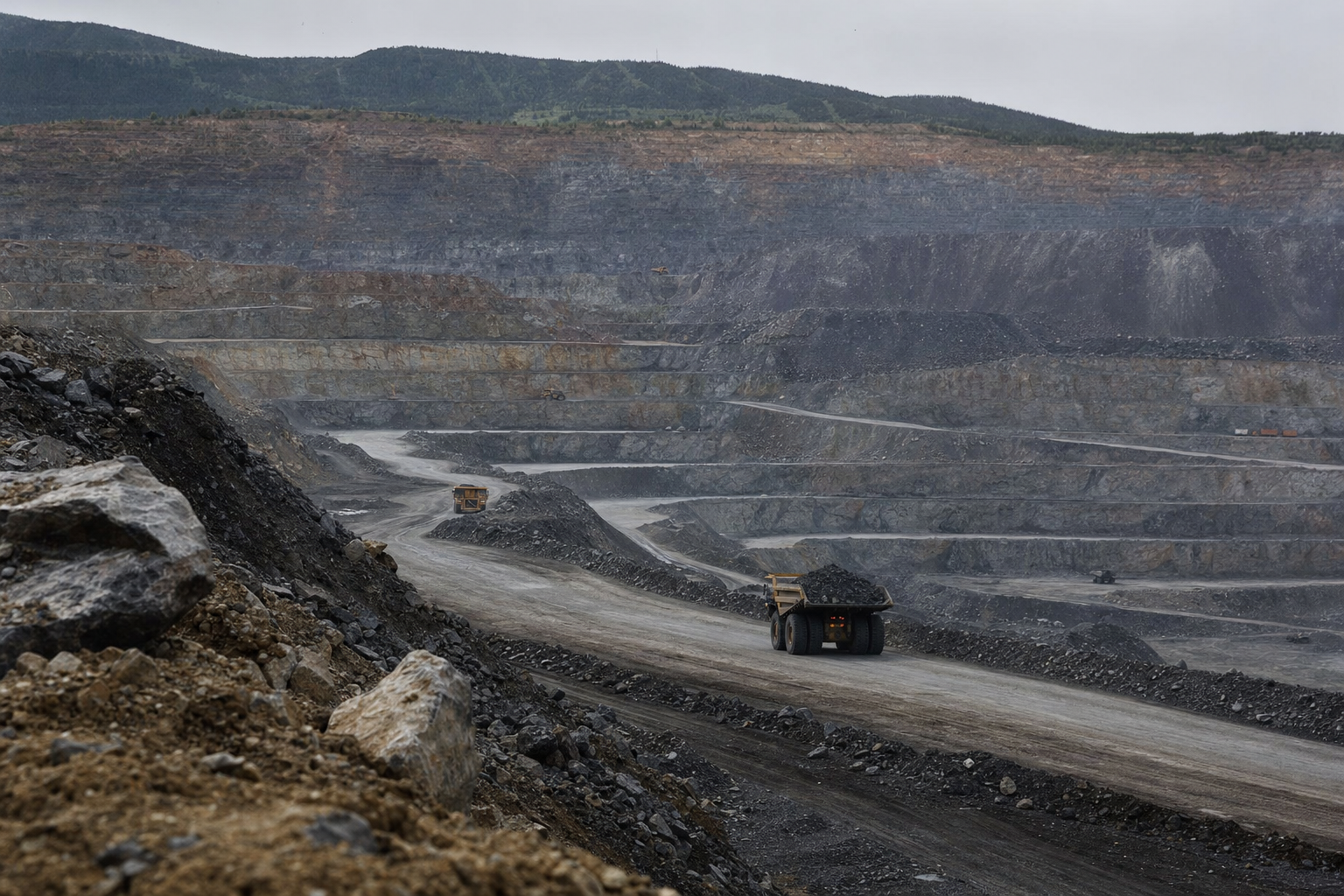
Gold miners do not trade like a clean proxy for bullion, and the last few months have reminded everyone why. The metal has been volatile, analysts have trimmed some 2026 price forecasts, and rate expectations have moved around enough to keep the equity tape choppy even when the commodity itself still sits at a level that would have looked absurd a few years ago. Bank of America has cut its average gold forecast to $4,360 per ounce, JPMorgan still talks about $6,000 by year-end, and that spread tells you the market is not settled on the next leg.
Kinross sits in the middle of that argument. It is a mid-tier producer with operations primarily in the Americas and West Africa, so it does not get the same scale premium as Barrick or Newmont, but it also does not carry the same single-asset fragility as some smaller names. The stock has outpaced both of those larger peers on a year-to-date basis, with Kinross up 15.51% as of July 10, Barrick at about 15.96%, and Newmont at 4.15%. That is not a victory lap. It is a reminder that the market is still sorting winners by cost profile, jurisdiction mix, and how much leverage each name has to a gold price that has already done a lot of work.
Twelve insiders, one direction, and a stock that did not flinch
On July 9, eight Kinross insiders filed purchases in a single day, and the broader cluster now totals 12 insiders trading the name in the same direction over the past quarter. The individual filing values ranged from about EUR 4,399 to EUR 40,436, euro-normalised at ingest, which keeps the scale honest. These are not giant checks relative to a company with a market value of about EUR 25.3bn. They are, however, coordinated enough to matter.
The names matter too. Kinross Gold Corporation saw buying from Julie Robertson, Ryan Latinovich, Stephen Kerrigan, Joseph Kemp, Afjal Hashim, Daniel Fombonne, Jonathan Paul Rollinson, and Kathleen M. Grandy. The filings were all buys, and the cluster includes senior officers and a director-level filer. That is the kind of pattern you do not get by accident. It is also the kind of pattern that can be overread if you forget the size of the checks and the fact that this is still a gold miner, where the stock can move more on bullion, costs, and guidance than on any one insider form.
Kinross shares closed at $24.11 on July 10 after trading near $24.20 the prior session, and the stock had already posted a 4.94% gain on July 9. So the market did not treat the filings as a shock. It treated them as confirmation, or at least as one more reason not to lean against a name that has been holding up better than some of its large-cap peers. The company is scheduled to report second-quarter 2026 results after market close on July 29, which gives the market a near-term checkpoint on whether the operating story still supports the share price.
Kinross, gold, and the forces behind the stock
Kinross is not a software company with recurring revenue and a neat margin bridge. It sells gold, and the stock moves on a few blunt variables. First, the gold price. Second, the company’s ability to keep costs from outrunning that price. Third, production mix and jurisdiction risk. Fourth, the market’s appetite for leverage to bullion when macro rates, the dollar, and central-bank buying all pull in different directions.
That is why the current backdrop matters. Gold recently traded near $4,127 per ounce on July 9, which is still a very high number even after the pullback from the January intraday high above $5,500. The late-June low near $4,000 shows the metal can still move sharply in either direction. For a miner, that means the equity is never just a simple read on the commodity. It is a read on whether the market thinks the company can hold margins if bullion cools, and whether the next quarter will show discipline or slippage.
Kinross has some help from scale. It is a mega-cap by the dossier’s classification, with a fundamental score of 78 and a quality score of 88 in Insiders Trades data. Those are screening inputs, not a promise of future returns, but they do explain why the name can attract attention when the sector is under pressure. A company with that profile does not need a heroic gold price to look interesting. It needs the market to believe the current price is not already discounting too much caution.
The July 9 cluster is the part that deserves attention
The cluster is wide enough to be meaningful and narrow enough to be readable. Insiders Trades data shows 12 distinct insiders trading the same name in the same direction over the past quarter, and six of the recent declarations listed in the dossier all came on July 9. That is not a random trickle. It is a synchronized set of buys across senior officers and a director-level filer, which is exactly the sort of pattern our scoring tends to reward.
One of the buys, Julie Robertson’s, was about EUR 9,376. Another, Jonathan Paul Rollinson’s, was about EUR 40,436. The rest sat in the same general band, from about EUR 4,399 to EUR 15,641. The point is not that any one check is large in isolation. The point is that several insiders chose the same day, the same direction, and a stock that had already been working higher. That is a lot of coordination for a company that does not need to manufacture confidence through press releases.
Our score on the filings came in at 49, which is middling on its own and more useful when you read the reasons behind it. The filing by an operating director, the wide cluster, and the euro-normalised value near EUR 9,376 for one of the buys all fed into that read. The score is not the story. The pattern is. And the pattern says the boardroom and senior management were willing to add exposure while the stock was already near recent highs and before the July 29 earnings date.
Director-level buys at mega-cap names
The relevant cohort here is director-level buys at mega-cap names. That bucket has a sample size of 52,833, a 90-day win rate of 55.9%, and an average 90-day return of 3.33%. The 365-day average return in that same bucket is 39.8%. Those are useful context points because they tell you this kind of filing has not been random noise in the historical sample. They do not tell you what Kinross will do next week, next month, or even over the next quarter.
That distinction matters more than usual in a miner. Commodity equities can swamp insider timing. A good cluster can be drowned by a bad gold tape, a cost surprise, or a guidance reset. A weak cluster can be rescued by a sharp move in bullion. So the historical bucket is best used as a sanity check. It tells you the pattern is not empty. It does not let you pretend the stock has to follow the average.
The strategy framework behind these trades is also live only as a screen, not a claim. The dossier’s point-in-time backtest headline sits behind the tokens 1.17, 12.5% (STOXX Europe 600 on the same dates: 9.3%), and (figure withdrawn, see audit 231), and those figures apply to a restricted EU venue universe with a short, single-regime window. That is useful for process, not for prophecy. If you want a cleaner way to think about it, use the filings as one input and the business as the anchor.
Why Kinross can attract buying here, even after a run
Kinross has already done enough work this year to make the July 9 cluster more interesting than a routine dip buy. The stock’s 15.51% year-to-date total return as of July 10 puts it ahead of Newmont and roughly in line with Barrick. That means insiders were not stepping in after a collapse. They were buying into a name that had already re-rated with the sector, but had not fully escaped the macro crosscurrents around gold, rates, and cost inflation.
That is where the business model matters. A miner with decent quality and a solid balance sheet can still look cheap or expensive depending on where gold settles and how much of the move is already in the shares. Kinross has a fundamental score of 78 and a quality score of 88 in Insiders Trades data, which is consistent with a company the market can own when it wants exposure to bullion without reaching for the most levered name in the group. The stock does not need to be perfect. It needs to avoid disappointing on the one thing miners cannot fake, operating performance.
The July 29 earnings date is the next real test. If the company shows stable production, controlled costs, and no ugly surprises, the cluster will look more like informed positioning than a ceremonial gesture. If the quarter disappoints, the filings will not save the stock. They never do. But they can tell you where the internal vote was before the numbers hit.
Barrick, Newmont, and the comparison that still matters
Barrick and Newmont are the obvious comparables because they set the tone for the sector. Barrick’s year-to-date return of about 15.96% shows the market still pays for scale and leverage to gold when it likes the setup. Newmont’s 4.15% return shows the other side of that trade, where a larger name can still lag if the market worries about costs, execution, or the path of bullion. Kinross sits between those poles and has recently traded with more momentum than Newmont.
That relative strength is not a free pass. It does, however, help explain why insider buying landed now. When a stock has already outperformed a lagging peer and still trades below the kind of levels that would imply a perfect macro backdrop, insiders can decide the risk-reward is still acceptable. They may be right. They may simply be early. In miners, those are not the same thing.
The sector backdrop also keeps the read grounded. Mining.com noted earlier this year that gold mining stocks were at risk of giving back gains as rate-cut bets faded and energy costs stayed high. That is the kind of pressure that can make a cluster of buys more notable, because it says the insiders were willing to buy while the sector still had reasons to hesitate. Again, that is not a forecast. It is a posture.
July 29 is the real test
The market will not spend long admiring the paperwork. It will move on to the second-quarter 2026 results after market close on July 29. That is the date that can either validate the cluster or reduce it to a footnote. For a miner, the quarter will matter more than the form because it will show whether Kinross can keep translating a strong gold price into actual operating leverage.
If the company reports cleanly, the insider cluster will read as a timely vote of confidence from senior people who were willing to buy before the print. If the quarter shows cost pressure or weaker production, the same filings will look more like a well-timed but ultimately incomplete expression of faith. That is the honest way to hold both ideas at once. The buys are real. The business still has to earn them.
For now, the useful fact is simple. Kinross had 12 insiders buying the same name in the same direction over the past quarter, eight of them on July 9, while gold was volatile, miners were lagging the metal at times, and the stock was already holding above $24. The next hard data point is the July 29 earnings release, and that is where the cluster either gets confirmation or gets put back in the drawer.
Sources and further reading
- Yahoo Financepress
- InsiderScreenerpress
- The Globe and Mailpress
- Kinrosspress
- Quiver Quantitativepress
- Fintelpress
- Simply Wall Stpress
- Kinrosspress
This is not investment advice.