
AI capex still has the sector bid, but the tape got jumpy

Applied Materials sits in the middle of one of the cleaner secular trades in semis. The company sells wafer fabrication equipment into a market that is still being pulled forward by AI infrastructure spending, and the latest industry data have not been subtle about that. SEMI said global semiconductor equipment billings reached $36.55 billion in the first quarter of 2026, up 14% year over year and 1% sequentially, with record levels tied to logic, DRAM, and advanced packaging demand.
That is the backdrop. The stock has been trading like a name with a lot of that good news already in the price, which is why the tape matters here as much as the filing. AMAT ran hard into late June, then sold off sharply on July 1, with the shares down nearly 10% to close at $650.91 after touching an intraday high near $739 earlier in the week, according to the market data in the brief. That kind of swing tells you the market is still willing to pay for AI exposure, but it is no longer handing out free passes.
What Dickerson sold, and why the size matters
The filing is not a one-line trim. Dickerson sold 78,321 shares in a series of open-market transactions disclosed in the Form 4 on July 1. The trades were spread across June 29 and 30, with reported weighted-average prices of $700.21 for 50,332 shares, $701.33 for 7,989 shares, $735.22 for 19,970 shares, and $736.05 for 30 shares. The total value was about EUR 55.5 million after normalisation at ingest.
That is a large sale for any executive, and it is especially large when the seller is the president and chief executive of a company with a market cap of EUR 574.0 billion in the dossier. The point is not that the sale is mechanically bearish. It is that the market is being asked to read a meaningful reduction in exposure from the person who knows the operating cadence, customer demand, and order timing better than anyone outside the building. That is the part worth sitting with if you are weighing the name.
The cluster is the tell, not the headline number
Our scoring puts the filing at 54, and the reason is plain enough. The role matters, because the model weights a chief executive more heavily than a routine director. The cluster matters too. Insiders Trades data show this was part of an insider cluster, with three distinct insiders trading the name in the recent window and 12 recent declarations in total. The recent list includes multiple Dickerson sales on July 1, plus sales by Raja Prabu G. on June 22 and Timothy M. Deane on June 17.
That does not make this a panic signal. It does make it harder to dismiss as a one-off tax or estate event. When a CEO sale lands inside a broader run of insider activity, the market gets a cleaner read on internal positioning. The cluster says the company is not dealing with a single isolated filing from a long-dormant holder. It is seeing repeated selling from the top of the house, and that is a different animal.
The caveat is just as important. Insider filings are a signal, not a guarantee. They can reflect diversification, liquidity planning, or prearranged trading plans. You do not get to infer motive from the filing alone, and you should not pretend otherwise. What you can say is that the pattern is real, the size is real, and the timing is real.
Applied Materials is still a quality name, which is why the sale lands harder
The fundamental screen in the dossier is not weak. Applied Materials carries a fundamental score of 55, with a quality score of 82. That is not the profile of a broken business. It is the profile of a company that still sits in a strong strategic position inside the semiconductor equipment stack, with enough operating quality to keep the market interested even when the stock gets ahead of itself.
That matters because insider selling in a low-quality name can be shrugged off as noise. In a higher-quality compounder, the same sale gets more attention. The market already knows AMAT is tied to AI infrastructure, advanced packaging, and the broader buildout in logic and memory. The company has also been positioning itself around 3D chip architectures and high-bandwidth memory, which keeps it in the right conversations when investors are chasing the next leg of capex. So when the CEO sells into that narrative, the filing cuts against a stock that still has a premium story attached to it.
The read is not that the business has lost its edge. The read is that the market may have pushed the shares to a point where even a strong franchise is vulnerable to profit-taking, especially after a fast run. That is a different conclusion, and a more useful one.
Lam, KLA, ASML, and the part of the trade that still works
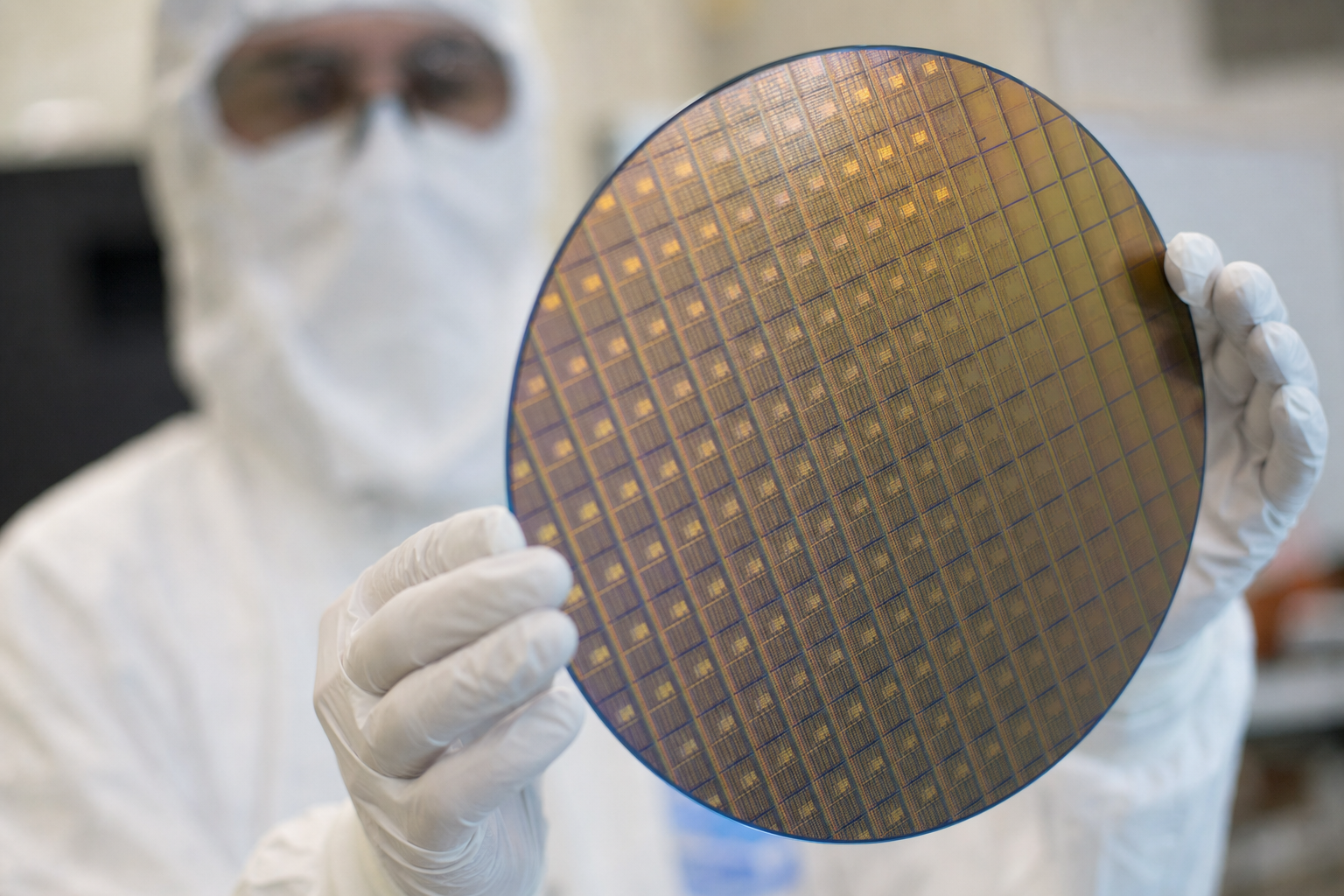
If you want to understand why AMAT can still trade well even with insider selling on the tape, look at the peer set. Lam Research and KLA are in the same broad equipment conversation, with exposure to wafer and process-control demand that benefits from AI-related spending. ASML sits in a different lane, but it dominates extreme-ultraviolet lithography and remains the other obvious reference point when investors talk about the equipment cycle.
The common thread is that the market has been rewarding the names that sit closest to the bottlenecks in advanced chip production. That has been true for months, and it is still true now. The problem is that crowded leadership rarely moves in a straight line. When a sector has already outperformed broader semiconductor indices on AI tailwinds, the first thing the tape does on a weak day is test who is still willing to pay up.
Applied Materials has been one of the beneficiaries of that rotation. It is also one of the names where the market can get a little too comfortable with the story. The company is large, liquid, and widely owned. That makes it a natural destination for momentum capital, but it also means the stock can gap lower when the mood changes. The July 1 move fits that pattern. The insider sale does not cause the pullback, but it does arrive at exactly the kind of moment when traders start asking whether the easy money in the group has already been made.
What the cohort data say, and what they do not say
Insiders Trades cohort data for the PDG/DG · Mega bucket show a 90 day win rate of 50.4% across 15,819 observations, with an average 90 day return of 1.7% and an average 365 day return of 25.92%. That is useful context, but only if you keep it in its lane. It is historical cohort data for a role-and-size bucket, not a forecast for Applied Materials and not a promise that this sale will be followed by any particular price path.
The point of the cohort read is narrower. It tells you that chief executive sales in mega-cap names are not automatically toxic, and that the average post-filing drift in this bucket has been modest over 90 days. That is a long way from saying the stock will do the same thing here. It will not. AMAT has its own cycle, its own valuation, its own AI narrative, and its own tape.
If you are trying to use the data properly, the cohort stat should keep you from overreacting to the filing while still respecting it. A CEO sale of this size is not a throwaway detail. But the historical bucket data also argue against treating every executive sale as a clean short. The market is messier than that, and the data are too.
Our strategy layer is built around a 90 day holding period with a maximum position size of 0.08. The out-of-sample Sharpe of 0.56 and CAGR of 17% come from a restricted EU venue universe and a short, single-regime window, so they are context, not a claim of durable edge. Useful, yes. Gospel, no.
The tape is the real test now
The cleanest way to read this filing is against the tape, not against a press release. AMAT had already surged into late June, then gave back a lot of that move on July 1. That matters because insider selling is most informative when it arrives after a stretch of strength. A CEO selling into weakness is one thing. A CEO selling after a sharp run and before a hard reset is another.
The market is also in a more selective phase than it was when every AI-adjacent name could rally on the same macro story. The brief points to profit-taking in a narrow leadership environment ahead of earnings season, and that is the right frame. When leadership narrows, the market starts discriminating between names with durable order momentum and names that have simply been carried higher by the group. Applied Materials is still in the first camp on the fundamental story, but the stock is now being asked to prove it again.
That is where the insider sale becomes relevant. It does not change the long-term case for semiconductor equipment. It does not erase the AI capex backdrop. It does tell you that the person running the company chose to reduce exposure in size while the stock was near highs and the sector was already extended. That is a data point, not a verdict. But it is a data point with enough weight to matter.
The read for a sophisticated holder
If you own AMAT, the question is not whether the company is good. It is. The question is whether the stock has outrun the near-term setup, and whether the July 1 drawdown is the market beginning to answer that for you. Dickerson’s sale does not force a conclusion, but it does make the burden of proof heavier for the bulls.
If you are looking at the name fresh, the setup is cleaner than the headline suggests. You have a high-quality equipment franchise, a sector still supported by AI-driven capex, and a stock that has already shown it can move violently in both directions. Against that, you have a CEO sale of EUR 55.5 million, a broader insider cluster, and a tape that just reminded everyone that momentum can unwind fast. That is enough to keep the name on the watchlist, but not enough to treat the filing as a buy signal.
The best read here is disciplined, not dramatic. Applied Materials remains one of the better ways to express the semiconductor equipment cycle, but the insider activity says the easy part of the move may be behind it for now. If the stock stabilises and the order story keeps holding, the sale will fade into the background. If the tape keeps breaking, this filing will look less like noise and more like timing.
Sources and further reading
- investing.compress
- finance.yahoo.compress
- stocktitan.netpress
- simplywall.stpress
- insiderscreener.compress
- secform4.compress
- quiverquant.compress
- stockcircle.compress
This is not investment advice.