
AI networking is still doing the heavy lifting
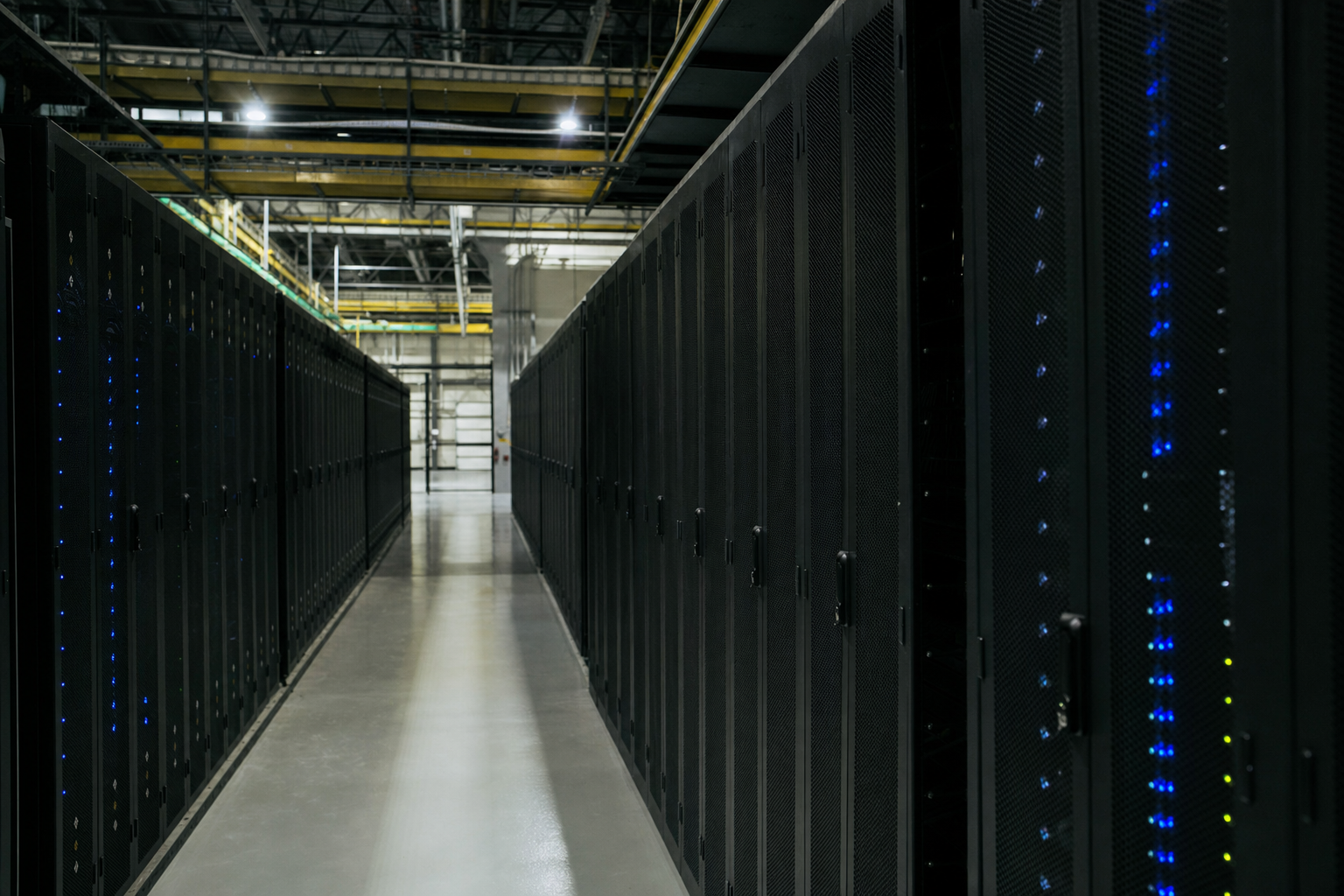
Semtech SEMTECH CORP sits in a part of the semiconductor market that still has a real story behind it. The company sells analog and mixed-signal chips into AI data center networking, IoT connectivity, and related applications, which means the stock does not trade like a sleepy industrial supplier. It trades with the market’s appetite for bandwidth, optical gear, and anything that helps move data faster inside a rack or across a data hall.
That backdrop matters because the sector itself has been strong. Worldwide semiconductor sales reached $298.5 billion in the first quarter of 2026, up 25% from the prior quarter, with March sales at $99.5 billion. Semtech is not the whole industry, of course, but it is riding the same current. When AI capital spending stays hot, names with exposure to high-speed connectivity and data infrastructure get pulled into the same conversation as larger peers, even if their business mix is narrower and their balance sheet story is different.
Hou trims after a sharp run in Semtech shares
Hong Q. Hou, Semtech’s President and CEO, sold 2,000 shares on July 10 at $133 per share, for a total filing value of EUR 232,351 after euro-normalisation. The Form 4 landed on July 14. That was not his first sale in the window. On June 29, he disposed of 9,605 shares at a weighted average price of about $152.57, for roughly $1.465 million. The second trade is smaller, but it comes after the first one and after a stock that had already moved a long way.
Semtech closed at $132.15 on July 13, after a recent high of $174.73 on June 22. That is a meaningful gap. It tells you the CEO was not selling into the exact top tick, but he was also not selling after a collapse. He sold after a strong run, then sold again after the stock had already given back a chunk of that move. That is the kind of sequence that makes a filing more interesting than a one-off trim.
The stock’s own volatility is part of the setup. Semtech has had multiple moves above 5% over the past year, and that is exactly what you expect from a name tied to AI networking and chip-sector momentum. When the tape is this active, insider sales can mean several things. They can be routine. They can be tax-driven. They can also be a sober response to a price that has outrun the business. You do not get to assume which one from the filing alone.
Semtech’s revenue mix keeps the stock in focus
Semtech’s revenue mix is what keeps the stock in the market’s line of sight. The company reported record quarterly revenue of $291 million in its fiscal first quarter of 2027, with data center revenue at a record $71.6 million. Management tied that to demand for 800-gig products and traction in higher-speed offerings. That is the operating engine here. Not a vague semiconductor label. Specific products, specific end markets, specific demand.
That matters because the market has been rewarding exactly this kind of exposure. Onsemi and AMD have also been moving in the same broad chip-strength window, with breakouts tied to sector momentum and AI-related capital spending. Semtech is not a direct substitute for either one, but it lives in the same investor mental bucket when the market is paying up for data infrastructure and connectivity. If you own the stock, you are not just buying a single company. You are buying a claim on continued demand for faster links, denser networks, and more expensive silicon content per rack.
The risk is that this is still a cyclical business wearing a growth-market jacket. Semtech’s fundamental score in our dossier is 33, with a value score of 38 and a quality score of 29. That is not a pristine profile. It says the company has real operating momentum, but not the kind of broad fundamental strength that lets you ignore price. In a stock like this, the market can forgive a lot when the data center line is accelerating. It can also punish the name quickly if that growth cools or if the multiple gets ahead of the next quarter.
The insider cluster changes the read
Our scoring puts this filing at 60, and the reasons are plain enough. It was filed by a chief executive, which our model weights heavily. It came as part of an insider cluster, with multiple insiders trading the name within a month. And the filing value was small relative to market value, about 0.00% of the company’s market cap, which makes it a modest position trim rather than a balance-sheet event. The euro-normalised filing value was about EUR 232,351. That is not a giant number for a company with an EUR 11.1 billion market cap, but the role and the cluster keep it on the board.
The cluster itself is the part that deserves attention. Insiders Trades data shows three distinct insiders in the recent window, with 12 recent declarations. Hou appears twice in the recent list, and Asaf Silberstein appears repeatedly as a seller as well. That does not prove coordination, and it does not tell you why each person sold. It does tell you the CEO was not alone. When a chief executive sells and other directors are active in the same stretch, the filing reads less like a random portfolio housekeeping note and more like a broader posture around the stock.
That is where the read gets sharper. A lone sale by a CEO after a run can be dismissed as noise. A cluster of sales after a sharp move in the shares is harder to treat as noise, even if the amounts are not huge relative to the company. You still need to respect the business backdrop, because Semtech has real operating momentum. But you also need to respect that insiders are acting while the stock is still elevated relative to its June base.
Historical cohort data for chief-executive buys at large-cap names
The relevant historical bucket in our dossier is chief-executive buys at large-cap names. That bucket has a sample size of 12,775, a 90-day win rate of 50.2%, an average 90-day return of 1.61%, and an average 365-day return of 29.01%. Those are historical cohort data, not a forecast for Semtech and not a promise that this stock will behave the same way. They are useful because they keep you honest about how noisy insider work can be. Even in a large sample, the 90-day hit rate is barely above coin-flip territory.
That is the right way to use the number. Not as a magic wand. As a sanity check. If you are tempted to overread a single filing, the cohort data pulls you back toward discipline. It says that insider trades, even when filtered by role and size, do not hand you a clean edge every time. They work best when you combine them with the actual business cycle, the stock’s price path, and the presence or absence of a cluster.
Semtech’s own price path is doing some of the work here. The stock’s June 22 high of $174.73 and July 13 close of $132.15 frame the filing in a very specific way. Hou sold after the stock had already surged, then sold again after it had cooled. That is not the same as selling into panic. It is also not the same as buying weakness. You are looking at a manager who has chosen to reduce exposure while the market is still paying attention to the name.
AI capex still drives the stock, not the filing alone
The broader market context is still favorable to the semiconductor group. AI-driven capital expenditure remains the main narrative, and Semtech has enough exposure to data center networking to stay in that lane. That is why the stock can absorb a sale like this without breaking the story. The company just posted record quarterly revenue, and its data center line hit a record as well. Those are the facts that keep the equity from becoming a pure insider-trading story.
But the market does not pay for facts in isolation. It pays for the next few quarters of those facts. If 800-gig demand keeps translating into revenue, the stock can justify a premium. If the pace slows, the multiple can compress quickly, especially in a name that has already shown it can swing more than 5% in a session. That is the tension you should keep in view. The filing matters because it arrives while the stock is still priced as a beneficiary of the AI buildout, not after the market has given up on the theme.
Peers help frame that tension. Onsemi and AMD have both been used by the market as proof that chip names tied to infrastructure and compute can still break out when the tape is friendly. Semtech is not as large or as diversified as those names, but it is close enough to the same demand story that sentiment can travel across the group. When that happens, insider sales get read through a harsher lens. Not because they are automatically bearish, but because the market has already done some of the work for the insider.
What to watch before the next filing lands
The next useful data point is not another headline about the sale. It is whether Semtech keeps printing the kind of revenue mix that justified the stock’s move in the first place. Data center revenue at $71.6 million in the fiscal first quarter of 2027 is the number to watch because it tells you where the growth is actually coming from. If that line keeps expanding, the market will be more forgiving of insider trimming. If it stalls, the June high starts to look less like a waypoint and more like the top of the move.
You should also watch whether the insider pattern broadens or fades. The recent cluster already includes the CEO and another director-level seller. If the next Form 4s show more of the same, the market will have to decide whether this is simply a period of routine monetization or a more deliberate reduction in exposure. If the filings stop, the current cluster may end up looking like a short-lived window around a strong price move. Either way, the stock will still be judged first on execution, not on the paperwork.
Insiders Trades data gives you a useful frame, but not a verdict. The company’s score of 33 says the fundamentals are not weak enough to dismiss the name, and not strong enough to ignore valuation and timing. The 60 signal score says the filing deserves attention. The business model says the stock is still tied to AI networking and data center demand. Put those together and you get a name that remains investable, but not one you should treat casually after a CEO has sold twice in two weeks.
Dig deeper: HOU HONG Q's filing track record.
Sources and further reading
- StockTitanpress
- Investing.compress
- StockTitanpress
- Secform4press
- Semtechpress
- InsiderScreenerpress
- Secform4press
- Insiderflowpress
This is not investment advice.