
EU waste rules are still doing the heavy lifting
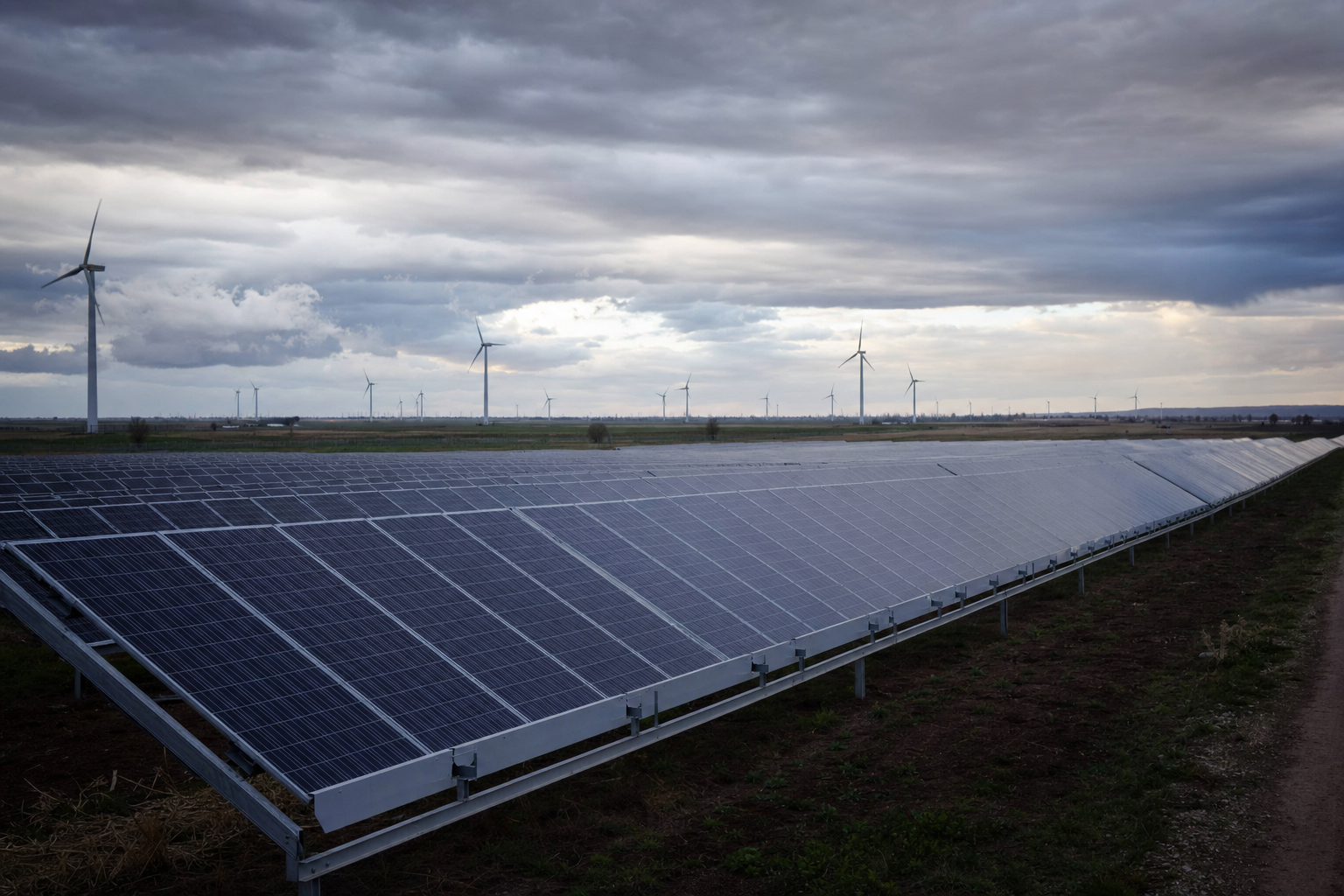
Europe’s environmental-services trade has not needed much help from the macro tape this year. It has had regulation. That is the cleaner driver, and it is still in force. On July 10, the European Commission updated rules to clarify and sustain waste-recovery shipments to Switzerland, which matters because cross-border treatment flows are not a side issue for operators with real industrial footprints. Add the 2026 digitization of cross-border waste-shipment procedures, the Packaging and Packaging Waste Regulation coming in from mid-August, and the right to repair directive due by July 31, and you get a policy stack that keeps compliant treatment, recycling, and recovery capacity in demand.[^1][^2]
That backdrop has already shown up in the listed names. Veolia Environnement, the obvious large-cap comparator, has been trading with much better momentum than the broader French market, with a year-to-date total return of about 30 percent as of July 14, while the CAC 40 itself has only managed modest gains through mid-July.[^3] Veolia is the liquid benchmark, the one the market can actually use to express the theme. Séché Environnement is smaller, less liquid, and more idiosyncratic. That matters. In this part of the market, policy tailwinds can lift the whole group, but the stock-specific read still comes down to execution, leverage, and whether insiders are willing to buy their own paper when the sector is already working.
Veolia is the reference point, Séché is the test
Veolia trades like the sector’s liquid proxy. Séché trades like a smaller industrial with more moving parts. That difference is not cosmetic. When the market is rewarding environmental-services names, the large-cap can absorb the flow first, then the smaller operator gets judged on whether it can keep up without the same balance-sheet flexibility or index sponsorship. Séché’s shares were recently quoted in a range of EUR 77.30 to EUR 80.80, with a close of EUR 77.30 on July 10 after a 4.32 percent daily gain. The 52-week range, EUR 55.60 to EUR 105.60, tells you the stock has already lived through a wide re-rating window.[^4]
That is the frame you want before you touch the filings. A stock that has already moved from the mid-50s to above EUR 100 over the past year does not need a heroic insider signal to matter. It needs a filing that says something about timing, confidence, or both. And because this is a name in the EUR 300 million to EUR 1 billion band, the market is less efficient than it is in the mega-cap industrials. Our data has long treated that size bucket as one where insider activity can still carry some informational weight, especially when the buyer is the chief executive and the trades arrive in a cluster.
Séché’s own public framing has not been dramatic. Earlier in 2026, the company highlighted consistent strategy execution and governance, including recognition as one of France’s Best Managed Companies for the fifth consecutive year.[^5] Fine. Useful, even. But that is not the same thing as a market setup. The setup is the combination of policy support, a sector leader already trading well, and a smaller listed peer whose stock has room to move both ways. That is where the insider filing becomes worth reading.
Three July 13 buys, and the name on every line is the same
On July 13, 2026, Maxime Séché filed three separate purchases in Séché Environnement, all on the same day, all marked as buys, and all tied to the same insider. The euro-normalised filing values were approximately EUR 94,769, EUR 68,672, and EUR 67,843, for a total of about EUR 231,284.[^6] The filings were posted on the AMF database. There is no need to dress that up. The chief executive bought his own stock three times in one day.
That is the part that matters more than the arithmetic. A single small buy can be noise, especially in a name where the share price has already had a strong run. Three buys, same day, same insider, same direction, is a different pattern. It does not tell you the stock is cheap. It does tell you the person running the company was willing to add exposure after the stock had already recovered into the high-70s. That is a cleaner read than any press release language about confidence or alignment. The market can decide whether to care. You can at least say the insider did not wait for a pullback that never came.
Insiders Trades data scores the cluster at 7.5, and the reason is straightforward: it was filed by a chief executive, it came as part of an insider cluster, and the total size was about 0.02 percent of market value. That is not a balance-sheet event. It is a behavior event. The distinction matters. A chief executive buying in size after a strong sector move is not the same as a director nibbling once. The role carries more weight, and the repeated filings make the action harder to dismiss as a one-off administrative trade.
What our cohort data says, and what it does not

The historical cohort for this bucket, chief-executive buys at sweet-spot names between EUR 300 million and EUR 1 billion, covers 7,132 observations. The 90-day win rate is 46.3 percent, the average 90-day return is 0.28 percent, and the average 365-day return is 18.37 percent. That is historical cohort data, not a forecast for Séché, and not a promise that this filing will work. It is a way to keep the trade honest. Chief executive buys in this size band have not been a magic wand over 90 days. They have been better at the longer horizon, where the average return is meaningfully positive.
That split is useful here because Séché is not being bought in a vacuum. The stock already sits inside a sector that has been helped by regulation and a peer group that has been bid up. In that kind of tape, the short-term reaction can be messy. A good filing can still be followed by nothing. A mediocre filing can still be followed by a drift higher if the sector keeps working. The cohort data does not solve that. It gives you a prior. And the prior says the market usually needs more than a chief executive buy to produce an immediate payoff, even if the longer-run distribution has been better than flat.
Why the size of the buy matters here
The total filing value, about EUR 231,284, is not huge in absolute terms, but it is not trivial either. In a company with a market capitalization near EUR 620 million in the internal data, that is enough to register without pretending to be transformational. The individual trades were also not identical in size, which is often the case when an insider is building exposure through multiple declarations rather than making one neat headline purchase. The market does not need the exact motive to see the pattern. It only needs to see that the chief executive was adding, not trimming.
The stock’s recent price action makes that more interesting. Séché closed at EUR 77.30 on July 10 after a 4.32 percent daily gain, and the recent trading range of EUR 77.30 to EUR 80.80 suggests the market had already started to lean in before the filings hit the AMF database.[^4] That is where the read gets more nuanced. Buying after a move is not the same as buying into weakness. It can mean the insider thinks the move has more room. It can also mean the insider is simply comfortable owning more of a business that is already doing what it should. You do not get to assign motive. You do get to note timing.
Insiders Trades data also shows this was not a lonely event. The cluster picture lists 12 recent declarations, with repeated July activity and another buy on July 10, July 8, and June 29. The public filings point to a pattern of continued accumulation rather than a single burst. That does not make the stock a certainty. It does make the July 13 trio look like part of a sequence, which is more informative than a one-off line item buried in a database.
The sector still has policy behind it, but the stock still has to earn it
The environmental-services trade has a habit of looking obvious after the fact. Regulation tightens, compliance costs rise, treatment capacity matters more, and the listed operators get rerated. Then the market starts asking which names can actually convert that backdrop into cash flow and margin stability. Séché sits in that second group. It is not the sector’s giant. It is the name you watch when you want to know whether the policy tailwind is broad enough to lift smaller operators, or whether the money stays concentrated in the liquid leader.
That is why Veolia matters as a comparator and not just as a peer. Veolia’s stronger momentum tells you the market likes the theme. Séché’s insider cluster tells you management is willing to own more of the stock while the theme is still in favor. Put those together and you get a reasonable, not extravagant, read: the sector is supportive, the stock has already moved, and the chief executive is still buying. None of that guarantees follow-through. It does suggest the company is not being treated like a dead money asset by the person who knows it best.
The fundamental screen in our dossier is middling rather than sparkling, with a score of 58, a value pillar at 70, and quality at 46. That is not a clean growth story. It is a steadier industrial profile inside a favorable policy regime. If you want a high-octane momentum name, this is not the one. If you want a smaller environmental-services operator with a chief executive adding stock while the sector is getting policy support, this is the kind of filing that belongs on your list.
What would make this matter more, and what would make it fade
The next thing to watch is not another abstract statement about alignment. It is whether the company keeps showing the same behavior in the filings, whether the sector backdrop stays intact, and whether the stock can hold above the recent EUR 77.30 to EUR 80.80 band without giving back the July gain.[^4] If the shares keep advancing while the chief executive keeps buying, the market will have to decide whether this is simple confidence or a more durable signal about the business. If the stock stalls and the filings stop, the July cluster will look more like a timely but contained expression of support.
The other thing to watch is whether the policy tailwind remains broad rather than selective. The EU updates on waste recovery shipments, packaging, and digitized cross-border procedures are not one-off headlines. They are part of a regulatory cycle that should keep compliant operators busy. But the market rarely pays for policy in the abstract. It pays for execution against policy. Séché’s July 13 cluster gives you one data point on how management is behaving while that cycle is still in motion.
The filing is useful because it is specific. Three buys. One chief executive. One day. About EUR 231,284 in euro-normalised value. In a sector that already has the wind at its back, that is enough to justify attention, and not enough to justify complacency.
[^1]: European Commission, EU updates rules for waste-recovery shipments to Switzerland, July 10, 2026. [^2]: Ecomondo, Circular economy in the EU, 7 news for 2026. [^3]: Yahoo Finance, Veolia Environnement quote and performance context. [^4]: Google Finance, SCHP:EPA quote and range. [^5]: Groupe Séché, Séché Environnement named a Best Managed Company for 2026. [^6]: AMF filings linked in the grounded research, July 13, 2026 declarations.
Sources and further reading
- Yahoo Financepress
- Groupe-sechepress
- Googlepress
- Spglobalpress
- Euronextpress
- Financial Timespress
- Simply Wall Stpress
- Marketscreenerpress
This is not investment advice.