
Oil still has a bid, and Saturn sits in the right pocket
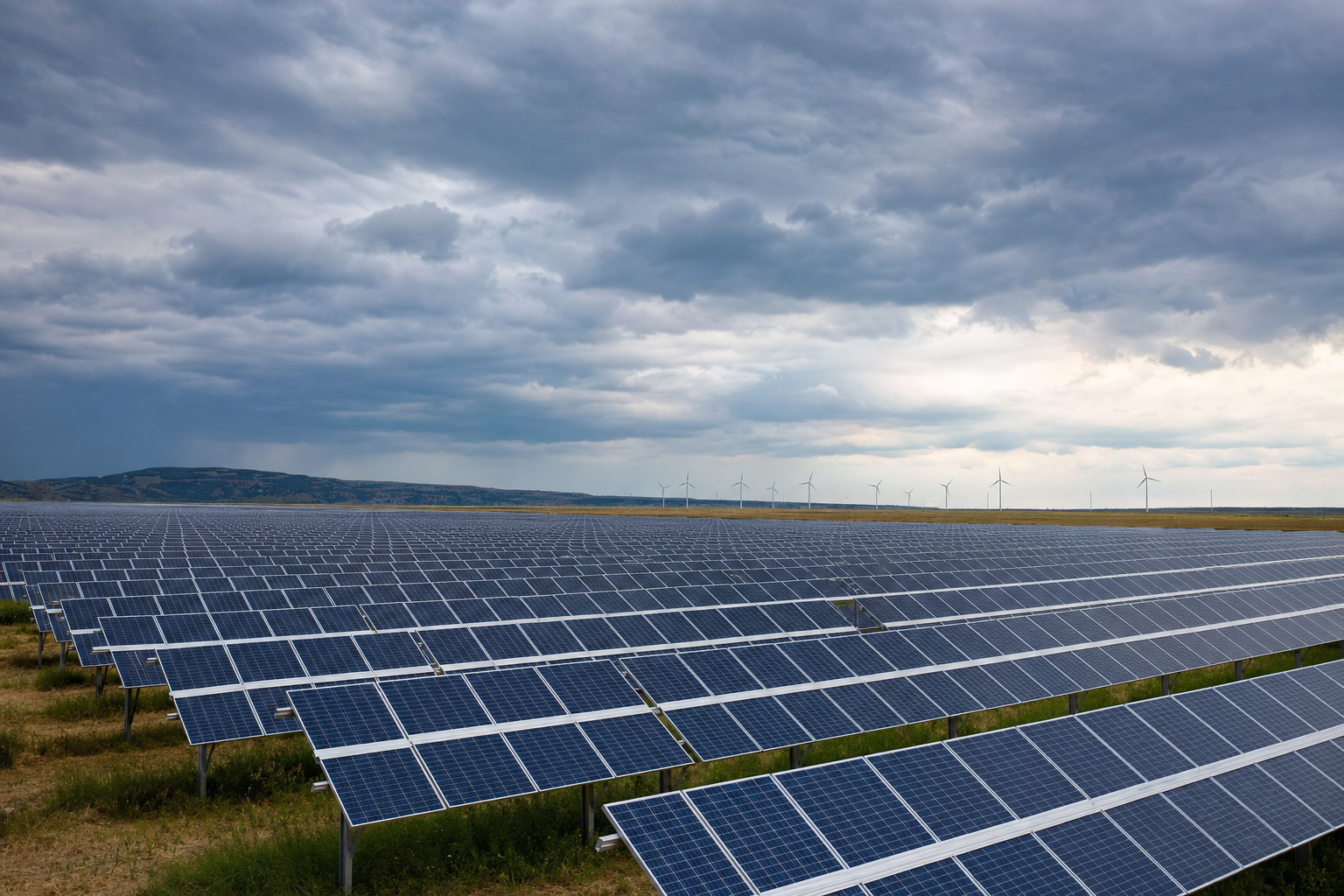
Energy has not needed much help this year. The sector has been one of the stronger corners of the market, with E&P names up about 17.6% year to date by late July 2026, and that matters because Saturn Oil & Gas Inc. is not trying to sell a story about software margins or multiple expansion in a vacuum. It is a light-oil producer. When crude stays elevated, the market tends to pay more attention to names that can turn barrels into cash without too much drama.
That is the backdrop here. WTI near USD 89 to 90 and Brent near USD 96 to 100 is not a neutral setup for a Canadian producer with Saskatchewan and Alberta assets. It is the sort of price environment that keeps the sector bid, keeps balance-sheet work in focus, and keeps investors willing to look past the usual skepticism that hangs over leveraged E&P names. Saturn is trading in that current, not against it.
A useful comparison is the broader Canadian light-oil group, where the market has rewarded names that can show volume growth, cleaner debt profiles, or both. The point is not that every peer is moving the same way. They are not. The point is that Saturn is being read inside a sector that already has a tailwind, and that makes any insider buying easier to notice, but also easier to overread if you forget the commodity is doing a lot of the work.
The company’s preliminary Q2 2026 production came in at 41,447 boe/d, with 81% oil and liquids. That is the sort of mix that keeps the market focused on realized pricing, operating leverage, and how much of the cash flow lands after the hedges, transport, and debt service are done with their cut. Saturn is not a broad diversified energy story. It is a light-oil-weighted producer, and the market treats that differently when crude is firm.
The balance-sheet work has also been active. Saturn priced dual-tranche senior unsecured notes on July 21, US$575 million and C$185 million due 2031, to refinance existing debt, and it also extended and increased its credit facility to 2029. Those are not cosmetic moves. They tell you management has been using the current commodity and rate backdrop to push out maturities and reduce near-term pressure. That matters because insider buying in a name like this lands differently when the company is also cleaning up its capital structure.
The market has not been shy about rewarding energy names that can show operational discipline and balance-sheet progress. Saturn’s own share price closed at CAD 5.86 on July 24, the same day GMT Capital Corp filed its buys. That is a live price, not a theory. It gives you the frame for the filing, because a purchase at that level after a run in the sector is a different statement from a purchase after a collapse.
The filing itself came from GMT Capital Corp, which reported four purchases on July 24, 2026, in Saturn Oil & Gas Inc.. The euro-normalised filing value across the four transactions was about EUR 432,455, broken into roughly EUR 171,781, EUR 138,256, EUR 89,083, and EUR 33,335. That is the number set. It is not a rounding error, and it is not a one-line curiosity.
The more useful detail is that this was a cluster, not a lone nibble. GMT Capital Corp is listed as a 3 to 10% security holder of the issuer, and the filings were all buys on the same date. InsiderTrades data gives the name a score of 41, which is decent but not heroic. The reason it scores there is straightforward enough: a wide cluster, a small or mid-cap name, and a filing size that sits around 0.02% of market value. That is the sort of pattern our scoring tends to like because it is harder to dismiss as noise than a single symbolic trade.
The market cap in the dossier is about EUR 705.7 million, so the total filing value is not huge relative to the company. That cuts both ways. On one hand, it means the buys do not force a dramatic conclusion about future price action. On the other, it means a holder already large enough to matter chose to add rather than stand still. In a sector where the commodity backdrop already supports the equity, that is the part that deserves attention.
Saturn has spent the summer doing the kind of corporate housekeeping that usually gets ignored until it goes wrong. The debt refinancing and credit facility extension are the obvious examples. They tell you the company is trying to keep its capital structure aligned with the current oil environment rather than waiting for the next stress point to force the issue. That is a sensible move, and it makes the insider buys more interesting because they arrive after management has already shown it is willing to act on the balance sheet.
The cluster picture in the dossier also helps. InsiderTrades data shows 12 recent declarations and 5 distinct insiders trading the name in the same direction over the past quarter. The recent list includes a director-level buy and repeated action from GMT Capital Corp. That is not a random scatter of filings. It is a pattern of accumulation around the same name, and the market usually notices that more when the stock is liquid enough to trade but still small enough that a few informed holders can matter.
Still, you do not want to turn this into a fairy tale about insiders seeing something the market does not. Saturn is already operating in a favorable commodity window, and the company has already told you what it is doing operationally. The insider cluster sits on top of that. It does not replace it. If crude weakens, if the refinancing terms stop looking so helpful, or if production growth stalls, the same filing will look less like a vote of confidence and more like a well-timed add in a strong tape.
Our cohort data for large-shareholder buys at sweet-spot names, the EUR 300 million to EUR 1 billion bucket, shows a 41.5% 90-day win rate and a 2.3% average return across 349 cases. That is useful context, but only if you keep it in its lane. It is historical behavior for a role-and-size bucket, not a forecast for this stock, and not a promise that GMT Capital’s July 24 buys will pay off over the next quarter.
The bucket matters because Saturn sits in the size range where insider information has historically been less fully priced in than at the mega-cap end. That is one reason our scoring leans on it. But the market is not a lab. Oil prices move, debt markets move, and E&P equities can re-rate or de-rate quickly when the commodity turns. A 41.5% win rate is decent context, not a trading plan.
The more honest way to use the cohort is as a filter on your own enthusiasm. If you already like the sector, the production mix, and the refinancing work, the cluster adds weight. If you do not like the leverage, the commodity dependence, or the fact that the filing value is still small relative to market cap, the cohort does not rescue the case. It just tells you that this sort of buyer has historically been worth a second look more often than not.
The timing matters because the company is not filing these buys in a vacuum. Energy has been in favor, and the macro backdrop has been supportive enough to keep the sector in the conversation. The EIA’s near-term inventory outlook has pointed to draws before possible later accumulation, which is the kind of setup that keeps crude from collapsing into complacency. That does not guarantee anything for Saturn, but it does explain why a light-oil producer with recent production growth and active balance-sheet management is on more screens than usual.
Saturn’s preliminary Q2 production of 41,447 boe/d, with 81% oil and liquids, gives the market a concrete operating anchor. The company is not just riding a commodity beta trade. It is showing volume. That is important because insider buying in a producer often lands best when the operating story is already moving in the right direction. If production were flat and debt were rising, the same cluster would feel more defensive. Here, the company has at least given the market a reason to keep watching.
Peer comparisons are imperfect because the available recent data does not give a clean apples-to-apples valuation set. Even so, the broader Canadian and North American light-oil group has been trading with the same commodity tailwind, and some peers have posted year-to-date gains in the 20% to 30% plus range in select cases. Saturn is not being singled out because it is the only name working. It is being singled out because it combines sector strength, operational momentum, and a meaningful insider cluster in a market cap band where those things still matter.
The obvious risk is that oil does the work and the filing gets too much credit. That happens all the time. A producer can look smart because crude is strong, then look ordinary when crude rolls over. Saturn’s July 24 buys do not change that. They sit inside it. If you are buying the stock, you are still buying a light-oil producer with commodity exposure, balance-sheet execution risk, and the usual E&P sensitivity to realized pricing and capital discipline.
There is also the size issue. EUR 432,455 across four buys is real money, but it is not a transformational amount against a market cap of about EUR 705.7 million. The market should not pretend otherwise. The filing is meaningful because of who bought, how they bought, and the fact that it was clustered. It is not meaningful because it somehow rewrites the company’s capital structure or operating outlook on its own.
InsiderTrades data gives Saturn a 41 score, and that is fine as a shorthand. But the score is not the thesis. The thesis, if you want one, is that a light-oil producer with recent production growth, a cleaner debt profile, and a cluster of buys from a large holder is worth more attention when the sector is already strong. If crude weakens or the company stumbles operationally, the same facts will still be true, and they will matter less.
The next useful checkpoint is not another abstract insider metric. It is whether Saturn keeps showing production growth and whether the balance-sheet work continues to hold. The July 21 refinancing and the credit facility extension to 2029 are already on the table. The market will want to see whether those moves translate into more breathing room, not just more paper.
Watch the commodity backdrop too. WTI near USD 89 to 90 and Brent near USD 96 to 100 is supportive, but energy does not stay polite forever. If crude stays firm, Saturn’s light-oil mix should keep the market interested. If it softens, the stock will have to stand more on its own operating numbers. That is where the next quarter matters more than the filing date.
For now, the cleanest fact is simple. GMT Capital Corp bought Saturn on July 24 in four reported transactions totaling about EUR 432,455, and it did so while the company was already benefiting from a strong energy tape, a recent production update, and active debt management. The next production update and any follow-through in insider declarations will tell you whether this was a one-day cluster or the start of something more persistent.
This is not investment advice.
TotalEnergies trades near €79.4 as the board backs Pouyanné, buybacks continue and sector calls split. Here is the insid...
Yannick Bolloré added to Louis Hachette Group in three September filings. The buys land as ALHG sits near highs and H1 r...
Bolloré insiders bought on September 24 after a weak half-year print and a lower share price. Here is what the filings a...
Recticel posted 16.4% half-year sales growth, kept its €70m EBITDA target, and then saw a €465,709 insider buy from SERV...
Scandi Standard board members bought into a stock already up 72% year to date, as poultry demand, valuation and Glenhave...
Covivio insiders bought through September while European office valuations stayed under pressure from higher rates, tigh...