
The purchases came after the raise, not before it
Dr. Dietmar Voggenreiter bought 5,000 DEUTZ shares on September 24 at €11.18 each, a filing value of about EUR 55,900, and that came after his EUR 57,850 purchase on September 16. The timing matters because the company had already placed 15.26 million new shares at €11.70, raising €179 million and expanding the share count by 10 percent.
InsiderTrades data puts this in a bucket of board buys at mid-cap names where the 90-day win rate is 49.6 percent across 2,691 cases, with an average 90-day return of 1.43 percent and a 365-day average return of 60.01 percent. That is historical cohort data, not a promise about DEUTZ, and it is useful mainly because it keeps you honest about what a board buy can and cannot do.
The filing itself is not the whole story. The company had just asked the market to absorb a larger equity base, and the stock was already trading above the placement price, around €12.15 on September 18, according to the cited report. That is a different setting from a lonely insider buy into weakness. Here, the board was buying after the raise, after the market had seen the dilution, and after the company had already used the capital to push the turnaround narrative harder.
DEUTZ sits in a German industrial segment that is not exactly begging for optimism. Reuters reported on September 17 that the VDMA expects real production in the German machinery sector to fall 2 percent in 2026, which would make it the fourth straight annual decline. The same report said output was already down 4.1 percent year over year in the first seven months, while domestic demand stayed weak and foreign orders, especially from outside the eurozone, held up better.
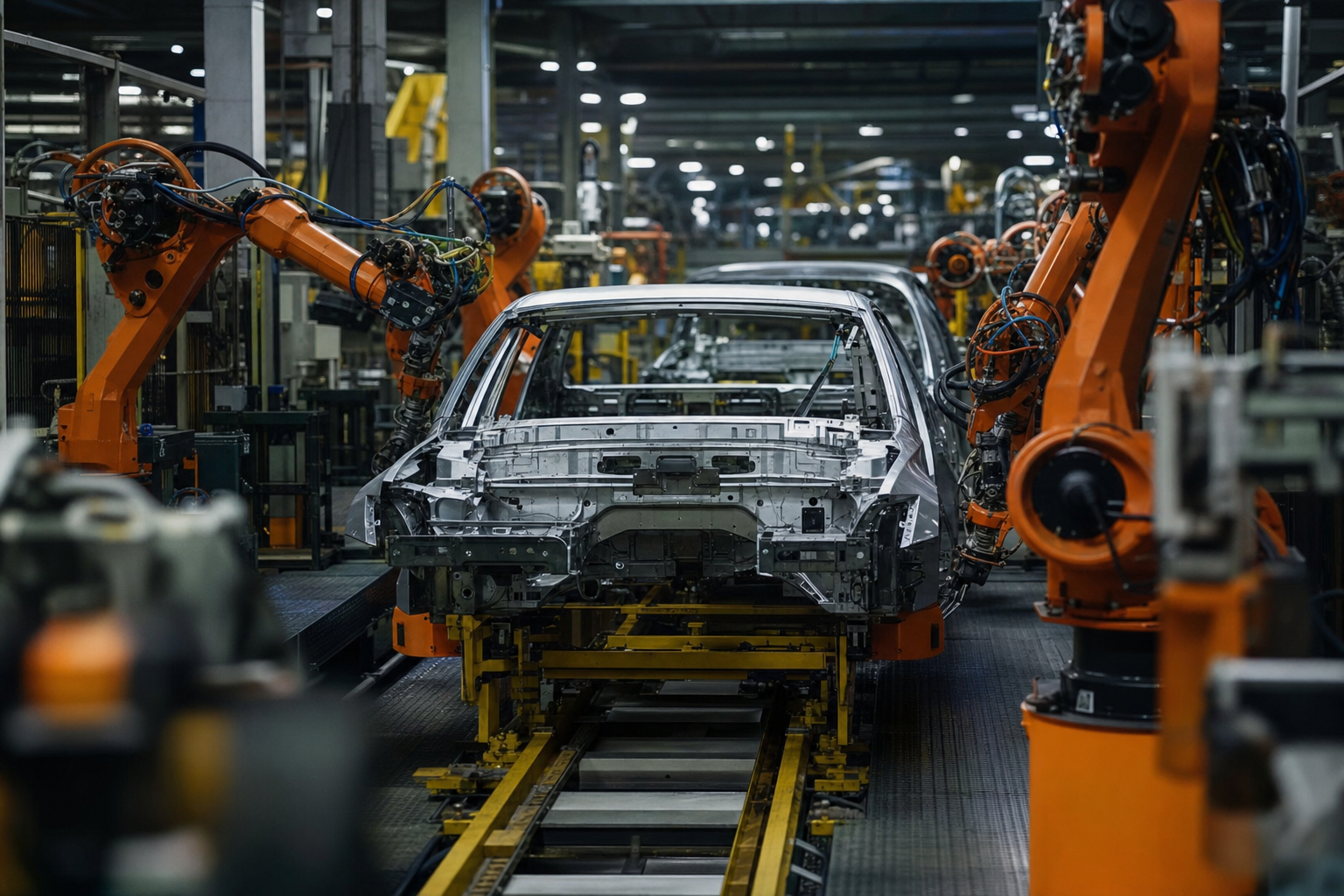
That backdrop matters because DEUTZ is not a software rerating story dressed up in overalls. It sells diesel and gas engines for construction, agriculture, marine and stationary applications, and it is trying to push more weight into service, energy systems and defense. In a sector where the cycle is still soft, the company needs more than one engine line to carry the load. It needs mix, execution and a market willing to pay for the shift.
The ECB did not make that easier. On September 10, it raised its key rates by 25 basis points, taking the deposit facility to 2.50 percent, and its staff projections still showed euro-area headline inflation at 3.0 percent for 2026 before easing to 2.5 percent in 2027. Growth was projected at 0.9 percent this year and 1.4 percent next. For a capital goods name, that is not a disaster, but it is not a clean tailwind either. Higher rates keep a lid on enthusiasm for cyclical industrials, especially when the domestic manufacturing base is already nursing a long slump.
The market has not been blind to the pressure. German machinery names have spent the year trying to prove that foreign orders and selective end markets can offset weak home demand. That is the context in which a board buy lands. It is not a macro call. It is a vote that the company’s own path can outrun the sector’s drag.
DEUTZ does not trade in the same weight class as Caterpillar or Cummins. Those are global heavy equipment and engine franchises with scale DEUTZ does not have. But the comparison still matters because it shows what the market pays for industrial durability, and what it withholds from smaller names that are still trying to prove their mix shift.
MarketScreener’s sector valuation pages and GlobalData’s competitor mapping both point to DEUTZ trading at lower enterprise-value multiples than some larger global peers. That is not a surprise. Smaller industrial names usually get less credit until the order book, margins and cash conversion all line up for long enough to force a rerating. DEUTZ has not earned that kind of patience yet, even if the recent numbers are better than the old story would suggest.
The company’s first-half 2026 results were the strongest evidence for why the stock has attracted attention. Revenue rose 10.7 percent to €1.115 billion, new orders increased 28.7 percent, and adjusted EBIT margin improved to 7.1 percent. Management also confirmed full-year guidance of €2.3 billion to €2.5 billion in revenue and a 6.5 percent to 8.0 percent adjusted EBIT margin. Those are not heroic numbers. They are, however, the sort of numbers that make a capital raise look less like a rescue and more like fuel.
ODDO BHF leaned into that view in the same week as the latest insider trades, lifting its target to €16.50 from €16.40 and keeping an Outperform rating. That does not settle anything. Analysts can be early, late or simply polite. But it does tell you the market is not looking at DEUTZ as a broken story. It is looking at a cyclical industrial name with a live transition, a cleaner balance sheet after the raise and enough operational momentum to keep the debate open.

The cluster is the useful part here, because one board buy can be noise and six can start to look like a coordinated read on the company’s own prospects. InsiderTrades data says this is a wide cluster, with six insiders trading the same name in the same direction over the past quarter, and that is the configuration our scoring rewards most. The signal score sits at 4.4, which is not a trumpet blast. It is a modest read that becomes more interesting because of timing and breadth.
The recent declarations show the pattern clearly. Melanie Freytag bought on September 15, Helmut Ernst on September 17, Dr. Dietmar Voggenreiter on September 17 and again on September 24, Patricia Geibel-Conrad on September 1, and Dr. Sebastian C. Schulte on August 11. Twelve recent declarations, six distinct insiders, all buying. That is a lot of board-level participation for a company that had just asked shareholders to absorb a 10 percent increase in share count.
The size of the individual trades is not the point by itself, but it does matter that Voggenreiter’s September 24 purchase was only about EUR 55,900, and the score rationale notes that the filing value was a negligible fraction of market value, under 0.01 percent. That keeps the read grounded. These are not balance-sheet moves. They are not a capital allocation decision in the corporate sense. They are board members putting fresh money into the stock after the raise, which is a cleaner expression of confidence than a press release and a lot less polished.
Still, you should not overread the cluster. Supervisory board buying after a capital increase can reflect alignment, optics, or a genuine view that the equity story is still underpriced. It can also reflect the simple fact that the stock had already cleared the placement price and the company had just announced a more ambitious strategic path. The filings tell you where the board stood. They do not tell you how much of the next leg is already in the price.
The €179 million capital increase is the hinge in this story. DEUTZ placed 15.26 million new shares at €11.70, and the market then had to decide whether the dilution was the cost of a better business or just another industrial company reaching for growth while the cycle stayed awkward. The answer so far has been mixed, which is why the insider buying matters at all.
The company has used the new capital to support strategic moves, including the planned FFG acquisition. That is the kind of transaction that can change how a small industrial name is viewed, because defense exposure tends to attract a different multiple conversation than traditional engine sales. It also raises the burden of proof. If the acquisition is supposed to accelerate the 2030 targets, then integration, margin discipline and order conversion become the real tests, not the announcement itself.
DEUTZ has already been trying to broaden the story beyond legacy engines. It has international partnerships, including with Kirloskar on a 1.6-liter platform, and it has been leaning into service and energy systems as the old engine market gets more cyclical and more regulated. That is sensible strategy, but it is also the sort of strategy that can take years to show up cleanly in the numbers. The market usually gives industrials some credit for diversification only after the evidence is boring and repeatable.
The stock’s ability to trade above the placement price around €12.15 on September 18 suggests the market was willing to give at least some credit. The board buying after that point suggests the same thing from a different angle. But the gap between €11.70, the placement price, and €12.15, the post-deal trading level, is not a victory lap. It is a small sign that the market accepted the raise without immediately punishing the stock. That is useful. It is not the same as a verdict on the next twelve months.
InsiderTrades data gives DEUTZ a fundamental score of 48, with a quality score of 44 and a value score of 52. Those are middling marks, which fits the company’s current position better than any glossy turnaround pitch would. The business is improving, but it is not yet the sort of industrial compounder that gets a free pass on execution.
That is why the next set of numbers will matter more than the filings themselves. The company has already told you what it wants to do, and the first-half results showed enough momentum to keep the story alive. What you need now is evidence that the margin improvement holds, that the order growth is not a one-off, and that the capital raise is translating into strategic progress rather than just a larger equity base.
The insider cluster does add something real. It tells you the supervisory board was willing to buy after dilution, after the raise and after the market had a chance to digest the new setup. That is more persuasive than a lone token purchase. It also sits alongside an analyst target increase and a stock price that held above the placement level, which makes the whole picture less fragile than it would have been a month ago.
But the company still lives in a sector where the macro is not helping much. German machinery is under strain, the ECB is not cutting aggressively, and the domestic industrial base remains soft. DEUTZ can still work if defense, service and export demand keep doing the heavy lifting. If they do not, the board’s purchases will look like a well-timed expression of faith rather than a useful guide.
The next hard checkpoint is the next operating update, because that is where the market will see whether the first-half momentum and the FFG logic are still intact. Until then, the filings are a useful clue, and nothing more.
Dig deeper: DEUTZ Aktiengesellschaft's full insider filing history.
This is not investment advice.
Scandi Standard’s board is buying into a rights issue, a Glenhaven deal and a firmer chicken market. Here is what the fi...
Roche Bobois drew three board-linked buys in late September as luxury furniture stays soft, the stock slides, and peers ...
WashTec's supervisory board bought into a guidance reset, while Germany's machinery slump and a 6.6% H1 revenue rise fra...
Argo Investments drew a three-director buying cluster as rates stay restrictive and LICs compete on franked income, yiel...
Covivio drew a three-filing buy cluster on September 18 as European property stays under rate pressure and peers keep tr...
Two board-level buys at Roche Bobois total EUR 12k as furniture demand stays soft, rates stay sticky, and peers trade on...